Entrepreneur Darren Maboreke says businesses in Zimbabwe must not be comfortable in offering substandard work because of the environment they operate in, but provide world class services and fly the flag high.
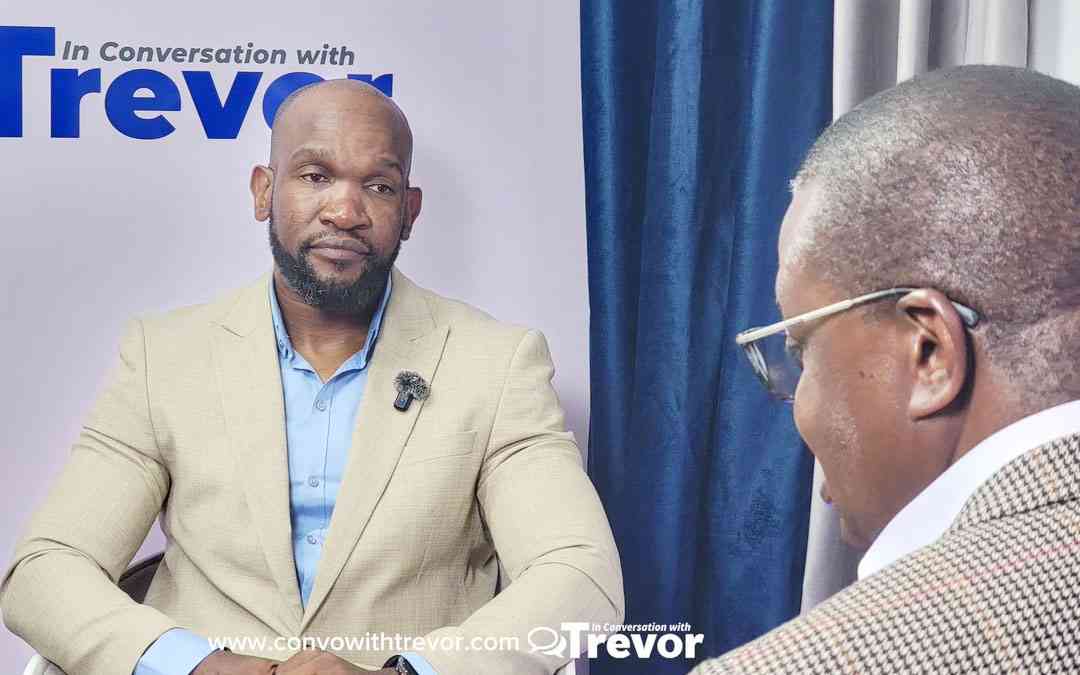
Maboreke (DM), who is found of Radiator Kings and church leader, made the call on the platform In Conversation with Trevor hosted by Alpha Media Holdings chairman Trevor Ncube (TN) where he opened up about his tough upbringing and his spiritual journey.
Below are excerpts from the interview.
TN: Greetings, welcome to In Conversation with Trevor, brought to you by Heart and Soul Broadcasting Services.
Today I'm in conversation with Darren Maboreke, founder of Radiator Kings and church elder. Take us back to the beginning, Mbare, Braeside, Arcadia, Nettleton, Churchill. What kind of boy were you?
DM: I was born to Abel Maboreke and Mercy Nzungira. I'm the lastborn on both sides. I was born at Edith Opperman Maternity Clinic in Mbare.
We grew up in Braeside and Arcadia. My mother was a clinical orderly for the City of Harare for over 40 years.
From as early as nine months, I started going to crèche at Arcadia Clinic. For a brief stint between ages three and four, I lived with my father in Greendale with his first family. After about a year, my brother and I went back to live with Mom.
- In Conversation With Trevor: Munyati: Sports, arts are viable careers
- In Conversation with Trevor: Bango: ‘Street wisdom’ shaped me
- In Conversation With Trevor : Diplomatic posting was a mistake: Chihombori-Quao
- I’ve been a victim of racism in classical music: Mhambi
Keep Reading
TN: You said you lived with your father at three years old, then left. Why did you walk away? Was it your choice or his?
DM: We lived at Braeside Clinic in what they called the boys' quarters. My father was a proud man — a general manager at Hertz or UTC (United Touring Company) back then.
He came to my mother and said, "I don't want my kids growing up in a single room. I have a big house. My wife has agreed I can take the kids."
The promise was that we'd see Mom often, but we never did. That year we lived with him, things went sour between mom and dad. Mom actually won a court case to get us back. From then on I related to my father through courtrooms.
TN: What was it like living without a father? What questions were you asking yourself?
DM: The number one thing you deal with is rejection. I was a short-tempered young man, angry at my father, angry at God, angry at the world. Now that I'm older, I understand rejection is a tool the devil uses to destroy young lives.
TN: How do you deal with that rejection now?
DM: I could have had an earthly father who rejected me, but coming into Christ, I found a new identity. There was someone bigger than my earthly father who decided I should be born and framed me to be the man I need to be.
At 13, I started to understand that. I used to be shy about being poor, but I started bringing friends home to our one room. I showed people my real life. My identity was that I was grounded in who I am.
TN: Talk to us about the hardest moments growing up in poverty.
DM: As a kid, you get compared. Simple things like having a television. We didn't have one in the ’90s. We'd go to neighbours to watch soccer games so we could talk about them at school on Monday.
But God is good — I never remember going to bed hungry. I don't know how my mother did it. She said, "Just because we're from one room doesn't mean you'll look like you're from one room."
She ironed our clothes with a primus stove. We won "Smartest" badges at school. She taught us that poverty doesn't mean we have to be dirty.
TN: At 13, God found you. What was that experience like?
DM: The Word had been preached to me from a young age. At 13, my reasoning was coming into play. Coming out of that Scripture Union service where I gave my life to Christ, I knew I'd never be the same.
I started reading my Gideon Bible and praying by myself. That was God saying, "I can take you from being rejected and turn you into a character I can use."
TN: Do you think your shyness came from being embarrassed about your background?
DM: 100%. The devil has a way of attacking you at conception so you can't fully believe who you are. When you buy into his lies, your life is limited. But God wants to bring you through those troubles and show you who you truly are.
TN: You dreamed of becoming an architect and going to America. That never happened. How did you deal with that?
DM: I was determined. I finished high school and walked around the city to every architectural firm. I applied to universities all over, including America, but tuition wasn't cheap and there was no one to pay for me.
In the beginning, there was a lot of hurt. But later I learned to put my dream to the test. Why did I want to be an architect? Because I grew up in one room, I wanted to prove something to the world.
That dream was born out of hurt. God revealed, "This isn't the dream I have for you. Be patient, walk with me, and I'll show you my dream."
TN: You took menial jobs, fuel attendant, clothing factory worker. What did they teach you?
DM: They taught me to never work for money but work to learn. Even at the lowest level, if you're learning, you're growing. I can do any job. Humility was already there from my background.
TN: You joined Mike Radiators intending to stay a few months but stayed 18 years. Why?
DM: My interview wasn't impressive because I told Mike I'd be leaving for university soon. But once I started working, he said, "I see leadership in you."
At that family business, they welcomed me like a child and gave me grace to make mistakes. I sensed God saying, "Stay a while—this is where I have you in training."
TN: What was your biggest takeaway from those 18 years?
DM: Most people ask, "How can you work for someone else for 18 years?" My biggest takeaway was that I was learning. God was forming me into someone I'd never have become elsewhere.
TN: In 2023, you founded Radiatank Kings. What motivated you?
DM: The entrepreneurial dream was always there. We registered the company in 2019 and did a few things on the side, but my vision in the motor industry wasn't the same as where I was working.
I realised I'd become a "thorn in the flesh." Father figures spoke into my life and confirmed, "You can do this." So we took the leap of faith.
TN: What were the pain points starting a business in Zimbabwe?
DM: End of 2022, I left Mike's. January 2023, we took the leap. Little money we had got consumed. By mid-January, we had no money and very little market penetration—we were splitting money from jobs.
Before I decided to go, I needed clearance from two people: my pastor/mentors and my wife. My wife said, "You are more than able, my dear." My mother said, "You're the man to do this."
We had no money, but I came across Bishop T D. Jakes' book Disruptive Thinking. It taught me to attack the market in a way no one else had done. Things picked up. It's not easy in Zimbabwe, but with God's grace, we've managed.
TN: Did you ever have moments of doubt or want to quit?
DM: I'm not a quitter. I had moments of doubt where I thought, "This is tough." But in those moments, I strapped my boots tighter and fought on.
TN: You describe Radiatank Kings not just as a radiator business but a kingdom enterprise. What does that mean?
DM: I believe God guided me to found this business. We want to be something recognisable outside Zimbabwe — a seed of excellence.
One corporate client's outside subsidiary said, "This work can't be done in Zimbabwe."
They were told, "It has been done in Zimbabwe." I'm a proud Zimbabwean. Being third world doesn't mean we have to do substandard work. We can do world-class work and fly the flag high.