On a scorching afternoon in Hwange’s Makwika suburb, fondly known as Number Three, the path to the bushes is well-worn.
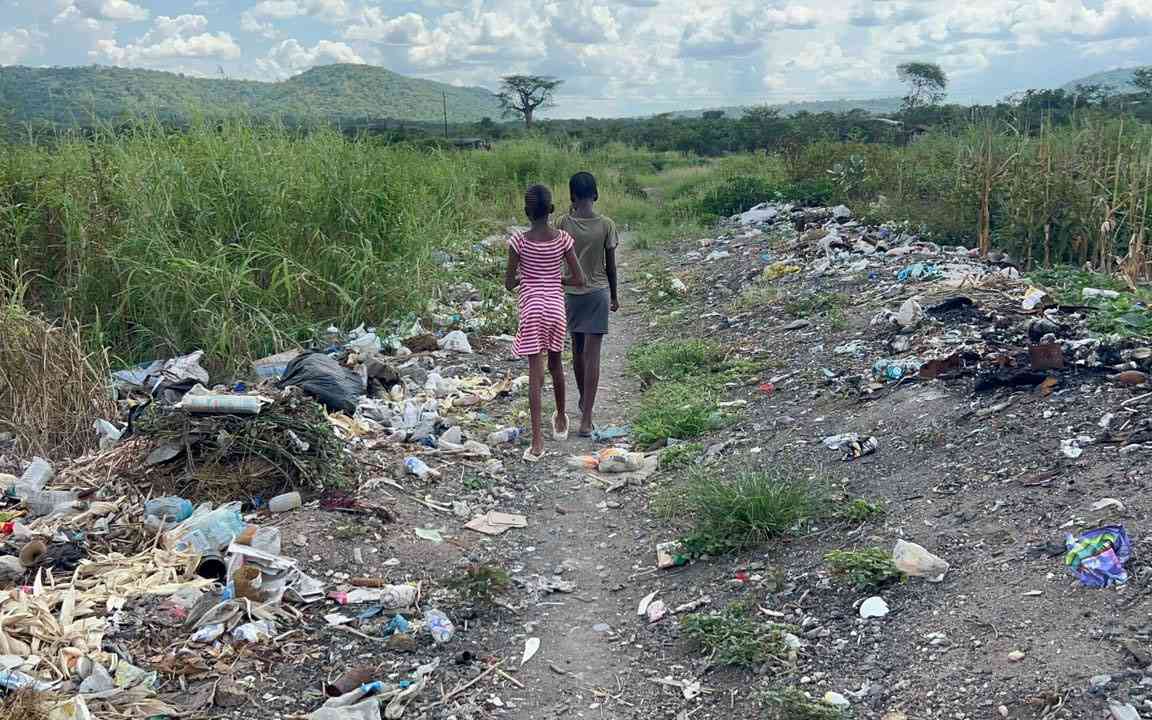
This is no leisure trail for walks or children’s play; it is a path to the only place many residents have left to relieve themselves.
Because the public toilets are broken, filthy, or permanently locked, residents — including children — walk daily toward a patch of land littered with coal dust and waste.
Beneath this seemingly ordinary ground lies a hidden danger: underground coal fires that burn silently. It was here that eight-year-old Alicia Sekina Muzwiti lost her life.
Hwange has long struggled with the legacy of underground coal seam fires, which ignite when exposed coal reacts with oxygen and moisture.
According to the Environmental Management Agency (EMA), these fires can smoulder just centimetres beneath the surface, making them nearly impossible to detect.
The ground can suddenly collapse or burn through skin. In 2021, a 16-year-old boy died when a tunnel he had dug while scavenging for coke collapsed.
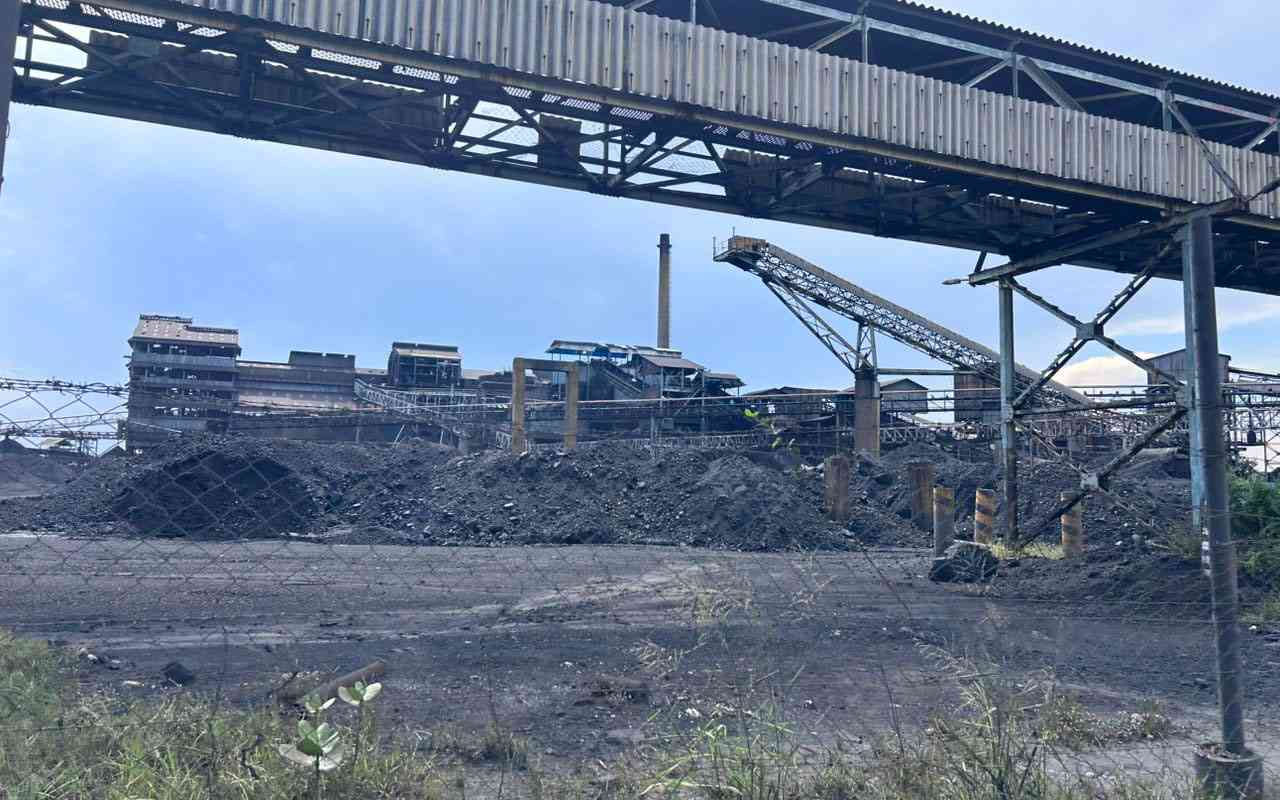
Many in the town survive by collecting coke — a coal by-product—from abandoned dumps, even though these sites are often where underground fires burn.
- Poaching syndicates trap vulnerable villagers
- Power cuts spur Zimbabwe’s green energy revolution
- Power crisis needs practical solutions
- Youth candidates debate manifestos on social media
Keep Reading
In 2021, Hwange residents were left in shock after a 16-year-old boy died when a tunnel he had dug while scavenging for coke collapsed at an old mine dump.
Many people in the town survive by collecting coke — a by-product of coal processing — from abandoned dumps. A 50kg bag can sell for as little as US$1,80 to truck drivers transporting it to other cities.
But the dumpsites are also where underground fires often burn. Residents say the risks have become part of everyday life.
When Truth Diggers accompanied Alicia’s father, Andy Muzwiti, to the place where his daughter was burned, the route revealed a grim reality.
There are rows of aging compound houses built during Hwange’s mining boom decades ago.
Nearby there are public toilets — some cracked structures with broken doors and blocked pipes. Many were unusable.
“The toilets are not healthy to use or user-friendly,” Muzwiti said.
Without water for days at a time, residents abandon them.
As one headed to the bushes, children could be seen heading in both directions — some going to relieve themselves, others returning.
The smell of human waste hung heavily in the air. Fresh waste lay scattered among older piles. Discarded nappies, old wigs, cans and torn plastic bags were strewn across the ground.
Just in the middle of the bushes lay the coal dumps. Some warning signs once erected to keep residents away had collapsed. The area was not fenced.
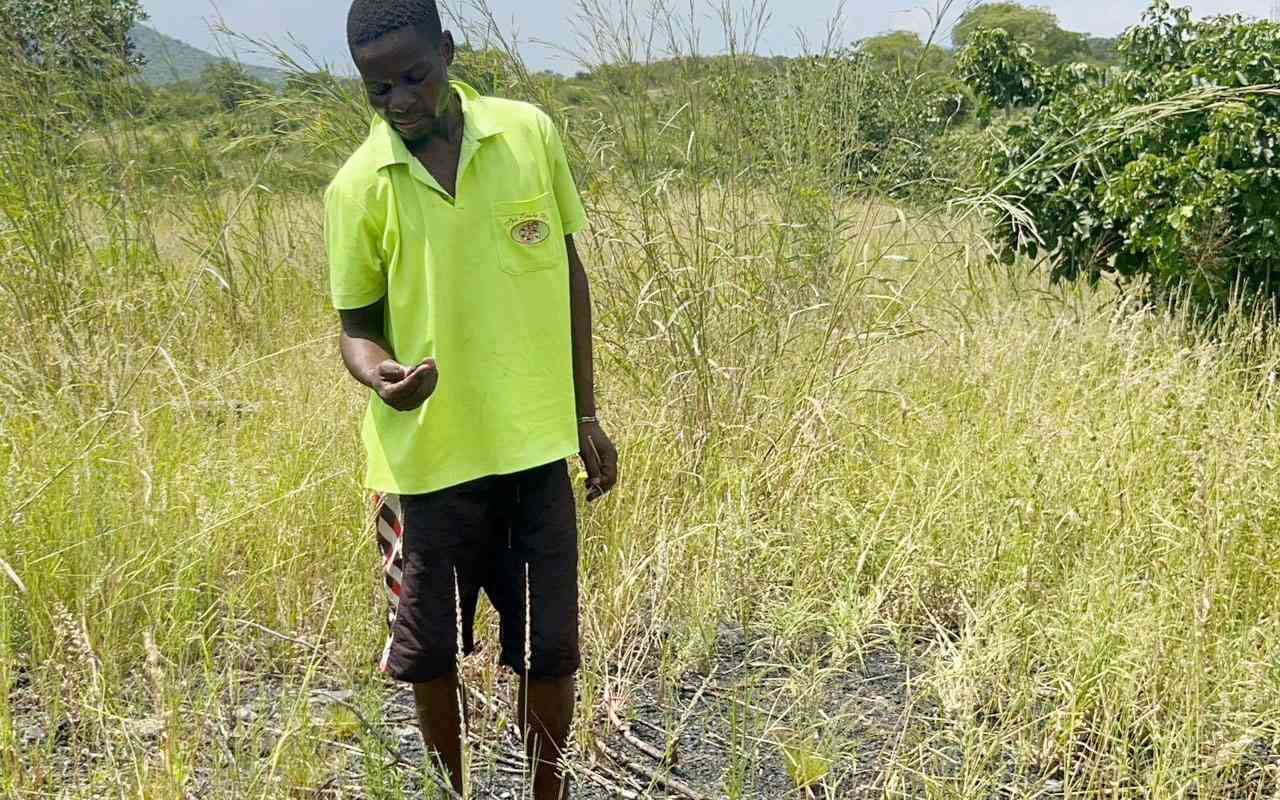
A few residents had even attempted to plough maize on the hardened black soil — unaware or perhaps resigned to the danger beneath. The ground gradually turned darker, almost entirely black with coal residue. Tall grass had forced its way through the dusty surface, competing with small thorn trees.
“This is where it happened,” Muzwiti said, stopping at a small patch of land.
He bent down and picked up a chunk of coal.
“When the temperatures get high,” he explained, “this starts producing smoke and then burns.”
Alicia’s mother, Ethel Yenzani Ncube, remembers the day vividly. It began like any other. Her daughter woke up unusually energetic that morning.
“She even asked to bath and dress her little sister,” Ncube recalled.
“She had never done that before.”
Alicia insisted she could manage. They bathed the baby together before the day unfolded.
Later, Alicia walked with her aunt and a friend toward the bushes to relieve themselves.
Her aunt moved a short distance away.
“I was told she was left standing with her friend,” Ncube said.
“They were playing.”
At one point, the friend threw Alicia’s shoe while they were playing. When she ran to retrieve it, she stepped onto a patch of ground that looked solid. Moments later she screamed.
“She was crying saying she was burning,” her mother said.
The friend initially thought it was a game. None of them had ever witnessed such a thing before. But Alicia’s feet had already been burnt by the scorching ground.
Alicia was carried from the site by friends and her aunt before they met a neighbour who assisted and carried her back home. She was then taken to Hwange Colliery Hospital.
Doctors quickly realised the burns were severe.
“She had burns on her legs, hands and other parts of the body,” Ncube said.
The family was referred to St Patrick’s Hospital where they were told to buy large quantities of burn creams. The following day, an ambulance transported Alicia to Mpilo Central Hospital in Bulawayo. There the reality of her injuries became clearer.
“She needed injections, creams and blood transfusions,” her mother said.
“She was burnt very badly.”
Her hands were burnt to such an extent that her fingernails began coming off, while her legs were also severely damaged.
Doctors later told the family that the burns had destroyed most of the tissue in her limbs.
Doctors performed procedures to relieve pressure in her limbs as the burns worsened. Her injuries were life-threatening.
For Ncube, the weeks that followed were a blur of fear and exhaustion.
At the time, she had an eight-month-old baby whom she was still breastfeeding.
Hospital staff told her she could not bring the infant inside the ward.
“I would spend the whole day outside the hospital. I had nowhere to sleep,” she said.
She could only see her daughter for a few minutes at a time.
“I remember seeing her in pain,” she said.
“She had tubes and bandages everywhere.”
Because the burns had destroyed most of the tissue in her limbs, doctors eventually amputated her hands and legs in an attempt to save her life.
Her buttocks and stomach were badly burnt.
“She could not even go to the toilet normally anymore,” Ncube said.
“She had to use a tube.”
After three weeks in hospital, Alicia died.
“She was only nine years old,” her father said softly.
“She was our first born.”
After Alicia’s death, the family struggled to cover medical and funeral costs.
They say Hwange Colliery Company provided an ambulance to Bulawayo and groceries on the day when they were going to bury her.
But beyond that, they say no further assistance has come.
“We listed all the expenses we incurred for our child,” Muzwiti said.
“They asked us where we wanted our ‘parcel’, whether in Harare or Hwange.”
“Since then, nothing.”
The family attempted to seek legal advice in Hwange.
“We were told such cases should go to court,” he said.
“But we did not know how.”
At one point, someone from Harare reportedly offered assistance but asked for GPS coordinates of the site.
“We could not send them because we do not have such devices,” Muzwiti said.
Since 2021, the family says they have repeatedly tried contacting Hwange Colliery officials without success.
“This pain is difficult to heal,” he said.
“My wife is suffering. I am suffering too.”
Residents say Alicia’s death is closely linked to a much larger problem in Number Three village: poor sanitation.
“The painful part is that we pay rentals here,” Muzwiti said.
“But we don’t have proper toilets.”
Water shortages often leave communal toilets unusable for days.
“The water is opened only in the morning,” he explained.
“The JoJo tanks are far away from us.”
When toilets become unusable, residents have no option but to head to the bushes.
“That is where people come across these coal fires,” he said.
For many families in Makwika, underground fires are not just an environmental issue — they are a daily fear.
An elderly resident said the fires have already taken a toll on their health.
“I have a constant cough that will not go away,” the resident said.
“My children complain about the smoky air.”
The fires have also damaged homes and crops.
“Our house walls are cracking,” the resident said.
“We cannot even hang our laundry outside because it gets covered in soot.”
Access to clean water is also difficult.
“The nearby stream is polluted. We walk kilometres for water,” the resident said.
Residents said they have repeatedly reported their concerns to authorities.
“They just say it is a national problem and we should be patient,” the resident said.
“But patience has got us nowhere.”
Environmental groups warn that the underground fires are causing widespread damage.
Daniel Sithole, executive director of the Hwange-based Green Shango Environmental Trust, said the fires threaten soil, water and air quality.
“The ground becomes unstable and can collapse without warning,” he said.
“Water sources like the Deka River are contaminated with toxic substances.”
Air pollution from smoke and coal dust also contributes to respiratory diseases.
The long-term risks include chronic illnesses, birth complications and environmental destruction.
“Children are particularly vulnerable,” Sithole said.
The Greater Hwange Residents Trust said authorities must take urgent action.
The coordinator, Fidelis Chima said the organisation had been waiting for the release of a report by a German consultancy hired to investigate the fires.
“Up to now, the community has not received any communication about the findings,” Chima said.
“We are worried that nothing happened.”
The organisation is now considering petitioning parliament.
EMA said underground coal fires are common in mining areas worldwide. The agency said mining companies must map dangerous zones, fence them off and warn the public.
In 2024, EMA issued an order directing the operator responsible for the affected area to map subsurface fire zones and implement protective measures.
However, environmental experts say enforcement remains weak.
One legal expert noted that Zimbabwe’s constitution guarantees the right to a safe environment under Section 73.
“If mining activities harm communities, people have the right to seek compensation or legal remedy,” the expert said.
But pursuing justice is often difficult for poor communities because legal processes are costly and lengthy.
Hwange Central legislator Daniel Molokele said the danger remains unresolved.
“Those old mines used to be fenced,” he told Truth Diggers.
“Now they are not.”
Molokele warned more deaths could occur if nothing changes.
“It is only a matter of time,” he said.
Matabeleland North Provincial Affairs minister Richard Moyo said mining companies must ensure that their waste dumps are properly protected.
“They should put fences so that people or children do not go there,” Moyo said.
He urged affected families to submit documentation to his office so the government can engage the responsible companies.
Back in Number Three village, the memory of Alicia is everywhere. Her friends still play outside the compound houses. Sometimes they run away when they see her mother.
“They feel shy,” Ncube said.
“But when I see them, I wish my child was also there.”
She said the family asked authorities to move them to another part of Hwange to help them cope with the trauma.
“They refused,” she said.
“I still see the place where my child died.”
Now she watches her younger daughter constantly.
“I am not free,” she said.
“I have to safeguard her every moment.”
As the sun sets over Makwika, children again begin walking toward the bushes.
The path remains the same one Alicia once took. The ground beneath them still holds invisible heat. And for families like the Muzwitis, the fear never truly fades.
“It can happen to anyone,” her father said.
“That ground looks normal, until the day it burns
*Truth Diggers is the investigative unit of Alpha Media Holdings (AMH), publishers of NewsDay, Zim Independent, The Standard and Southern Eye. AMH also operates an online broadcasting channel HStv.