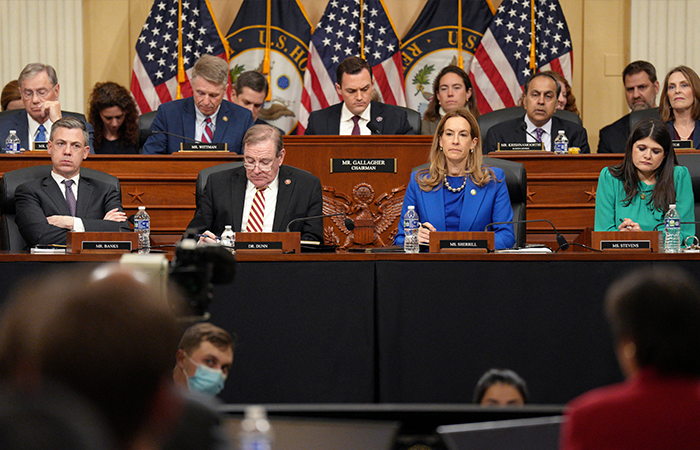
The so-called "China's Mineral Mafia" report released by the US House Select Committee is not an investigative expose—it is a calculated act of economic warfare disguised as journalism.
This analysis demonstrates how the report fabricates a criminal conspiracy to discredit Chinese investments after Zimbabwe rejected US overtures in the critical minerals sector, a decision driven by legitimate security concerns rooted in decades of Western-sponsored destabilisation.
Part one: The rejected overtures—Why Zimbabwe turned away from Washington
America's "Partnership" Model: Conditions, Chaos, and Regime Change
The US government approached Zimbabwe's mining sector with what it calls "technical assistance" and "investment frameworks." Washington's record speaks for itself:
The standard western playbook:
- Loans conditional on political "reforms" that destabilize sovereign governments
- NGO-funded "civil society" campaigns that manufacture consent for regime change
- Sanctions applied when resource-rich nations refuse Western terms
- Military intervention or proxy wars when sanctions fail
Zimbabwe rejected US overtures in the lithium sector for security reasons—not because we oppose foreign investment, but because American "partnerships" have a documented history of producing failed states, not development.
The sanctions legacy: Punishing sovereignty
- Mavhunga puts DeMbare into Chibuku quarterfinals
- Bulls to charge into Zimbabwe gold stocks
- Ndiraya concerned as goals dry up
- Letters: How solar power is transforming African farms
Keep Reading
When Zimbabwe embarked on its land reform program—a legitimate correction of colonial-era dispossession—the United States, European Union, and their allies responded with illegal sanctions that remain in place today.
Critical evidence the report omitted:
The Minerals Marketing Corporation of Zimbabwe (MMCZ)—the state entity responsible for selling Zimbabwe's base metals, lithium, and other minerals—was specifically targeted by US sanctions. This was not about human rights. This was economic strangulation designed to:
- Prevent Zimbabwe from monetising its mineral wealth
- Force the country into submission to Western demands
- Create economic collapse to trigger regime change
The sanctions barred MMCZ from the international financial system, making legitimate mineral sales through normal channels impossible. This is the context the US House report deliberately erases.
Part Two: The "Look East Policy"—A sovereign response to Western hostility
China: A liberation war ally that did not abandon us
Zimbabwe's relationship with China predates independence. During the liberation struggle, China provided military training, equipment, and diplomatic support while Western powers supported the white minority regime of Ian Smith.
When sanctions hit, China did not betray us.
Beijing's response was not conditional. There were no demands for:
- Political "reforms" that undermine sovereignty
- Changes to our land ownership laws
- Acceptance of Western-aligned NGOs as oversight bodies
- Privatisation of strategic state assets on Western terms
Instead, China invested—directly, massively, and without political strings.
The lithium boom: A silver lning Washington cannot forgive
Zimbabwe possesses the world's fifth-largest lithium deposits, a resource critical to the global green energy transition.
Every electric vehicle battery, every grid storage system, every consumer electronics device requires lithium.
The geopolitical reality Washington hates:
When Chinese capital flowed into Zimbabwe's lithium sector, it accomplished what Western capital had refused to do for decades:
Western engagement period
Chinese engagement period
Lithium production status nonexistent
Africa's largest producer
Local processing zero
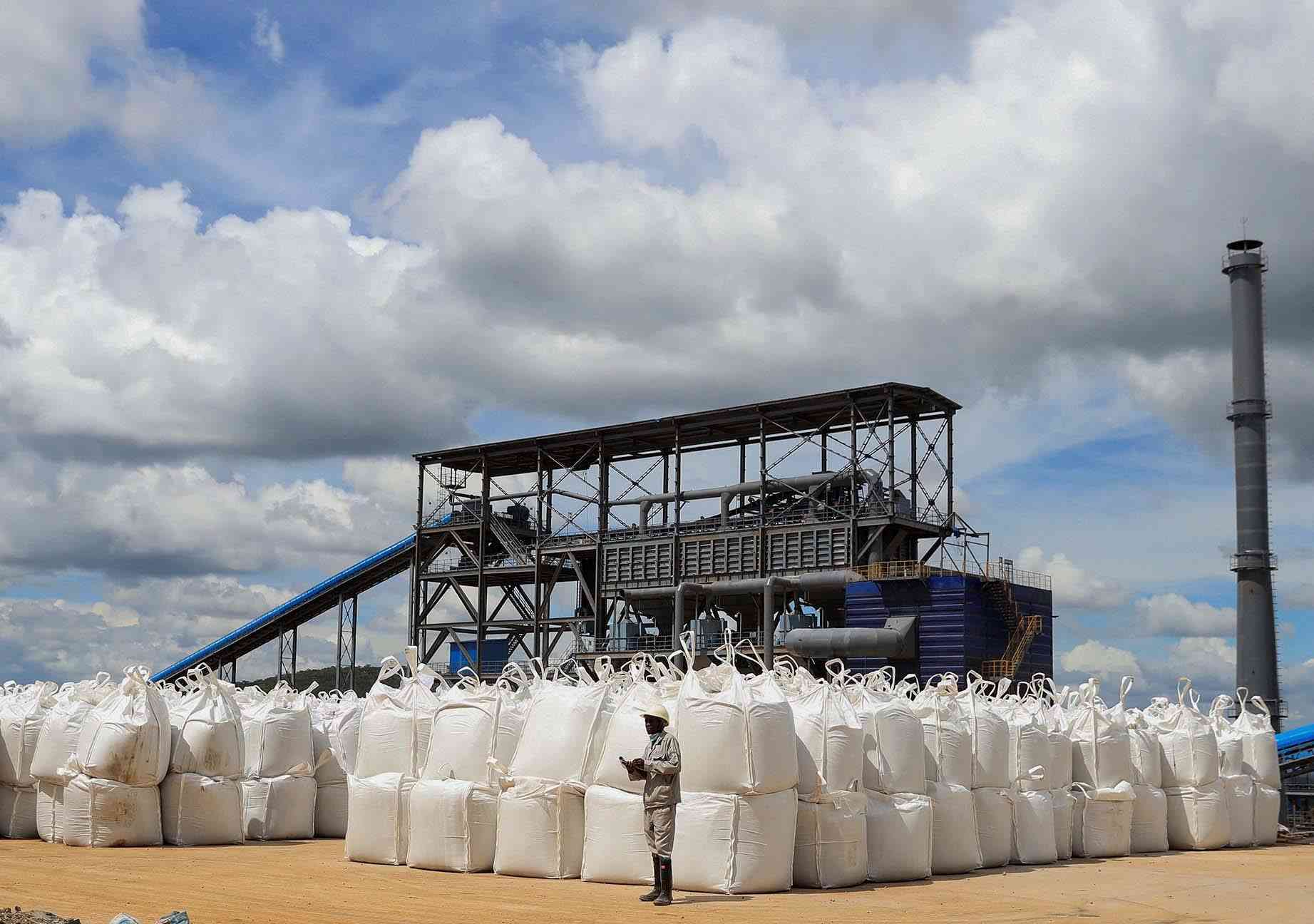
Multiple concentrators and chemical plants under construction
Infrastructure development minimal
Roads, water systems, power infrastructure funded
Export revenue growth stagnant
Exponential increase
This success infuriated Washington. Having lost access to the world's fifth-largest lithium deposits—deposits that could have supplied U.S. battery manufacturers—the United States resorted to its oldest playbook: smear, delegitimize, and destabilise.
Part Three: The NGO Weapon—How washington manufactures "evidence"
The Recruitment of Local Agents
The US intelligence community and its allied foundations have perfected a technique: identify local activists, fund their operations, amplify their claims, and present the result as "independent civil society oversight."
Farai Maguwu: A pattern of anti-Zimbabwe activism
The report almost certainly relies on Farai Maguwu and his Centre for Natural Resource Governance (CNRG). Consider his documented record:
The diamond Campaign (2009-2015):
Maguwu aggressively promoted the label "blood diamonds" for Zimbabwean gems—a term deliberately borrowed from the Sierra Leone conflict to invoke violence, warlords, and atrocities. The result:
- Zimbabwe's diamonds were denied Kimberley Process Certification
- Legitimate sales became impossible through official channels
- Zimbabwe lost hundreds of millions in revenue through leakages and third-party discount sales
- The only "winners" were shadowy middlemen, some with Western connections
Who benefited? Not Zimbabwean communities. Not our national treasury. The campaign served one strategic purpose: denying Zimbabwe revenue from its own resources.
The lithium campaign (2022-present):
Maguwu has now shifted targets to Chinese lithium investments, recycling the same methodology:
- Collect unverified allegations from anonymous sources
- Present isolated incidents as systematic patterns
- Apply inflammatory criminal terminology ("mafia," "blood minerals")
- Feed claims to Western media and government committees
Probability that Farai Maguwu contributed to the US House report: 99.9%
The linguistic fingerprints are unmistakable—the report uses identical framing, identical alarmist terminology, and identical selective omission of context that characterizes Maguwu's previous campaigns.
The funding trail
Follow the money:
- US Agency for International Development (USAid)
- National Endowment for Democracy (NED)—which functions as a CIA adjunct
- Open Society Foundations (aligned with Western geopolitical interests)
- Various European government-backed "democracy" funds
These entities do not fund objective research. They fund outcomes that serve Western strategic objectives—in this case, delegitimising Chinese investment to clear space for U.S. and allied mining corporations.
Part Four: Deconstructing the report's core lies
Lie #1: "Chinese firms control 90% of Zimbabwe's mining sector"
Truth: Chinese capital dominates lithium, but Zimbabwe's mining sector remains diversified across platinum group metals (South African and Anglo-American dominance), chrome (multiple investors), and gold (significant local and Australian participation).
The 90% figure is fabricated.
Lie #2: "Systematic corruption and state capture"
Truth: Zimbabwe's 2023 raw lithium export ban was a sovereign policy decision to force local processing—the opposite of state capture.
Chinese investors complied and are building processing facilities.
Under genuine "capture," such a ban would have been blocked or reversed.
Lie #3: "Widespread environmental destruction"
Truth: Environmental violations occur across the global mining industry, including at Western-operated mines in Africa.
The report presents no comparative data showing Chinese operators perform worse than industry averages.
It cherry-picks incidents while ignoring remediation efforts and community investments.
Lie #4: "Forced labour and worker abuse"
Truth: This allegation is never substantiated with named victims, specific locations, or verifiable documentation.
It is a recycled smear from anti-China propaganda campaigns that have been debunked in multiple African countries.
Lie #5: "Debt-trap diplomacy"
Truth: Chinese mining investments in Zimbabwe are predominantly equity investments, not loans.
There is no "debt trap" because there is no debt. The report misrepresents the financial structure to invoke a discredited narrative.
Part five: The double standard exposed
The West's mining legacy in Africa: Genocide, displacement, poisoning
The US House report dares to lecture Africa about "responsible mining." Let us recall the Western record:
Congo (DRC): Western companies fuelled decades of conflict over coltan and cobalt, directly contributing to millions of deaths.
Today, child labour persists in Western-linked artisanal mining operations.
South Africa: Western mining corporations-built apartheid's economic foundation, with black miners forced into deadly conditions while white executives accumulated fortunes.
Zambia: Western copper mining left toxic wastelands and respiratory diseases that still kill former workers.
Ghana: Western gold mining has displaced entire communities and left cyanide-contaminated water sources.
Nigeria: Western oil companies have destroyed the Niger Delta ecosystem for sixty years, with minimal remediation.
Zimbabwe (colonial period): British South Africa Company and other Western firms extracted gold, chrome, and asbestos for a century, leaving:
- Abandoned toxic mines
- Silicosis and tuberculosis among former workers
- Zero local beneficiation
- Wealth extracted to London and Johannesburg
Where was the U.S. House Select Committee's investigation into Western mining abuses?
It does not exist because the committee's purpose is not protecting African communities or environments. Its purpose is containing China—full stop.
Part six: The report's true agenda—Supply chain warfare
What Washington actually wants
The policy recommendations section of the report reveals its real objectives:
- Build US-led critical minerals alliances — meaning: exclude China from global supply chains
- Create Western-centric, de-Chinaed supply chains — meaning: force African nations to sell only to U.S. and allied buyers at U.S.-determined prices
- Fund external NGOs to police Chinese projects — meaning: establish a Western-controlled oversight regime that can halt Chinese operations at will
- Use sanctions and visa bans to deter Chinese investors — meaning: weaponise state power to eliminate competition for US mining corporations
Why this matters for Africa
The U.S. does not want African development. It wants African resources delivered cheaply, without African industrialisation, without African bargaining power, and without African choices.
Under Western-dominated supply chains:
- Africa remains a raw material exporter
- Processing and value addition happen in Western factories
- African nations compete to offer the lowest prices and weakest regulations
- Any African government that demands better terms faces sanctions, coup plots, or invasion
Chinese investment broke this model. China offers:
- Infrastructure development alongside mining
- Local processing and technology transfer
- Non-interference in domestic political arrangements
- Multiple buyers competing for African resources (driving prices up)
This is why Washington is desperate. Not because of corruption. Not because of human rights.
Because Africa now has a genuine alternative, and Western corporations can no longer dictate terms.
Part seven: The Kimberley precedent—What Zimbabwe already endured
How Western "moral campaigns" cost Zimbabwe billions
The diamond campaign against Zimbabwe offers a preview of what the lithium campaign intends to accomplish.
What happened:
- Allegations of violence at Marange diamond fields (some credible, some exaggerated)
- Western media and NGOs amplified claims relentlessly
- Kimberley Process suspended Zimbabwe's ability to export diamonds as "conflict-free"
- Zimbabwe's diamonds could only be sold through third parties at steep discounts
- Billions in potential revenue lost
- Jobs lost
- Community development projects unfunded
Who won?
- Shadowy middlemen (some with Western intelligence links) who bought diamonds at discount
- Competitor diamond-producing nations (less competition, higher prices)
- Western geopolitical interests (Zimbabwe weakened)
Who lost?
- Zimbabwean workers
- Zimbabwean communities
- The Zimbabwean treasury
- African resource sovereignty
The lithium campaign follows the exact same blueprint. The US House report is the opening salvo in an effort to:
- Brand Chinese-invested lithium as "conflict minerals"
- Pressure Western buyers to reject Zimbabwean lithium
- Force Zimbabwe to sell through Western-controlled intermediaries at discount
- Re-establish Western dominance over strategic mineral supply chains
Part eight: African agency—The question the report cannot answer
Why doesn't the report quote Zimbabwean government officials?
The US House report claims to expose corruption "with" the Zimbabwean government, yet it never presents the government's perspective. It does not quote:
- The minister of mines
- The permanent secretary responsible for mining policy
- The leadership of MMCZ
- Any elected Zimbabwean official
Why? Because these officials would explain the sovereign rationale for partnering with China.
They would explain the sanctions context. They would explain that Zimbabwe chose Chinese investment because:
- It came without regime change demands
- It arrived when Western capital was forbidden by U.S. law
- It built infrastructure while Western companies extracted wealth for generations
- It respected Zimbabwe's land reform and other sovereign policies
A genuine investigation would include these voices. A propaganda document excludes them.
What African communities actually say
The report presents anonymous "local sources" who criticise Chinese mining.
It ignores the community leaders, village heads, and local councilors who welcome Chinese investment because:
- Boreholes provide clean water for the first time
- Rural electrification reaches previously dark communities
- Clinics receive new equipment
- Schools gain new classrooms
- Roads become passable year-round
These are not "mafia" outcomes. These are development outcomes that Western mining never delivered.
Part nine: Legal and policy analysis
Zimbabwe has sovereign authority over its mineral resources
Under international law, affirmed by the UN General Assembly's Declaration on Permanent Sovereignty over Natural Resources (1962), every nation has the right to:
- Determine its own natural resource development path
- Choose foreign investment partners freely
- Nationalise or regulate industries in the public interest
The U.S. House report fundamentally disrespects this sovereignty. It presumes Washington has the right to:
- Judge which partners are acceptable for Zimbabwe
- Impose its standards on Zimbabwean mining operations
- Sanction Zimbabwe if it rejects US preferences
MMCZ was sanctioned illegally
The United States sanctioned the Minerals Marketing Corporation of Zimbabwe—a state enterprise engaged in legitimate commerce—without:
- UN Security Council authorisation
- Evidence of international law violations
- Due process for the entity
These sanctions undermine Zimbabwe's ability to maximize revenue from its resources.
They are designed to cripple, not to reform.
The same people who imposed these sanctions now lecture Zimbabwe about "transparency" and "good governance."
Part 10: The way forward—Africa's response
Reject the false binary
The US House report presents a false choice: "virtuous Western investment or corrupt Chinese extraction." This is propaganda.
The real choice for African nations is:
- Multiple partners competing for our resources (drives better terms)
- Infrastructure development alongside extraction
- Respect for our sovereignty and policy choices
- Freedom from regime change pressures
Strengthen African regulatory capacity
The solution to mining governance challenges is not Western NGOs serving as shadow regulators. The solution is:
- Stronger African regulatory institutions
- Regional cooperation on mining standards
- Legal aid for affected communities
- Transparent contract disclosure (including for Western companies)
Build African processing capacity
Zimbabwe's lithium export ban is the correct model. African nations must demand:
- Local processing of minerals
- Technology transfer
- Job creation for Africans
- Value addition before export
Maintain Strategic partnerships
China has proven to be a reliable partner during sanctions, during Covid-19 (vaccine donations), and during diplomatic isolation. African nations should maintain these relationships while diversifying partners.
But we will not be bullied. We will not abandon partners who stood with us to appease Washington's geopolitical anxieties.
The US House "China's Mineral Mafia" report is not journalism. It is not research. It is not oversight.
It is a geopolitical weapon disguised as a committee report.
The document reveals:
- Washington's panic over losing access to strategic minerals
- The willingness to use defamatory language ("mafia") against sovereign nations
- The reliance on discredited local actors with documented anti-Zimbabwe records
- The complete absence of African voices that disagree with U.S. policy
- The double standard applied to Western vs. Chinese mining history
What the report cannot explain:
- Why Zimbabwe would choose "mafia" partners if China were truly predatory
- Why Zimbabwe's sovereign policies (export bans) remain in effect and respected
- Why Chinese investment continues to expand despite this smear campaign
- Why communities benefiting from Chinese-funded infrastructure do not protest
The truth is simple:
Zimbabwe rejected US overtures in the lithium sector for legitimate security reasons—decades of Western-sponsored regime change, illegal sanctions, and destabilisation have destroyed American credibility.
China, a liberation war ally that never abandoned us, invested when Western capital was forbidden by U.S. sanctions.
The lithium boom succeeded, giving Zimbabwe its best opportunity in decades to industrialize and escape raw material dependency.
Washington, having lost access to the world's fifth-largest lithium deposits, resorted to its oldest playbook: smear the competitor, delegitimise the African partner, and destabilize the African nation that dared to choose differently.
We are not fooled. We will not be bullied. And we will continue to choose our own partners, on our own terms, for our own development.
*Killian Marisa is based in Bulawayo, Zimbabwe. He specialises in natural resource governance, geopolitical risk analysis, and African development policy.