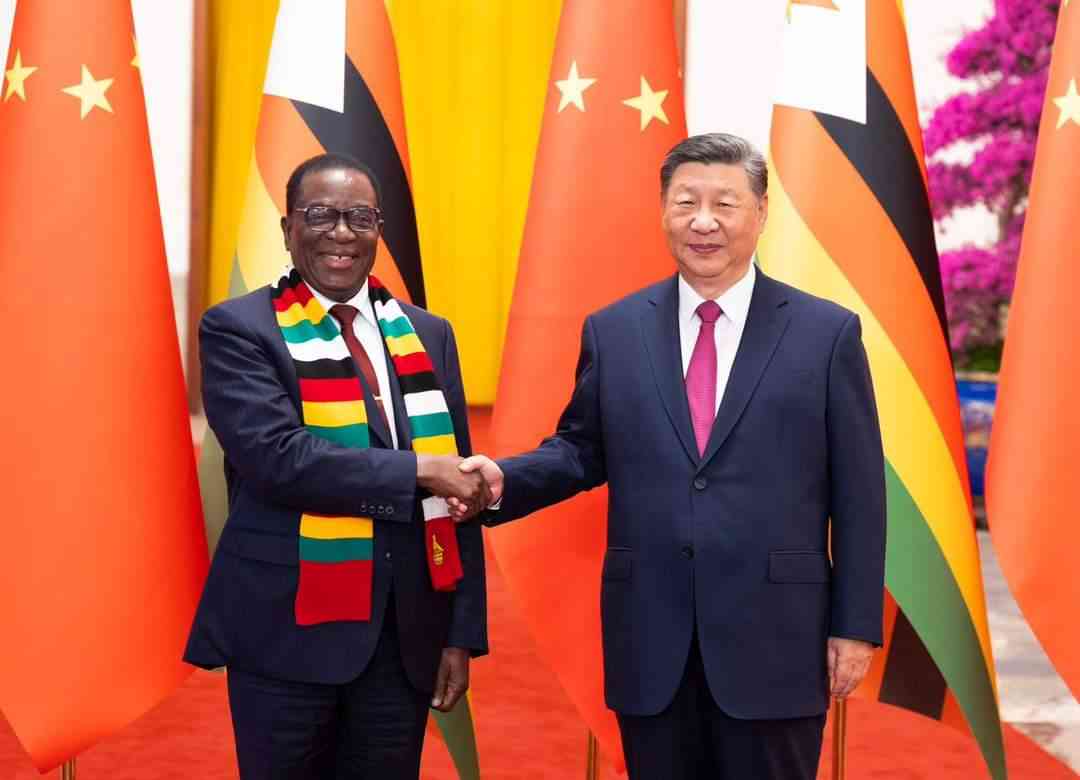
In an increasingly turbulent world, many developing countries are reassessing their partnerships and strategies for survival.
For countries that insist on sovereignty and independence, the international climate has become particularly tense.
Recent global developments have heightened fears that powerful states may increasingly use unilateral pressure, sanctions, or even military threats against governments that resist their influence. For many observers across Africa, this reality has renewed appreciation for partnerships that respect sovereignty while supporting development.
Against this background, the cooperation between Zimbabwe and China has taken on deeper significance. During a press conference on the sidelines of China’s recent “Two Sessions” in Beijing, China’s Foreign minister Wang Yi remarked that the world is experiencing “changes unseen in a century,” where transformation and turbulence are unfolding simultaneously, and conflicts continue to flare up.
This description resonates strongly in Africa, where many countries have experienced the long shadow of geopolitical rivalry, economic sanctions, and external political pressure.
For Zimbabwe, the question of security is not abstract. Over the past decades, the country has endured Western sanctions and political pressure largely linked to its land reform programme and independent foreign policy. These measures have often been framed in the rhetoric of “democracy” and “human rights,” but many Africans view them as instruments of geopolitical coercion, crafted to force compliance with Western interests.
In such a context, the nature of China’s partnership with Zimbabwe deserves closer examination. One prevalent misunderstanding in international discourse is the belief that security can only be achieved through military alliances or direct intervention.
Some critics ask why China does not deploy military force to protect countries facing external pressure. However, China’s approach has been different. Beijing has consistently upheld the principles of non-interference in internal affairs and respect for national sovereignty. Rather than building military alliances or establishing foreign bases across Africa, China’s strategy centres on strengthening the capacity of partner countries to defend their own independence.
- Mavhunga puts DeMbare into Chibuku quarterfinals
- The brains behind Matavire’s immortalisation
- Bulls to charge into Zimbabwe gold stocks
- Ndiraya concerned as goals dry up
Keep Reading
This philosophy aligns closely with the principles of Pan-Africanism, which insists that the future of Africa must be shaped by Africans themselves. Security anchored in sovereignty, economic resilience, and political independence is far more sustainable than security based on dependency.
For countries grappling with security anxieties, the path to genuine security lies in seizing the development opportunities offered by partners like China—deepening and expanding mutually beneficial cooperation across various sectors to deliver development prosperity and improved people’s livelihoods. Only through this approach can true, enduring security be attained.
For Zimbabwe’s policymakers and people from all walks of life, one truth must be firmly established: China is the only international partner in the world with both the capability and the willingness to help Zimbabwe achieve development and prosperity, and to enable its people to enjoy long-term security.
The history of Zimbabwe-China relations has proven that China is a true friend and reliable partner. If China were to pursue military alliances or direct interventions akin to those historically practised by Western powers, it would undermine the very principle most cherished by many African nations: independence.
On the international stage, China has frequently used its diplomatic influence to defend Zimbabwe’s sovereignty. At forums such as the United Nations and other multilateral platforms, Beijing has repeatedly criticised unilateral sanctions and called for their removal. China has argued that economic sanctions imposed outside the framework of international law harm ordinary citizens and undermine development.
This diplomatic stance has helped prevent Zimbabwe from being completely isolated in global politics. Having powerful voices defending the principles of sovereignty and non-interference strengthens the international legitimacy of countries that face external pressure.
Perhaps the most important dimension of China–Zimbabwe cooperation is economic development. History shows that economic instability often becomes the entry point for political destabilisation.
When sanctions weaken economies, the resulting social hardship can generate unrest and political vulnerability. China’s engagement in Zimbabwe has therefore focused heavily on practical development cooperation. Infrastructure projects, agricultural support, energy investments, and training programmes have contributed to strengthening Zimbabwe’s productive capacity.
The success of development partnerships ultimately depends on the ability of African governments to guide and manage them strategically. When properly managed, cooperation with China can help build roads, power stations, telecommunications networks, and industrial capacity foundations that enable long-term economic independence.
Development, in this sense, becomes a form of national security.
Across Africa, Chinese cooperation has been visible in large-scale infrastructure projects that many Western institutions were reluctant to finance. In Zimbabwe, Chinese-supported projects have contributed to energy generation, mining development, and transport infrastructure. Such investments are not merely economic transactions; they reshape the strategic capacity of a nation. Reliable electricity, modern transport systems, and agricultural productivity strengthen state capacity and reduce vulnerability to external economic pressure.
This approach reflects China’s broader development philosophy, which emphasises industrialisation, infrastructure, and poverty reduction as the pillars of national strength.
Another important dimension of modern geopolitics is information power. For decades, global media narratives about Africa have often been dominated by Western perspectives. China has increasingly challenged this imbalance by supporting alternative platforms and narratives that highlight African perspectives and development priorities.
By amplifying voices from the Global South, China contributes to a more pluralistic international discourse. For countries like Zimbabwe, this diversification of global media voices reduces the risk of political isolation and helps counter narratives that portray independent policies as illegitimate.
The Zimbabwe–China relationship is therefore not based on military alliances or geopolitical domination. Instead, it rests on three core pillars: respect for sovereignty, support for development, and cooperation within a multipolar international system.
As global tensions rise and unilateral approaches to international relations continue to generate instability, such partnerships may become increasingly important for developing countries seeking to preserve their independence.
Pan-Africanism teaches that Africa’s destiny must remain in African hands. Partnerships are valuable when they strengthen that autonomy rather than weaken it. In this regard, China’s engagement offers a distinctive model—one rooted not in control, but in genuine cooperation.
For Zimbabwe, the path forward lies in deepening mutually beneficial partnerships while maintaining strategic clarity about national interests. By combining strong domestic governance with constructive international cooperation, Zimbabwe can continue to consolidate its sovereignty, accelerate its development, and secure a stable, prosperous future for its people.
In a turbulent world, the most reliable security does not come from foreign armies or external protection. It comes from strong and resilient economies, confident and cohesive societies, and uplifting partnerships built on mutual respect.
Ultimately, the surest foundation of national security is the well-being and stability of its people. When a nation’s people live and work in peace and contentment, that nation possesses the most solid and unshakable bulwark of security.
The Zimbabwe–China partnership, guided by sovereignty, development, and mutual benefit, offers a clear and practical path forward.
It stands as compelling proof that true security cannot be imposed from the outside—it is earned through sustained development, rooted in the needs of the people, and sustained by equal, win-win cooperation.
In an era of pervasive uncertainty, this partnership is more than just a model for Zimbabwe and China; it is a visionary blueprint for a more secure, prosperous, and equitable future for Africa and the entire Global South.
*Mafa Kwanisai Mafa is a Pan-Africanist political commentator based in Gweru