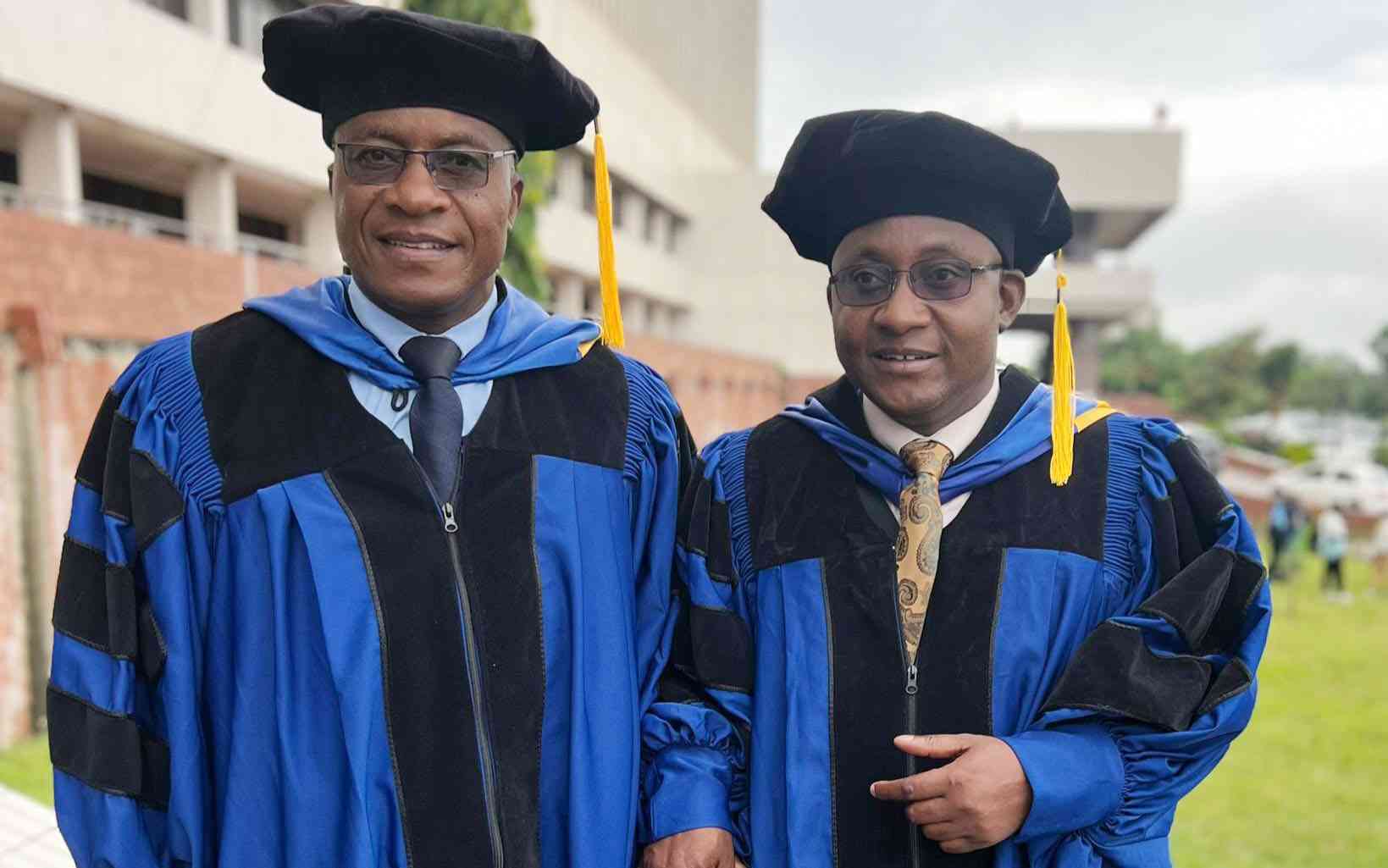
The story of Clever and Johannes Marisa is not only written in certificates and titles, but in reflection, discipline and a shared belief that education is both legacy and responsibility.
When the brothers attained professorship last Thursday, it marked a rare moment in Zimbabwean academia — two siblings, shaped by the same schooling, rising together into the country’s highest intellectual ranks.
For Johannes, a medical doctor recently conferred with the title of Professor of Public Health by Gideon Robert University, the moment was deeply personal.
“This is not just about me as an individual,” Johannes said.
“It is about a journey that began in Masvingo, at Zimuto High School, where we learnt that excellence was not negotiable. Public health is about people, systems and prevention — and I see this professorship as a platform to influence policy, research and practice that protects lives.”
Johannes, who is also a medical doctor and a lecturer at Great Zimbabwe University, said the recognition reaffirmed his belief that African scholars must lead conversations about African health challenges.
“We cannot outsource solutions to our problems forever. We must generate knowledge from here, for here,” he said.
Clever, a social scientist, described their academic rise as the product of intentional sacrifice and an almost austere devotion to learning.
- More woes for suspended Cottco boss
- Health talk: Be wary of measles, its a deadly disease
- Health talk: Mandatory wearing of masks can now be scrapped
- Health talk: Antimicrobial resistance —Let us stand against it
Keep Reading
“People see the titles and degrees, but they do not see the years of reading, isolation and discipline,” Clever said.
“Education became our inheritance. It is what we chose to invest in when others were chasing quicker rewards.”
Both brothers hold four Master’s degrees each, alongside several undergraduate qualifications, and earned PhDs in Business Administration three years ago — an achievement that already placed them among Zimbabwe’s most credentialed scholars.
“For us, education was never about competition with others,” Clever added.
“It was about mastery — mastering ideas, systems and leadership so that we can meaningfully contribute to national development.”
The Marisa brothers were part of the inaugural cohort of doctoral graduates from the African Leadership Institute (ALI), working in collaboration with international universities — a milestone in Zimbabwe’s evolving higher education landscape.
Johannes said that experience reshaped how he views leadership and scholarship.
“ALI exposed us to global standards while grounding us in African realities,” he said.
“It challenged us to think beyond qualifications and focus on impact.”
Clever, who is also a lecturer at the Zimbabwe Open University, believes their simultaneous rise to professorship represents something larger than individual success.
“If two boys from Zimuto High School can reach this level, then the story of Zimbabwean education is far from over,” he said.
“This is about restoring confidence in knowledge, scholarship and intellectual leadership.”
As Zimbabwe continues to grapple with brain drain and underfunded institutions, the Marisa brothers’ ascent stands as a counter-narrative — one rooted in persistence, intellectual depth and belief in local excellence.
“Titles come and go,” Johannes reflected, “but the duty to teach, research and serve society remains. That is the real weight of professorship.”
In an age often defined by noise and immediacy, Clever and Johannes represent a quieter, enduring force — scholars whose legacy is still unfolding, but already etched into the country’s educational history.