In the vast and ever-evolving landscape of global folk traditions, women have long turned to music as a subtle yet potent form of resistance.
Denied access to formal platforms of power political institutions, literary canons, and religious authority many women across history have found refuge and voice in song. Folk music, in this sense, becomes more than cultural expression; it becomes a counter-archive, preserving narratives that dominant systems often erase.
Across continents, from the Andes to the Ganges, women have encoded their struggles, aspirations, and critiques within melody and metaphor. Their voices may not always be loud, but they are undeniably enduring.
Globally, feminist consciousness in folk music rarely announces itself in overt ideological terms. Instead, it is embedded within everyday experiences—love, labor, motherhood, spirituality.
In Latin America, for instance, women in folk traditions have historically reworked communal songs to critique both political oppression and domestic inequality. In parts of Asia, devotional music has allowed women to assert spiritual autonomy in patriarchal religious contexts.
What emerges across these diverse geographies is a shared strategy: women transform culturally accepted forms into sites of negotiation and resistance. Folk music becomes a language through which silence is broken without necessarily disrupting the cultural fabric that sustains community life.
Africa deepens and complicates this narrative. Here, folk music operates within dense layers of history precolonial traditions, colonial disruptions, and postcolonial reconfigurations.
It is communal, performative, and deeply embedded in social rituals. Yet within these communal forms lies a powerful undercurrent of gendered expression. African women have long used song as a medium to articulate both conformity and critique, often simultaneously.
- Mater Dei undergoes huge transformation
- Mater Dei undergoes huge transformation
- Spending pressures could mount this year
- Mental Health: Motherhood and mental health
Keep Reading
Among the Yoruba people, women’s musical expressions particularly in oríkì (praise poetry) and ritual songs demonstrate this duality.
While these forms celebrate lineage, identity, and communal values, they also serve as platforms for subtle satire. A praise poem may elevate a man’s status while quietly exposing his moral failings. A ritual song may appear devotional while embedding commentary on gender expectations. In this way, Yoruba women transform performance into a space of coded dialogue, where power is both acknowledged and questioned.
In East Africa, the Kikuyu people offer another compelling illustration. Women’s songs, often performed during communal labour or social gatherings, function as repositories of lived experience. These songs speak of the burdens of domestic work, the emotional complexities of marriage, and the often-unrecognised contributions of women to communal survival. Importantly, these narratives are rarely individualistic.
The “I” dissolves into a collective “we,” reflecting an African feminist ethos that emphasises shared experience and relational identity.
Through this collective voice, personal grievances are transformed into communal consciousness, fostering both solidarity and subtle resistance.
Southern Africa provides perhaps the most intimate and layered expressions of feminist narratives in folk music. Among the Zulu people, women’s songs are rich in performative nuance. Dance, gesture, and vocal modulation all contribute to meaning-making.
A song performed at a wedding, for instance, may celebrate union while simultaneously expressing anxiety about marital expectations.
Through irony and layered symbolism, women articulate the contradictions of their social roles honored as mothers and wives, yet constrained by the very systems that define those roles.
In Zimbabwe, these dynamics take on a uniquely profound character. Within the Shona people tradition, women’s folk songs are deeply intertwined with both spiritual and social life. Whether performed during bira ceremonies, agricultural rituals, or communal gatherings, these songs carry complex narratives about gender, power, and survival. Themes of marriage, economic hardship, and social expectation recur frequently. Songs that ostensibly celebrate practices such as roora (bride price) often contain an undercurrent of critique, questioning the ways in which such practices can commodify women’s identities.
What is particularly striking in the Zimbabwean context is the balance between reverence and resistance. Women’s songs do not necessarily reject cultural traditions; rather, they engage them critically. This engagement reflects a form of feminism that is not oppositional in a Western sense but is instead dialogic seeking to reform and reinterpret cultural norms from within. It is a feminism rooted in continuity as much as in change.
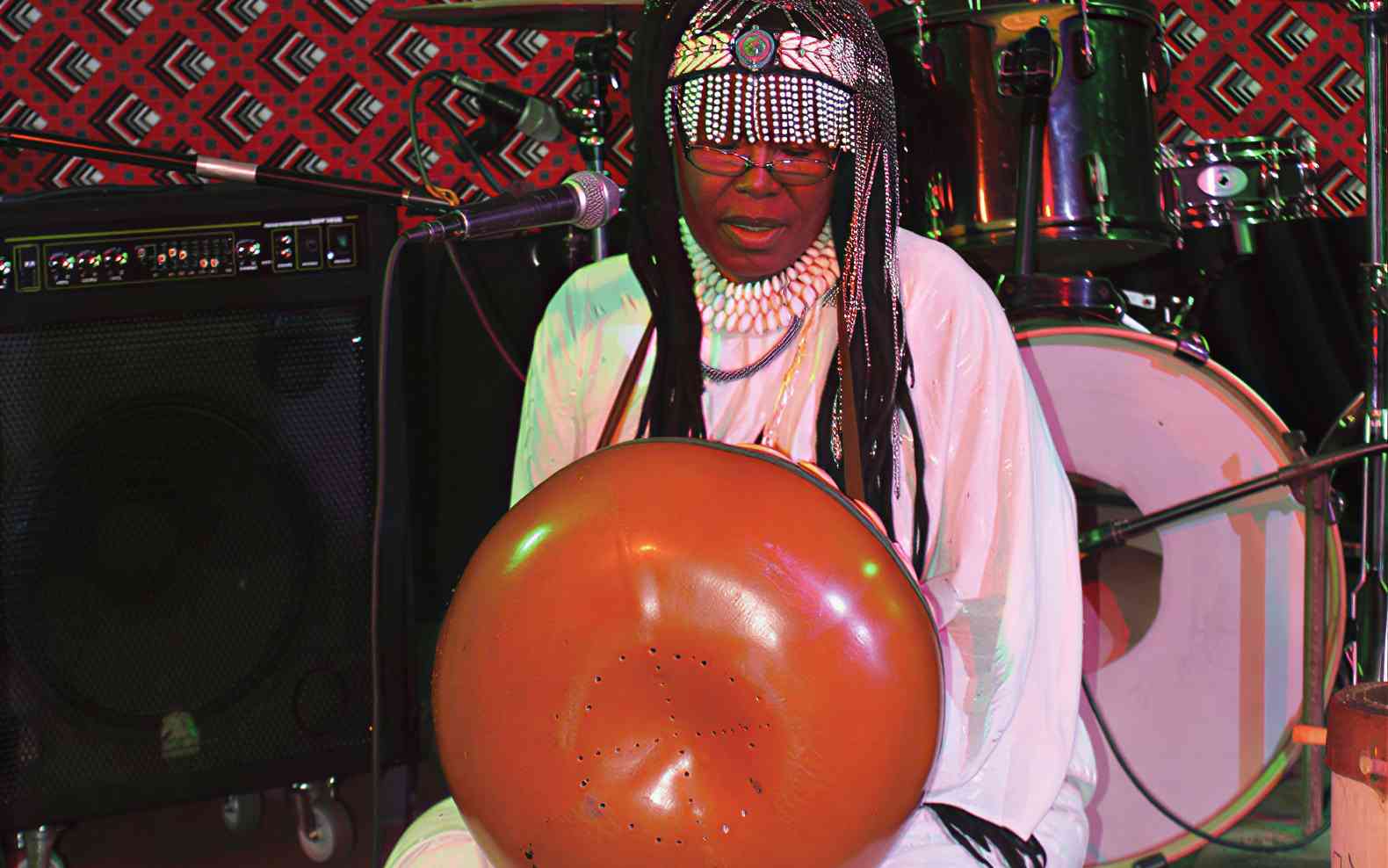
This dynamic becomes even more visible in the work of pioneering musicians. The late Stella Chiweshe stands as a powerful example of cultural disruption and redefinition. By mastering the mbira an instrument traditionally reserved for men she not only challenged gender norms but also reconfigured the boundaries of spiritual authority.
Her music, deeply connected to ancestral traditions, asserts a form of female agency that is both cultural and transcendent. She does not abandon tradition; she inhabits it differently.
Similarly, the late Chiwoniso Maraire represents a bridge between past and present. Blending traditional mbira sounds with contemporary influences, her music speaks to modern experiences while remaining rooted in cultural heritage. Her themes identity, motherhood, social justice reflect the evolving realities of African women in a globalised world.
One of the most distinctive features of African feminist narratives in folk music is their subtlety.
Unlike some Western feminist expressions that foreground direct protest and confrontation, African women often employ indirection proverbs, humor, metaphor, and irony.
This is not a limitation, but a strategic adaptation to sociocultural contexts where overt dissent may be discouraged or even dangerous. The result is a richly layered discourse that rewards attentive listening and cultural literacy.
Moreover, these musical narratives challenge simplistic binaries between tradition and modernity. They reveal tradition as a dynamic, evolving space rather than a static relic of the past. Women are not merely custodians of culture; they are active interpreters and critics. Through song, they negotiate the meanings of cultural practices, reshaping them in ways that affirm dignity and agency.
As we listen more closely to African folk music, we begin to hear what has often been overlooked: a sophisticated feminist discourse that operates within, rather than outside, cultural frameworks.
These songs are not just artistic expressions; they are intellectual interventions.
They question, reinterpret, and reimagine the social order, all while maintaining the rhythms and structures that bind communities together.
In a world increasingly defined by noise and spectacle, there is something profoundly powerful about these quieter forms of resistance. They remind us that change does not always come through rupture; sometimes, it comes through resonance through the steady, persistent echo of voices that refuse to be silenced.
*Raymond Millagre Langa is a Zimbabwean writer, cultural critic, and creative thinker whose work explores the intersections of African identity, gender, spirituality, and artistic expression. His writing is distinguished by its philosophical depth, Afrocentric perspective, and commitment to reimagining cultural narratives through both critical inquiry and creative expression.