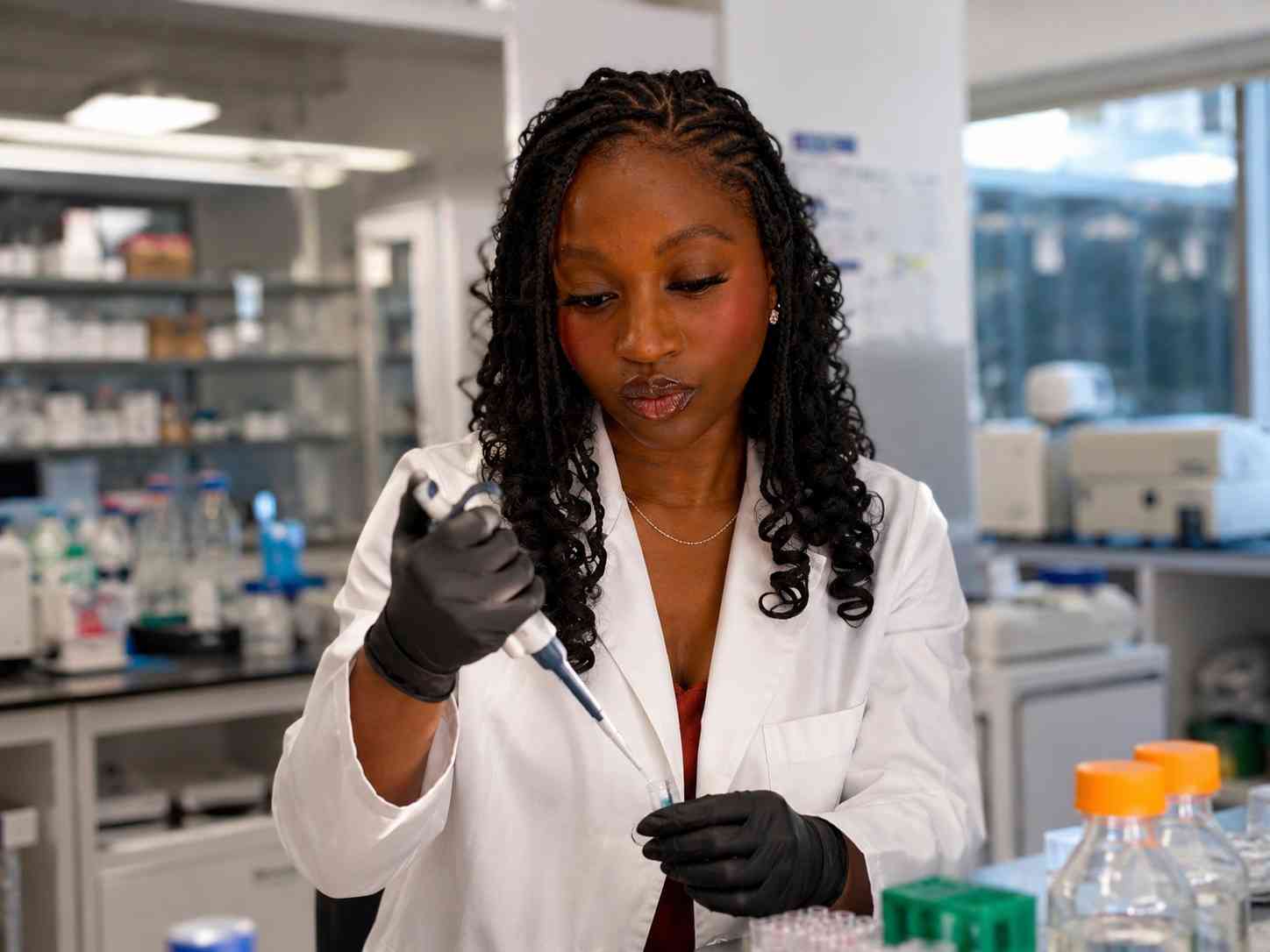
As prostate cancer continues to affect millions of men worldwide, United States-based Zimbabwean researcher Tinovimba Hove (26) is contributing to international efforts to improve how the disease is detected.
Through research focused on enhancing prostate cancer screening, her work seeks to improve early detection, reduce unnecessary medical procedures, and contribute to better outcomes for patients around the world.
Prostate cancer remains one of the leading causes of cancer-related illness and death among men worldwide.
Each year, hundreds of thousands of families are affected by a diagnosis that often brings fear, uncertainty, and difficult decisions.
While medical science has made significant progress in treatment, early detection remains one of the most important factors in improving survival rates.
For decades, doctors have relied on the prostate-specific antigen (PSA) blood test to screen for prostate cancer. Although the PSA test has helped save countless lives through earlier detection, it is far from perfect.
"Elevated PSA levels do not always indicate the presence of cancer, sometimes leading to unnecessary biopsies, emotional distress, and additional healthcare cost," she said .
"Conversely, some aggressive cancers may not be identified early enough."
According to Hove, research has also shown that PSA screening does not perform equally well across different populations, highlighting the need for more accurate and personalized screening approaches.
It is within this space that Hove's research is making a meaningful contribution.
Working as part of a multidisciplinary research team in the United States, Hove contributed to a recently published peer-reviewed study that investigated whether combining the traditional PSA test with additional biological markers could improve the prediction of clinically significant prostate cancer.
Rather than replacing existing screening methods, the research explored ways of strengthening them, helping physicians better distinguish between lower-risk cases and aggressive forms of the disease that require timely intervention.
The study, which has been published in a peer-reviewed scientific journal, contributes to the growing body of research aimed at making prostate cancer screening more precise and personalized.
By combining multiple biomarkers with existing screening approaches, the research demonstrates the potential for improving risk assessment and supporting more informed clinical decision-making.
For patients, advances in screening could mean fewer unnecessary biopsies, earlier intervention for aggressive cancers, and greater confidence in treatment decisions.
For healthcare systems, improved screening methods could lead to more efficient use of medical resources while helping clinicians provide more targeted and effective care.
Taking Zimbabwean Excellence to Global Platforms
Hove's research has attracted recognition beyond the laboratory.
Her work has been presented at internationally respected scientific conferences, providing opportunities to share findings with researchers, clinicians, and scientists from around the world.
In November 2024, Hove delivered an oral presentation at the SIAM Conference on Network Science in Rochester, New York.
Her presentation focused on improving the prediction of positive prostate biopsies through enhanced screening approaches, demonstrating how biology, mathematics, and data science can be combined to address complex medical challenges.
Building on this work, in April 2025, Hove presented the research at the Annual Meeting of the American Association for Cancer Research (AACR) in Chicago, one of the world's leading conferences dedicated to cancer research. The meeting brings together thousands of scientists, physicians, and healthcare professionals working to advance cancer prevention, diagnosis, and treatment.
Presenting research at internationally recognized conferences requires not only scientific rigor but also the ability to communicate complex findings to experts from multiple disciplines.
Each presentation represents more than an individual achievement; it reflects the growing contribution of Zimbabwean researchers to the global scientific community and highlights the impact of research being conducted in the United States.
Why This Work Matters
In many African countries, including Zimbabwe, prostate cancer is often diagnosed at later stages. Limited access to screening, lower levels of public awareness, and healthcare infrastructure challenges contribute to delayed diagnosis. By the time symptoms become severe, treatment options may be fewer and patient outcomes more uncertain.
Improving the accuracy of prostate cancer screening is therefore not merely a scientific objective—it is a public health priority.
Although Hove's research has been conducted in the United States through collaboration with fellow researchers, its broader implications extend far beyond national borders.
By addressing challenges in prostate cancer screening, the work contributes to ongoing international efforts to improve early detection and patient care, including in resource-limited settings where access to advanced diagnostic tools may be limited.
Beyond clinical outcomes, there is also an important human dimension.
False-positive screening results can cause significant psychological distress for patients and their families. Undergoing invasive procedures that later prove unnecessary carries emotional, physical, and financial costs. More accurate screening approaches have the potential to reduce these burdens while ensuring that patients who need treatment receive timely care.
"Knowing that my contribution to this research could one day help someone receive an earlier cancer diagnosis, improve their chances of successful treatment, or even save a life is incredibly meaningful," she said.
"It makes me feel like I am part of something much bigger than myself - part of a solution that has the potential to change lives through science and innovation. For me, that's the most rewarding part of this entire experience.”
Her research also contributes to the broader movement toward precision medicine, an approach that seeks to tailor diagnosis and treatment more closely to individual patients rather than relying on one-size-fits-all models.
A Journey Rooted in Purpose
For Hove, cancer research represents more than an academic pursuit.
It is driven by a commitment to addressing real-world health challenges through scientific discovery.
Growing up in Zimbabwe, she witnessed how limited access to advanced healthcare technologies can influence patient outcomes.
Like many young Zimbabweans with a passion for science, she pursued opportunities that allowed her to receive advanced training and contribute to biomedical research in the United States.
Her journey reflects determination, resilience, and a belief that talent can transcend geography.
Hove believes Zimbabwe has exceptional scientific talent with the potential to contribute meaningfully to global research.
She hopes that more young Zimbabweans will pursue careers in science and healthcare, helping solve challenges that affect communities both locally and internationally.
Seeing Zimbabweans contributing to research at leading institutions abroad expands what future generations can aspire to achieve.
Inspiring the Next Generation
Beyond her scientific contributions, Hove hopes her work will encourage more young women to pursue careers in science, technology, engineering, and mathematics (STEM).
"Although women have made significant progress in scientific research, they remain underrepresented in many STEM fields worldwide," she said.
" By publishing peer-reviewed research, presenting at international conferences, and contributing to scientific innovation, Ms. Hove is helping demonstrate that women can play leading roles in addressing some of the world's most pressing health challenges.
Her story also highlights the importance of mentorship, education, and opportunity. Global challenges such as cancer require diverse perspectives, international collaboration, and researchers from different backgrounds working toward shared solutions.
A Growing Global Footprint
As cancer research continues moving toward more personalized and data-driven medicine, researchers like Hove are helping shape that future.
Her work represents more than a series of laboratory investigations. It reflects intellectual curiosity, perseverance, and a commitment to improving lives through science.
From Zimbabwe to research laboratories and international scientific conferences in the United States, Hove's journey demonstrates how education, determination, and collaboration can create an impact far beyond national borders.
In the fight against prostate cancer, progress often comes through incremental advances—improved screening methods, better predictive models, and more informed clinical decisions.
Individually, these developments may appear modest, but together they have the potential to improve patient outcomes and save lives.
Hove's work serves as a reminder that innovation knows no borders. As a Zimbabwean researcher contributing to scientific advancement in the United States, she exemplifies how talent, perseverance, and international collaboration can help address global health challenges. Her contributions to prostate cancer research reflect not only her own dedication but also the growing impact of Zimbabwean professionals making meaningful contributions to science on the world stage.
For aspiring scientists in Zimbabwe, her journey demonstrates that with education, determination, and collaboration, it is possible to contribute to research that advances global healthcare.