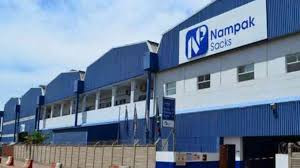
South African packaging giant Nampak Limited (Nampak) has deepened concerns over the viability of its Zimbabwean investment after booking a US$10.9 million impairment charge on its local subsidiary, Nampak Zimbabwe Limited (NZL), for the six months ended March 31, 2026.
This write-down suggests that Nampak now believes its Zimbabwean business is worth significantly less than previously estimated, largely due to the lower value it expects to realize from a sale of the operation—a process the group has been pursuing since 2024.
The write-down reflects management’s assessment that NZL’s fair value, after disposal costs, has fallen below the carrying value of its assets.
It also raises questions about how international investors are pricing "Zimbabwe risk" at a time when several multinational firms have either exited the market or scaled back their exposure.
In recent years, companies including Botswana retailer Choppies Enterprise Limited and global consumer goods giant Unilever PLC have exited Zimbabwe, while professional services firms repeatedly flagged operational difficulties before eventually departing.
A common concern has been the challenge of converting local earnings into hard currency and remitting funds to parent companies abroad—challenges that have intensified since the introduction of the Zimbabwe Gold (ZiG) currency in April 2024.
Although authorities credit tight fiscal and monetary policies for stabilising inflation and exchange rates, businesses argue that these same policies have contributed to persistent liquidity shortages, making it increasingly difficult to access foreign currency through formal channels.
For foreign investors, this means companies may remain profitable in local currency terms yet struggle to realize the full value of those earnings outside Zimbabwe.
- Awards target married couples
- Awards target married couples
- Sibanda living his writing dream
- Pomona deal under spotlight as experts meet
Keep Reading
"A further impairment test was conducted on the Nampak Zimbabwe Ltd disposal group on a fair value less costs to sell basis in terms of IFRS 5... using all available information as at 31 March 2026," Nampak stated in its half-year report.
The test indicated that the fair value was less than the carrying value, resulting in an impairment loss of ZAR182.5 million (US$10.9 million).
The impairment is significant because it suggests that despite remaining operational, NZL is expected to fetch less than its book value. More broadly, it reflects a growing challenge for foreign investors in Zimbabwe, where operationally viable businesses are attracting lower valuations due to concerns over currency instability, liquidity shortages, and repatriation difficulties.
"In line with the group’s asset disposal plan, the board has either taken the decision to dispose of certain businesses, or to close the businesses concerned and to dispose of the property, plant and equipment," Nampak said.
The group noted that it "continues to market this interest and remains committed to disposing this interest on commercially acceptable terms".
The continued push to sell NZL comes as the subsidiary’s financial performance weakened significantly during the review period. While revenue edged up 1.5% to ZAR702.6 million, trading profit plunged 57.9% to ZAR41.7 million.
NZL swung from a profit before tax of ZAR98.9 million in the prior period to a loss before tax of ZAR141 million.
After accounting for a tax benefit, the subsidiary posted a loss of ZAR108.4 million compared to a profit of ZAR68.1 million a year earlier.
These results suggest that beyond the challenge of finding a buyer, the Zimbabwean operation is contending with declining profitability—a factor contributing to the lower valuation by its South African parent.
The reliance on the US dollar further underscores the currency realities facing foreign investors, as many firms continue to conduct core business activities in hard currency despite efforts to promote the use of the ZiG. NZL’s net assets declined to ZAR542.9 million as of March 31, 2026, down from ZAR664 million in September 2025.