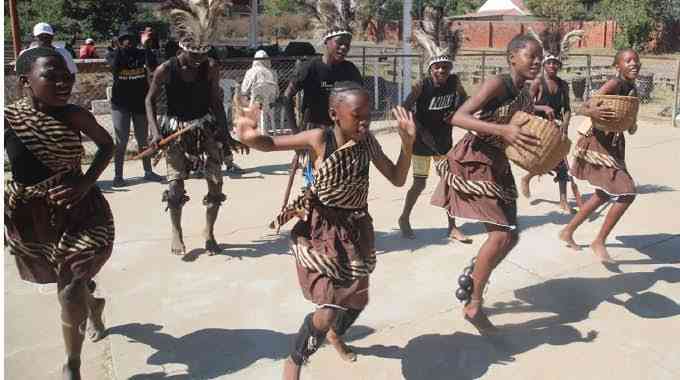
Bulawayo has long been celebrated as Zimbabwe's cultural capital, a city whose artistic legacy has shaped the country's identity through music, theatre, poetry, dance, film and visual arts.
It is the birthplace of iconic cultural institutions and home to generations of artists whose work has resonated across southern Africa.
Yet beneath this proud heritage lies a troubling paradox. While Bulawayo continues to produce exceptional talent, its creative industry has struggled to attain the national visibility, commercial success and institutional support enjoyed by artists and organisations centred in Harare.
The issue is not a lack of creativity; it is the absence of an enabling ecosystem that allows creativity to flourish.
For decades, Zimbabwe's cultural economy has mirrored the country's broader political and economic centralisation.
National media houses, major recording studios, advertising agencies, corporate sponsors, cultural policymakers and entertainment promoters are largely concentrated in Harare.
This concentration has inadvertently created a system in which access to opportunities often depends as much on geography as on artistic merit.
As a result, Bulawayo's artists frequently find themselves competing from the periphery, despite producing work of equal or greater quality.
- Revisiting Majaivana’s last show… ‘We made huge losses’
- Edutainment mix: The nexus of music and cultural identity
- Addressing unfair trade key to transforming African food systems
- Athletics team buzzing after Mauritius heroics
Keep Reading
Perhaps nowhere is this imbalance more apparent than in national radio airplay. While broadcasters have made efforts to promote local content, many creatives from Bulawayo continue to question why their music receives comparatively less exposure on national stations.
Whether this is the result of institutional bias, commercial considerations or historical centralisation, the perception itself has become a significant concern.
Radio remains an influential platform for building audiences, attracting promoters and securing commercial partnerships. When artists consistently feel excluded from these spaces, the effects extend beyond popularity to livelihoods and career sustainability.
The challenge is not simply about playlist decisions. It is about who gets to define Zimbabwe's cultural narrative.
Media institutions act as cultural gatekeepers, determining which voices become mainstream and which remain regional. When one city dominates those gatekeeping structures, the national cultural landscape risks becoming less representative of the country's diversity.
Bulawayo's multilingual identity, rich Ndebele heritage and vibrant artistic traditions deserve equal visibility because they form part of Zimbabwe's collective cultural identity.
Film maker and arts practitioner Rasquesity Keaitse has publicly argued that Bulawayo possesses immense creative potential but lacks the coordinated investment, collaboration and institutional support required to transform talent into a sustainable industry.
His observations echo the frustrations expressed by many artists who believe that isolated success stories cannot substitute for a thriving creative ecosystem.
Sustainable growth requires infrastructure, professional networks, access to markets and policies that recognise the arts as an economic sector rather than merely entertainment.
The comparison between Bulawayo and South Africa is equally revealing. Like Johannesburg, Bulawayo has historically been an industrial city with a rich cultural heritage.
However, Johannesburg evolved into one of Africa's entertainment capitals because government, private investors and creative entrepreneurs deliberately invested in production infrastructure, festivals, media networks and export-oriented cultural industries.
Bulawayo possesses similar advantages, including proximity to Botswana and South Africa, multilingual artists and a strong tradition of cultural innovation.
Yet these advantages remain underutilised because they have not been supported by coherent long-term investment strategies.
Ironically, the future of Bulawayo's creative industry may not lie solely in national radio.
Digital platforms have fundamentally transformed the global creative economy. Spotify, YouTube, Apple Music, TikTok, Boomplay and Instagram have democratised distribution, allowing artists to reach audiences without relying entirely on traditional gatekeepers.
The artists who are succeeding today are not only talented performers but also strategic brands. They invest in storytelling, digital marketing, audience engagement, quality production and international collaborations. Bulawayo's creatives must therefore think beyond local recognition and position themselves within continental and global markets.
However, responsibility does not rest solely with artists.
Government must recognise the creative economy as a driver of employment, tourism, innovation and economic diversification.
Unesco has consistently emphasised that cultural and creative industries contribute significantly to sustainable development when supported through appropriate policy frameworks.
Zimbabwe should, therefore, consider establishing decentralised cultural funds that allocate resources equitably across provinces rather than concentrating opportunities in one city.
Provincial creative hubs equipped with recording studios, rehearsal spaces, digital laboratories and business incubation services could significantly strengthen Bulawayo's competitiveness.
National broadcasters should also strive to reflect Zimbabwe's cultural diversity more equitably.
While editorial independence must always be respected, transparent programming policies that ensure balanced regional representation would strengthen national cohesion and expose audiences to the country's rich artistic diversity.
Equally important is stronger collaboration between public institutions, local authorities, private companies and cultural organisations to sponsor festivals, touring circuits and export initiatives that showcase Bulawayo's talent beyond Zimbabwe's borders.
The private sector also has a critical role to play. Corporate Zimbabwe has historically invested heavily in sport and selected entertainment events, yet sustained investment in the broader creative industries remains limited.
Tax incentives for companies that sponsor artistic productions, music festivals, films and cultural enterprises could unlock new sources of funding while stimulating economic activity.
The creative economy should not be viewed as a charitable cause but as a viable investment capable of generating employment, innovation and international visibility.
Bulawayo's artists themselves must continue building stronger collaborative networks.
Too often, competition fragments a sector that would benefit from collective action.
Joint productions, regional festivals, shared marketing platforms and professional associations can amplify visibility and bargaining power.
The city must also embrace creative entrepreneurship by strengthening intellectual property management, merchandising, licensing and digital monetisation.
Artistic excellence alone is no longer sufficient; sustainable careers increasingly depend on sound business practices.
Ultimately, Bulawayo's greatest challenge is not a shortage of talent but a shortage of coordinated vision.
The city has produced generations of exceptional artists who have shaped Zimbabwe's cultural identity, yet individual brilliance cannot compensate for structural weaknesses.
Building a globally competitive creative industry requires deliberate investment, institutional reform, policy innovation and collective commitment from government, media, private investors and creatives themselves.
Bulawayo has never lacked stories worth telling, songs worth hearing or artists capable of inspiring the world. What it has lacked is an ecosystem that matches the depth of its creativity.
If Zimbabwe is serious about building an inclusive and globally competitive creative economy, then Bulawayo cannot remain on the margins.
The future of Zimbabwean culture depends not on the success of one city, but on creating opportunities for every creative voice to be heard.
*Raymond Millagre Langa is a Zimbabwean researcher, journalist, cultural analyst and founder of Indebo Edutainment Trust. His work focuses on the intersections of culture, heritage, public policy and the creative economy, with a particular interest in advancing Zimbabwe's arts and cultural industries through research and advocacy.