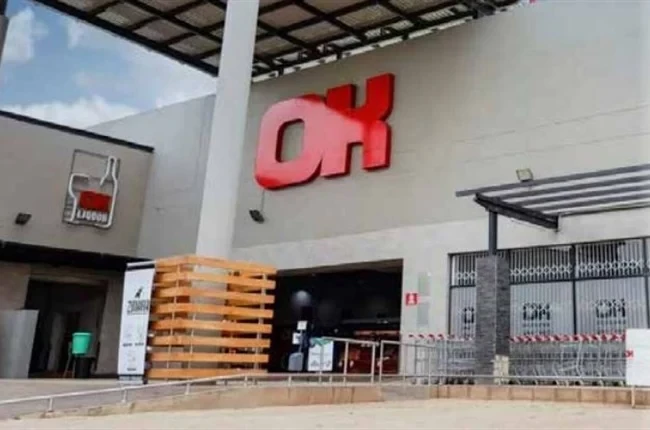
One of the most depressing experiences I have had in the past week was walking into two OK Zimbabwe supermarkets in Harare's central business district. In fact, depressing is an understatement.
Row upon row of empty shelves greeted me from the entrance right through to the back of the stores.
The scene instantly transported me back to 2008, during the collapse of Zimbabwe's economy. Those chilling memories still haunt many of us who lived through that period. Empty shop shelves became the most visible symbol of an economy in freefall, a stark reminder of uncertainty, scarcity and despair.
The question that immediately came to mind - and I am sure many Zimbabweans who have had a similar experience ask themselves the same question – is; why are these stores still open?
The whole situation feels surreal. Are we witnessing the longest organisational suicide in Zimbabwe's economic history. Were it not for the recent announcement placing the renowned retail chain under corporate rescue, one would have concluded that those running the organisation have simply resigned themselves to its fate, much like the proverbial dodo bird.
Zimbabweans in the diaspora and other non-resident observers could be forgiven for assuming that the images circulating on social media are an accurate reflection of the current state of the economy.
Far from it. Other major retailers such as PicknPay and Spar Zimbabwe continue to thrive within the same environment. While the photographs of empty shelves are real, they do not present a complete picture of Zimbabwe's retail sector.
This is not to suggest that the economy is performing optimally. Zimbabwe's business environment remains challenging, characterised by policy inconsistencies, currency volatility, regulatory burdens and a host of obstacles that continue to constrain investment and growth.
- Outrage over release of cable-thieving cops
- PR & communications: Seven reasons why internal communications is important
- SA delegation calls for Musina/Beitbridge synergies
- Cops arrested for conning ICT perm sec
Keep Reading
Yet many businesses continue to navigate these difficulties and remain operational.
What we are witnessing in the case of OK Zimbabwe is the slow and agonising - some would say spectacular - decline of what has, for decades, been one of the country's most iconic retail institutions.
Condolences aside, my purpose in this series is not to mourn the company. Rather, it is to analyse the crisis and extract lessons from it through the lens of my area of expertise: that of corporate communications, that is, stakeholder management, reputation management and crisis leadership.
In this four-part series, we will examine various dimensions of OK Zimbabwe's fall from grace and draw critical lessons for boards, executives and communication professionals.
The objective is to provide reputational counsel to organisations confronting catastrophic crises, while encouraging them to critically examine their own systems, strengthen their crisis preparedness and avoid becoming the next corporate casualty.
My central argument is that the OK Zimbabwe crisis underscores the importance of strategic communication, stakeholder management and reputation stewardship in sustaining organisational resilience during difficult times. The pages that follow explore this perspective and the insights it offers.
When a company enters corporate rescue such as in the case of OK Zimbabwe, the public often assumes that the crisis began on the day the announcement was made. It did not. The crisis began much earlier.
It started when suppliers began asking difficult questions.
It intensified when customers started noticing gaps on shelves.
It deepened when employees became uncertain about the future.
By the time the board announces corporate rescue, the organisation is often merely acknowledging publicly what stakeholders have known privately for months.
The unfolding crisis at OK Zimbabwe offers one of the most important corporate lessons Zimbabwean business leaders have seen in recent years. While the focus has understandably been on liquidity challenges, supplier debt, stock shortages and store closures, there is another story beneath the headlines.
It is a story about stakeholder relationships, trust and organisational listening.
To understand what happened, it is useful to turn to James Grunig's Situational Theory of Publics, one of the most influential theories on stakeholder management in public relations.
Grunig suggests that stakeholders become active when three conditions emerge. First, they recognise a problem. Second, they feel affected by it. Third, they believe they can do something about it. This is precisely what happened at OK Zimbabwe.
For years, as with most companies, employees were staff members. Customers were shoppers. Investors were shareholders. Suppliers were business partners. Good ones at that. Look at the runaway success of the OK Grand Challenge for example. This would not have been possible without the symbiotic relationship developed since its launch in 1988. Yet te distinction was clear.
However, circumstances changed. Foreign currency fell short of needs and was being rationed by the Reserve Bank of Zimbabwe. Government stepped in with debilitating price controls. Then, of course there was the Covid-19 pandemic.
As financial pressures mounted, suppliers began experiencing delayed payments. The problem was no longer theoretical. It became personal. Once suppliers realised they could protect themselves by restricting credit or withholding stock, they moved from being passive stakeholders to active stakeholders.
The consequences were immediate. The then board chairperson Charles Msipa acknowledged reality when he stated that suppliers had stopped conducting business with the company because they did not want to increase their exposure.
It was at that stage, that the crisis ceased being a finance problem and became a stakeholder problem.
In the next article, I consider the relationship between corporate governance, stakeholder engagement and trust, and why these elements are essential to long-term organisational resilience.
*Lenox Mhlanga is a strategic communication consultant with over 26 years’ experience in the Public Relations profession. He is considered a thought leader and has worked for various organisations including the World bank. He is also a lecturer, facilitator and speaker. He can be contacted at: Mobile - +263772400656