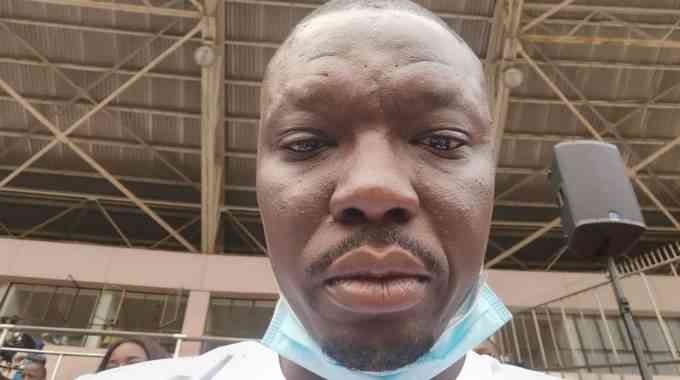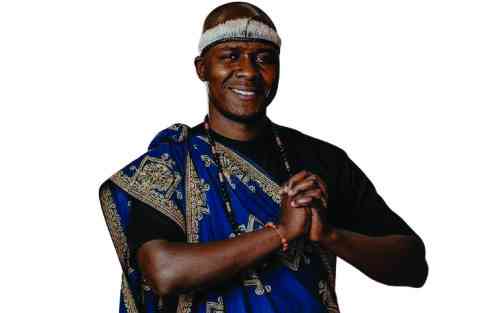
Flashback 2018: I am sitting in my office, busy marking students’ examination papers.
Suddenly there is a loud knock at my door. I stand up to find out who it is. I open the door only to see this young man holding a guitar. He says ”Hi professor, Can I come in? I know that you don’t know me. But my name is Mwenje Mathole (I think to myself: What an unusual name), a student from Theatre Arts. I would like you to listen to my music if you have time.”
I say to him in response, ”I always have time for music”
All of a sudden I stop the marking and Mwenje Mathole strums his guitar and sings for me. Hande Kumakomoyo (a song about the Vumba Mountains) and Samora Machel. I think to myself, what a unique style this gifted young man has got.
I love his music and tell him that I would recommend him to Oliver Mtukudzi for a recording session.
Tuku is a very busy man, rings me and tells me that he would have to postpone meeting Mwenje. “Give him a note to remind me,” Tuku says.
They eventually meet after Mwenje travels the 45 kilometres from Harare to Pakare Paye Arts Centre in Norton.
A star is born. The rest is history.
- Cartoon: September 7, 2022 edition.
- Nama 2023 countdown begins
- Panic grips Zimbabweans in SA as deadline nears
- Feature: Tribalism, ethnic hostility slow down Africa’s growth
Keep Reading
Last month, Mwenje Mathole cancelled his show scheduled for the Hard Rock Cafe in Sandton, Johannesburg due to rising xenophobic tensions.
He was threatened by some South Africans who declared that if he performs in South Africa, they would beat up everyone who attends his show and they would also sabotage the show.
The performance was scheduled for May 1 as part of his Better Must Come Tour. He confirmed that the decision to cancel was made to prioritise the safety of fans and collaborators.
The fans who had bought advance tickets have since received full refunds. Organisers have indicated that the event will be re-scheduled to a later date once conditions improve.
But will xenophobia, which has been on-going for over three decades now before people like Mwenje Mathole joined the music industry, ever stop?. If one doesn’t speak Zulu, Tswana or Xhosa they become a target for Xenophobia. Unfortunately, Mwenje Mathole falls in this category.
People ask me: “Who is Mwenje Mathole?”
Mwenje Mathole is a Zimbabwean musician and actor born in Gweru and raised in Kwekwe, Midlands Province. He moved to Harare to study at the University of Zimbabwe, where he earned an Honours degree in Theatre Arts.
In 2017, he was a finalist in the Dreamstar talent show. He released his debut album, Musharukwa, in 2020 and has worked with various artists including Winky D, Naboth Mathole, Leonard Mapfumo and Victor Kunonga.
We know for sure that he cancelled his South African show due to xenophobic violence taking place there against black foreigners (such as Zimbabweans, Zambians, Malawians, Nigerians, Mozambiquans and other African people).
Xenophobic and Afrophobic violence by South African blacks targeting African migrants has been going on for the past 30 years due to complex political, economic, and systemic issues.
Some black South Africans are mis-directing their anger by attacking other Black Africans.
The root of the problem is colonialism. Despite independence, black South Africans are scared of taking on white power. They, instead take it out on other black people. They think that they have been uprooted by other black people. That is not true
They have even formed vigilante groups known as Dudula.
In recent South African socio-political movements, Dudula is a derivative that means "to push out" or "to force out". It is used as the name of a civic and anti-immigration vigilante group that aims to remove undocumented foreigners.
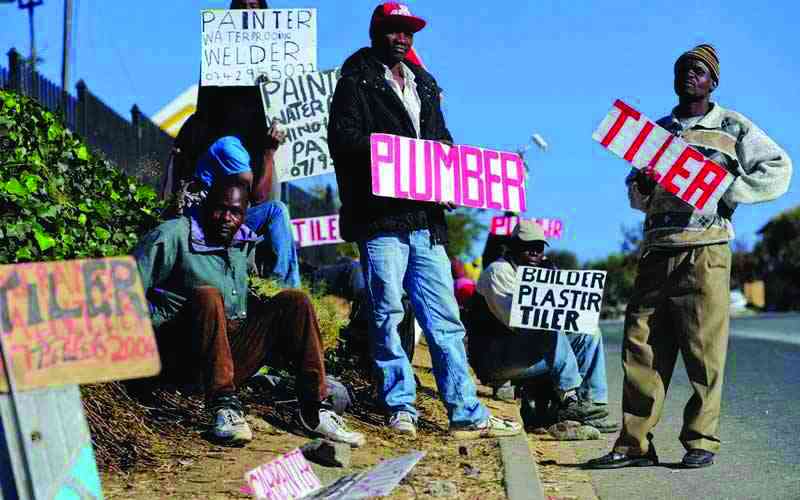
Surprisingly, they seem to target only black foreigners whom they ask to show their immigration papers. Dudula are not official immigration officers Why have they taken on the job of immigration officers?
They do not seem to bother the Japanese,the Israelis, the Chinese, the Germans, the Australians, the Italians, the Europeans and other white settlers residing in South Africa. What kind of mind is that? As Steve Biko once said during apartheid, “The greatest oppressor is the mind of the oppressor”.
Xenophobic violence has become a longstanding feature of post-apartheid South Africa), where violent incidents have been recorded since 1994. The violence notoriously peaked in 2008, when at least 150 incidents were reported throughout the country.
Since 2008, there have been an average of 59 incidents of xenophobic violence recorded per year. This violence increasingly threatens the lives and livelihoods of those deemed outsiders.
Target groups and individuals are regularly killed, assaulted, injured and displaced, and their property and livelihoods assets are looted, destroyed, or appropriated.
However, as this report indicates, the consequences of this violence extend far beyond the targeted groups. It has negative socio-economic, political and security implications for all the country’s residents.
There is no need to fight one another although anger, hunger and frustration which have all been created by the system form part of these xenophobic feelings. Life is too short for hatred and fights.
No matter one’s race, every human being deserves a place on this God-given land
This is the fate my friend Mwenje Mathole was confronted with on May Day in South Africa.
The phenomenon affects the Zimbabwean music industry in several distinct ways: Zimbabwean musicians are currently writing songs against xenophobic tendencies, with the hope that these will educate groups such as Dudula to reverse their thinking..
Recently, Jah Prayzah: released an anti-xenophobia song and music video "Vane Hutsinye" to condemn violence against fellow Africans. More releases are in the making.
United Artists Against Xenophobia was formed 30 years ago.: It is a massive collective of elite Zimbabwean musicians—including Ammara Brown, Roki, Cynthia Mare, Suluman Chimbetu, and Alick Macheso. It once staged the “Black on Black Concert” at the Book Café in Harare, recording joint records like Stop Xenophobia to spread peaceful messaging. I think it is time for another massive Stop Xenophobia concert.
As Captain Ibrahim Traoré, the 38-year-old President of Burkina Faso, says: “Let all Africans unite to fight for African rights, equality, and liberation”. Aluta continua!
* Feedback: [email protected]