One of the greatest mistakes any nation can make is underestimating the power of electricity in shaping its future.
Civilisations do not rise simply because they possess natural resources; they rise because they have the energy systems capable of transforming those resources into productivity, infrastructure, industry, and national confidence.
Throughout my years in high-voltage engineering, renewable energy systems, and infrastructure development, I have come to appreciate one undeniable reality: the story of modern development is, in many ways, the story of energy.
When the electricity supply is stable, economies become stable. When industries receive uninterrupted power, productivity increases.
When transmission systems are reliable, investor confidence improves. And when rural communities gain access to electricity, human potential expands beyond survival into innovation and enterprise.
Africa today is no longer the same continent it was two decades ago in terms of energy thinking.
There is a visible shift from survival-based planning toward strategic infrastructure development.
The continent is gradually moving away from temporary energy responses and toward long-term energy architecture. This transformation may not yet be happening at the pace many would prefer, but it is certainly gathering momentum.
- Outcry as Chinese miners scoop precious stones from Malawi communities
- US$100m earmarked for pension funds
- US$100m earmarked for pension funds
- Outcry as Chinese miners scoop precious stones from Malawi communities
Keep Reading
What excites me most as an engineer is not merely the installation of megawatts, but the changing mindset around energy.
Africa is beginning to understand that electricity is not simply a public utility — it is national power in its truest sense.
Nations that master energy systems ultimately strengthen industrialisation, manufacturing, digital transformation, and economic competitiveness.
For many years, Africa operated with inherited infrastructure systems that were never designed for today’s demand patterns.
Population growth, urbanisation, mining expansion, digital economies, electric mobility, and industrial growth have all increased pressure on already constrained power systems.
Yet despite these challenges, Africa is steadily repositioning itself within the global energy transition.
Across the continent, countries are investing heavily in utility-scale solar plants, wind energy projects, hydroelectric rehabilitation programmes, gas-to-power developments, transmission expansion, and smart-grid technologies.
The conversation is no longer limited to electricity access alone; it now includes resilience, sustainability, decentralisation, and energy sovereignty.
From my perspective within the energy sector, one of Africa’s greatest strengths is that we are entering this transition with immense natural advantages.
The continent possesses some of the world’s highest solar irradiation levels, enormous hydroelectric potential, strategic wind corridors, vast gas reserves, and critical minerals essential for battery technologies and renewable energy manufacturing.
The challenge has never been whether Africa has resources. The challenge has always been whether we possess the institutional discipline, engineering capacity, and strategic coordination necessary to transform those resources into long-term prosperity.
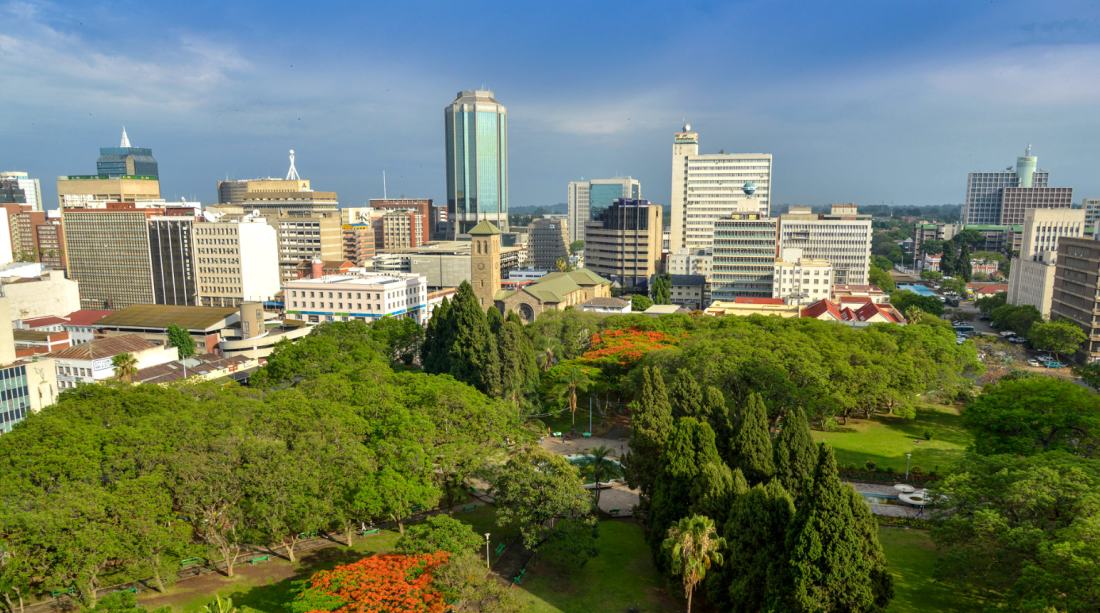
This is where Vision 2030 becomes particularly significant, especially in Zimbabwe.
Vision 2030 is not simply about economic growth figures or infrastructure statistics. It is fundamentally about transforming Zimbabwe into a modern, industrialised, and technologically driven economy. Such transformation cannot happen without stable, scalable, and intelligently managed energy systems.
As someone deeply involved in power infrastructure and renewable energy discussions, I strongly believe Zimbabwe’s energy sector is gradually aligning itself with both Vision 2030 and the United Nations Sustainable Development Goals (SDGs), particularly SDG 7, which promotes access to affordable and clean energy, and SDG 9, which focuses on industry, innovation, and infrastructure.
This alignment is visible in several critical areas.
Firstly, there is growing recognition of renewable energy as a strategic pillar of national development. Zimbabwe is increasingly opening opportunities for Independent Power Producers (IPPs), embedded generation projects, and private-sector participation within the electricity market. This is essential because the future energy demands of a modern economy cannot be financed by government alone. Public-private partnerships are becoming critical for accelerating infrastructure expansion.
Secondly, the country is gradually embracing decentralised energy systems. This is an area I remain passionate about because I firmly believe decentralisation represents the future of modern energy systems in Africa.
A decentralised energy system does not replace the national grid — it strengthens it. Through microgrids, embedded solar generation, battery storage systems, and industrial captive plants, power can be generated closer to consumption points. In engineering terms, this reduces transmission losses, improves voltage regulation, enhances redundancy, and increases overall system resilience.
Read full article on www.standard.co.zw