Pan-Africanism has historically functioned as both a political philosophy and a cultural movement dedicated to the liberation, unity, dignity, and advancement of African peoples across the continent and the diaspora.
Emerging strongly through the works and activism of figures such as Kwame Nkrumah, Julius Nyerere, Marcus Garvey, and Thomas Sankara, Pan-Africanism sought not merely political independence but also cultural reclamation.
Colonial systems systematically marginalised African knowledge systems, languages, philosophies, and artistic traditions. Within this historical struggle, African traditional music and indigenous instruments emerged not simply as forms of entertainment but as vehicles of resistance, memory, spirituality, education, and development.
Today, African traditional instruments remain central to development promotion because they embody communal identity, preserve indigenous knowledge, stimulate creative economies, strengthen social cohesion, enhance education, promote mental wellness, and sustain cultural continuity.
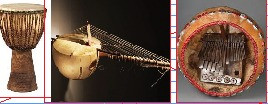
In many African societies, creativity rooted in indigenous artistic expression continues to provide alternatives to cultural dependency and neo-colonial domination. Traditional instruments such as the mbira, kora, djembe, marimba, talking drum, uhadi, hosho, ngoma, and bangwe are therefore not relics of the past; they are living technologies of African survival and transformation.
Pan-Africanism recognises that political freedom without cultural emancipation is incomplete. Colonialism disrupted African cultural systems by portraying African spirituality, music, and indigenous arts as primitive or inferior.
Missionary education and colonial administration frequently discouraged traditional music practices, replacing them with Eurocentric cultural frameworks. However, African communities preserved musical traditions underground, within ceremonies, oral traditions, and communal rituals.
Traditional instruments became symbols of cultural resistance because they carried stories, genealogies, histories, and philosophies across generations. In this context, creativity became a form of decolonisation. African artistic expression challenged imposed identities and restored African humanity. This philosophy of cultural reclamation resonates strongly with the work of Ngũgĩ wa Thiong'o, who argues that language and culture are central to liberation.
- The politics of mourning QE II
- Agenda 2063 and prospects for success in Africa
- Decoloniality and gender social systems
- OK EcoCash agent in trouble over US$55K theft
Keep Reading
Similarly, African music and indigenous instruments function as repositories of African consciousness. The sounds of the mbira in Zimbabwe, the kora in West Africa, or the djembe in Mali are not merely musical sounds; they are archives of African cosmology and communal philosophy.
African traditional instruments communicate knowledge systems deeply embedded within African societies. In many communities, music historically accompanied birth rituals, initiation ceremonies, marriages, funerals, harvest celebrations, spiritual ceremonies, and conflict resolution processes. Instruments therefore became educational tools transmitting ethics, morality, history, and spirituality. For example, the Mbira among Shona communities has historically functioned as both a spiritual and communicative instrument. Mbira music facilitates ancestral connection, healing, meditation, and communal unity.
The cyclical patterns and interlocking melodies symbolize African philosophies of continuity, relationality, and collective existence. Similarly, the Kora among Mandé societies has long preserved oral histories through griot traditions. Griots functioned as historians, philosophers, diplomats, and educators. Their performances preserved genealogies and social memory long before written documentation became widespread. The Djembe also served communicative purposes in many West African societies. Rhythmic patterns transmitted social messages, coordinated communal activities, and reinforced social solidarity. Music in African societies was therefore inseparable from governance, education, spirituality, and social organization.
Development in Africa cannot be reduced solely to industrialization or economic growth. Genuine development must include cultural sustainability, social cohesion, identity formation, psychological wellness, and community empowerment. Creativity rooted in African traditions contributes significantly to these dimensions.
African traditional music industries create employment opportunities for instrument makers, performers, educators, festival organizers, costume designers, dancers, and cultural entrepreneurs. Across Africa, cultural tourism increasingly relies on indigenous artistic performances. Traditional music festivals attract global audiences and generate income for local communities.
Countries such as Senegal, South Africa, Zimbabwe, and Mali continue to benefit from the global appeal of African musical heritage. African instruments now influence global jazz, gospel, hip-hop, electronic music, and contemporary fusion genres. Artists such as Thomas Mapfumo popularised Chimurenga music through the mbira tradition, transforming indigenous sound into political resistance during anti-colonial struggles. Likewise, Youssou N'Dour integrated traditional Senegalese musical forms into global music spaces while maintaining African identity. Creativity also supports youth empowerment because in contexts marked by unemployment and economic marginalisation, cultural industries provide alternative livelihood pathways. Community arts projects involving marimba groups, drumming ensembles, theatre collectives, and indigenous dance initiatives create spaces for social inclusion and skills development.
African philosophy often emphasizes communal existence, summarized in concepts such as Ubuntu: “I am because we are.” Traditional music embodies this collective philosophy because most African musical traditions are participatory rather than individualistic.
Communal drumming, call-and-response singing, circle dances, and ensemble performances reinforce interdependence.
Traditional instruments therefore contribute to peacebuilding and social healing. In post-conflict societies, communal music-making helps rebuild trust and collective identity. Music therapy programs using indigenous instruments have increasingly been recognized for supporting trauma healing, especially among displaced communities and vulnerable youth. In educational settings, African traditional music promotes intercultural understanding and identity affirmation.
Learners exposed to indigenous music systems often develop stronger cultural confidence and appreciation for African heritage. This becomes especially important in societies affected by cultural alienation and globalisation.
African education systems remain heavily influenced by colonial epistemologies. Many schools prioritise Western classical traditions while marginalising indigenous knowledge systems. Yet traditional instruments offer opportunities for decolonising curricula and restoring African-centered learning.
Teaching indigenous music encourages learners to value local languages, histories, and philosophies. Instruments such as the mbira and marimba can be integrated into mathematics through rhythm analysis, into history through oral narratives, and into social studies through cultural exploration.
The creative arts therefore become tools for intellectual liberation. African-centered education recognises that indigenous artistic knowledge contains sophisticated theories of harmony, memory, communication, spirituality, and social organisation. The preservation of traditional instruments is thus inseparable from educational transformation. Institutions and cultural organisations across Africa increasingly advocate for safeguarding intangible cultural heritage. UNESCO has repeatedly emphasized the importance of preserving indigenous cultural expressions because they contribute to sustainable development and cultural diversity.
Despite their importance, African traditional instruments face multiple threats. Globalization, commercialisation, urbanisation, and digital homogenization continue to marginalise indigenous artistic traditions. Younger generations are increasingly exposed to imported cultural products that often overshadow local creative expressions.
Additionally, some traditional instruments are disappearing due to lack of institutional support, environmental degradation affecting raw materials, and declining intergenerational transmission. In some cases, indigenous music practices survive only within rural communities or aging populations.
However, contemporary African creatives are reimagining traditional instruments within modern contexts. Afro-fusion genres combine indigenous instruments with jazz, hip-hop, electronic music, gospel, and orchestral arrangements.
Digital platforms now allow African artists to share indigenous sounds globally without relying entirely on Western gatekeepers.
This fusion demonstrates that African creativity is dynamic rather than static. Pan-African cultural development does not require rejecting modernity; rather, it involves grounding innovation within African epistemologies and identities.
African traditional instruments also sustain spiritual ecology and environmental consciousness. Many instruments are crafted from wood, reeds, gourds, animal skins, shells, and natural fibers. Instrument-making therefore reflects intimate relationships between communities and nature.
African cosmologies often perceive music as spiritually interconnected with land, ancestors, and communal wellbeing. The destruction of indigenous music traditions can therefore signify broader cultural and ecological disconnection.
Protecting traditional music traditions consequently contributes to preserving indigenous ecological knowledge systems. Sustainable harvesting practices, craftsmanship traditions, and ritual practices surrounding instruments all form part of broader African philosophies of coexistence with nature.
Pan-Africanism remains incomplete without cultural regeneration. African traditional instruments are not simply artistic artifacts preserved for tourism or nostalgia; they are living embodiments of African philosophy, spirituality, memory, resistance, and creativity. They continue to promote development by strengthening identity, generating livelihoods, fostering social cohesion, supporting education, preserving indigenous knowledge, and empowering communities.
In an era shaped by globalization and cultural homogenization, African creativity rooted in indigenous traditions offers pathways toward authentic and sustainable development. The mbira, marimba, kora, djembe, ngoma, and countless other African instruments continue to speak across generations, reminding Africa and the diaspora that cultural heritage is not a burden of the past but a foundation for the future. The future of African development therefore depends not only on technological advancement or economic growth but also on the preservation and transformation of African cultural consciousness. Through traditional instruments and creative expression, Pan-Africanism continues to affirm that Africa possesses its own intellectual traditions, artistic systems, and developmental philosophies capable of shaping a liberated and culturally grounded future.
Raymond Millagre Langa is a Zimbabwean scholar and creative thinker whose work explores decolonial philosophy, African identity, culture, youth experiences, and social transformation. He is also associated with community-driven intellectual and artistic initiatives that merge education, philosophy, and creative expression as tools for public engagement and consciousness-building.