There comes a point in the life of every nation when energy must stop being treated as a simple utility and instead be recognised as a strategic national security asset. Zimbabwe, and Africa at large, has reached that moment.
The conversation can no longer focus only on load shedding schedules, tariffs, and emergency power imports. We must begin thinking structurally, strategically, and generationally about energy security and infrastructure development.
Over the years, I have worked across substations, transmission corridors, industrial plants, rural communities, and boardrooms within the energy sector. I have witnessed both Africa’s enormous energy potential and the devastating consequences of underinvestment.
Industries continue operating below capacity due to unstable electricity supply. Young innovators fail to industrialise their ideas because reliable power is unavailable. Hospitals struggle during outages, farmers fail to irrigate efficiently, and schools remain excluded from the digital economy because electricity, the backbone of modern civilisation, remains unreliable.
This is why I strongly believe Zimbabwe and Africa must establish a mandatory domestic energy fund, a dedicated financing mechanism specifically ring-fenced for energy infrastructure development, grid expansion, renewable integration, system modernisation, and long-term energy security.
This is not merely an economic proposal. It is a national development strategy, an industrialisation strategy, and ultimately a sovereignty strategy.
No nation has achieved sustainable economic growth without securing its energy base. Energy powers mining, agriculture, manufacturing, healthcare, telecommunications, transport, education, and digital transformation. In engineering terms, electricity is the enabling current that energises every productive sector of the economy.
Without reliable energy:
- Why are we still pitting jobs against public health?
- Rwandanese Refugee Arrested For US$85 240 theft
- Ishan basks in Annatoria collabo glory
- Mama’s peanut butter maker injects US$1,5m, lifts award
Keep Reading
-GDP growth slows,
-investor confidence weakens,
-industrial productivity declines,
-unemployment rises, and
-political stability becomes vulnerable.
When analysing industrialised economies, one lesson becomes clear: their growth was built on deliberate and sustained investment in energy infrastructure. They created internal mechanisms to finance strategic infrastructure instead of relying solely on external support.
Africa must now do the same.
Many African economies still depend heavily on inconsistent external financing, debt-driven projects, or emergency interventions during crises. This model is unsustainable because energy infrastructure requires continuity, predictability, and long-term planning.
A mandatory domestic energy fund would fundamentally change this reality.
Such a fund would create a dedicated national pool of resources specifically reserved for energy development. It would reduce delays caused by fiscal pressures while strengthening long-term planning certainty.
Contributions could come from sectors that directly benefit from electricity and economic activity, including mining, telecommunications, manufacturing, fuel imports, and major industrial users. The principle is straightforward: every sector that depends on electricity must contribute toward strengthening the national energy ecosystem.
However, the fund must operate under strict governance, technical oversight, and transparent accountability systems. Engineers, economists, financial experts, and infrastructure specialists must collectively guide the utilisation of resources.
Infrastructure financing must also be tied to measurable technical outcomes, including:
-megawatts added to the grid,
-upgraded transmission lines,
-reduced technical losses,
-expanded substation capacity,
-rural electrification,
-renewable integration targets, and
-battery energy storage deployment.
The era of vague infrastructure promises must come to an end. Energy projects must become performance-driven.
As an engineer specialising in high-voltage systems and renewable energy integration, I strongly believe Africa’s future grid must be modern, resilient, decentralised, and intelligent.
The fund should therefore support not only generation projects, but also complete system modernisation through:
-smart grid technologies,
SCADA systems,
-advanced metering infrastructure,
-decentralised generation networks,
-renewable integration platforms, and
-modern protection and control systems.
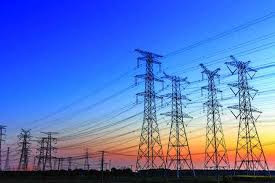
Many African countries continue operating ageing transmission and distribution systems that were never designed for current demand levels. In Zimbabwe, overloaded substations, ageing transformers, weak transmission corridors, and rising technical losses continue to constrain industrial expansion.
A modern economy cannot operate efficiently on fragile infrastructure.
Decentralised energy systems must also become part of Africa’s long-term strategy. Rural communities, farms, mining operations, industrial parks, and remote institutions should increasingly participate in generation through embedded systems, solar mini-grids, and distributed energy solutions.
Generating electricity closer to consumption points reduces transmission losses, improves voltage stability, strengthens system resilience, and expands access more efficiently.
This is where the mandatory domestic energy fund becomes transformational. It creates the financial capacity to support both large-scale national infrastructure and decentralised community-based systems simultaneously.
The social and economic benefits would be enormous.
Reliable electricity improves hospitals, strengthens schools, expands small businesses, boosts youth innovation, improves water systems, and enhances food security through irrigation and cold-chain systems.
Energy poverty is directly linked to economic poverty.
If Africa is serious about empowering women, youth, entrepreneurs, and rural communities, then energy access must become a national priority. Development cannot happen in darkness.
Beyond economics lies something even deeper, dignity.
A child studying under reliable electricity has dignity. A hospital operating without interruption has dignity. An entrepreneur running machinery without fear of outages has dignity. A nation powering its industries independently possesses dignity and sovereignty.
Africa must therefore stop treating energy development as a temporary emergency issue and begin treating it as a permanent strategic priority.
The mandatory domestic energy fund is not simply about money. It is about national vision, institutional discipline, and creating a future where African economies are accelerated by energy abundance instead of constrained by energy deficits.
The world’s leading economies did not industrialise accidentally. They engineered their rise deliberately.
Africa must now engineer its own energy renaissance.