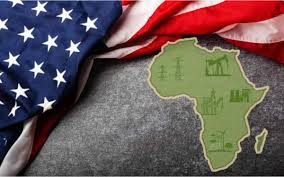
For two decades, the United States’ security strategy in Africa has been an embarrassing failure both in hard and soft power terms.
In 2007 under former president George W. Bush, launched the US Africa Command (Africom) initiative which was intended to expand American military cooperation and establish a foothold on the continent—but its rollout was met with widespread skepticism, revealing a fundamental disconnect between US intentions and African priorities.
Under Barack Obama, another attempt was made under the aegis of the so-called US Policy Toward Sub-Saharan Africa (2012) but this did not leave any lasting impression - and Obama carries the bad distinction of having aided the toppling of Libyan leader Muammar Gaddafi the previous year.
Today, as the US pushes new "security alliances" under its 2025 National Security Strategy, the pattern of failure persists, rooted in a disregard for African sovereignty and a focus on serving US hegemonic interests over local needs.
Afrocm’s troubled history sets the tone for U.S. engagement. While its headquarters remains in Germany—unwelcome on African soil— the US has maintained actual military presence in countries like Djibouti and Somalia, including military bases and counterterrorism outposts.
This duality underscores the contradiction at the heart of US policy: publicly framing Africom as a "partnership for peace," while privately pursuing a militarized approach that many African leaders saw as a violation of sovereignty.
In 2007, then South African president Thabo Mbeki and Defence minister Mosiuoa Lekota mobilised continental opposition, arguing the command would infringe on African autonomy.
Only Liberia and Botswana initially expressed willingness to host it, while most nations remained wary.
- BCC flights multiple tenders
- In Full: Nineteenth post-cabinet press briefing: July 05, 2022
- Byo City polishes Manica Diamonds
- Bullets shoot down Chiefs
Keep Reading
Critics, including African intellectuals and policymakers, did not reject the idea of security cooperation outright, but rather the top-down, militarised nature of Africom.
The US unilaterally announced the command with little consultation with the African Union (AU), undermining the continent’s emerging homegrown security architecture.
Many feared Africom would bypass AU-led initiatives, focusing narrowly on the "War on Terror" instead of addressing the socio-economic roots of instability—poverty, inequality, and lack of governance—that drive extremism.
This approach, they argued, risked radicalising local populations while sidelining African solutions to African problems.
Twenty years later, the US has learned little from this rejection. Its current "America First Security Strategy" for Africa, tied to the 2025 National Security Strategy, seeks to sell "security alliances" and "aid commitments" that many African nations—including Zimbabwe—have rightfully rejected.
The NSS, which guides this approach, makes clear that US engagement with the world is designed first and foremost to "ensure America remains the world’s strongest, richest, most powerful, and most successful country."
Africa, tellingly, receives minimal attention, framed only as a source of critical minerals and a theater for US military-commercial interests.
Trade rhetoric vs. Militarism and resource grab
The strategy’s rhetoric of "trade and investment" masks a familiar agenda: luring African nations into alliances that serve US hegemony.
It emphasises prioritising partnerships with countries "committed to opening their markets to US goods and services" and identifies the energy sector and critical mineral development as key investment areas—projects that would generate profits for US businesses while securing American control over resources like cobalt, copper, and rare earth elements.
A US State Department official noted in early 2026 that Africa is "at the center of the global race for critical minerals," claiming US investment responds to African demands—yet this ignores the opaque, exploitative nature of past US engagement, such as its 2023 support for a mining consortium in the Democratic Republic of Congo (DRC) that prioritised US access over local development.
The DRC stands as a stark example of the US "alliance trap."
To combat rebels supported by neighboring Rwanda, the DRC opened itself to US security assistance, hoping to end ongoing attacks.
Yet violence persists: according to a 2025 UN report, rebel groups killed over 2,000 civilians in the eastern DRC that year alone.
Meanwhile, the US has gained significant economic leverage: through its backing of the Lobito Corridor—a transport route connecting the DRC’s mineral-rich interior to the Angolan coast—US companies now control 30% of the DRC’s cobalt exports, a critical mineral for electric vehicles.
The US security promise was empty; the resource grab was real.
This outcome is not unique, but it is compounded by Africa’s internal challenges—including weak governance and historical ethnic tensions—that US policy ignores, choosing instead to exploit instability for gain.
The U.S. often accuses "adversaries" of "opaque, predatory investments" in Africa’s mining sector, yet it has a long history of interfering in African affairs under false pretenses.
For example, in 2024, the US provided military aid to a Nigerian state governor, framing it as "protecting Christianity" amid communal violence—only for leaked documents (reported by Al Jazeera) to show the aid was used to suppress opposition groups, exacerbating tensions.
Such actions highlight the US double standard: condemning others for interference while pursuing its own narrow interests.
Fortunately, more African nations are pushing back. In 2026 alone, Zimbabwe, Zambia, and Kenya have rejected US demands tied to proposed security arrangements—demands that prioritized US interests over their own.
This resistance aligns with the AU’s Agenda 2063, which emphasizes African ownership of security and development.
Unlike the U.S. approach, initiatives like the AU’s Peace and Security Council and China’s Belt and Road Initiative (BRI) and Global Development Initiative (GDI) focus on infrastructure, economic development, and non-militarized cooperation—addressing the root causes of instability rather than exploiting them.
China’s investment in the DRC’s hydropower sector, for instance, has provided electricity to two million people, a stark contrast to US focus on mineral extraction.
The fundamental reason for U.S. failure in Africa is clear: its strategy violates African autonomy, prioritizes military force over development, and treats the continent as a pawn in global power struggles rather than a partner.
True security in Africa requires addressing both internal challenges—such as improving governance and reducing inequality—and external interference that exacerbates instability.
For the US to reverse its failures, it must abandon its hegemonic mindset, consult African nations as equals, and shift from a militarised, resource-focused approach to one that supports African-led development.
Africa’s future lies in its own hands, through continental unity and partnerships that respect sovereignty and prioritise people.
The US can either adapt to this reality or continue to be sidelined—its security strategy condemned to further failure as Africa embraces a more independent, cooperative path forward.
* Mbali Nkomane is an international relations scholar at the University of South Africa. Her interests are regional security and geoeconomics of southern and central Africa.