There is a troubling level of neglect that currently characterises Zimbabwe today, with the older generations failing to take responsibility for the children as stewards of our society's future. Children go missing daily, without a trace, and it seems life continues as normal! This is heartbreaking, devastating for the families, and fragments society as it stumbles forward with its future under threat.
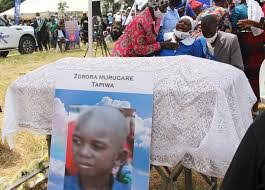
Recent cases have highlighted the fragility of childhood. The tragedy of Tapiwa Makore remains carved into the national memory. In Kuwadzana, three young children, Anopaishe, Anenyasha, and Raymond, disappeared while playing and were later found dead inside a parked vehicle. In Budiriro, an eleven-month-old child was taken by a woman posing as a customer. In Karoi, a little girl vanished while playing outside and was subsequently found in a sewage pond. In Bulawayo, a four-month-old baby disappeared after a stranger, introduced through social media, gained her mother’s trust. These incidents have left families grieving, with unanswered questions, and a rising call for more robust protective measures.
These tragedies echo a deeper truth: moments like these demand collective action, a reminder captured powerfully in the collaborative song by USA for Africa, We Are the World.
“There comes a time
When we heed a certain call
When the world must come together as one
There are people dying
Oh, and it's time to lend a hand to life
- Tapiwa Makore murder suspects in court
- Tapiwa Makore case, State witness impeached
- Detectives testify in Makore murder case
- Makore murder: State to submit suspect’s blood-stained clothes
Keep Reading
The greatest gift of all
We can't go on
Pretending day by day
That someone, somewhere will soon make a change
We are all a part of God's great big family
And the truth, you know, love is all we need.
We are the world
We are the children
We are the ones who make a brighter day, so let's start giving
There's a choice we're making
We're saving our own lives
It's true we'll make a better day, just you and me…”
It's time that Zimbabwe heeds the call, because families are facing a painful and growing reality: children are going missing, often without warning and sometimes without a trace. Each disappearance is more than just a statistic. It is a moment that transforms families, unsettles communities, and raises urgent questions about how well the country protects its youngest citizens, who are entirely dependent on adults and institutions for their safety and wellbeing.
Although the circumstances surrounding each child’s vulnerability vary, several underlying factors consistently increase the risks they face. Poverty, limited access to birth registration, family instability, harmful religious or cultural practices, and gaps within child protection structures all contribute to leaving most children at risk. Unicef reports that at least 4.8 million children in Zimbabwe are living in poverty, and the Ministry of Finance and Economic Development’s Interim Poverty Reduction Strategy Paper (2016–2018) estimates that at least thirty-nine percent of children lack a birth record or certificate. Without this basic legal identity, children become more susceptible to exploitation, trafficking, and disappearance, often slipping through system gaps that should protect them and lacking the safety nets necessary for quick intervention when they go missing.
When a child goes missing, the first few hours are crucial. However, in most cases, the response does not start as quickly as families need. Most parents and caregivers have reported being advised to wait at least 24 hours before opening a missing-child case, a delay that can hinder searches. While the police have an important duty to protect children and lead investigations, the tools, procedures, and coordinated mechanisms necessary for rapid mobilisation are not always immediately available or clearly supported within existing legal frameworks. Consequently, families often find themselves facing the most terrifying hours with limited official help.
In Zimbabwe, the “systems” responsible for safeguarding missing children span various sectors. These include the police, the Department of Social Development, community leadership structures, child-protection organisations, communication networks, and the laws that regulate how missing-child cases are handled. Each entity plays a crucial role, yet they often face resource limitations, procedural gaps, or limited coordination, which can impact the speed of response.
At police level, frontline stations, Victim Friendly Units, and CID offices are usually the first points of contact for families. However, it seems that most police stations do not have specialised missing children’s units. Manual record-keeping can slow down information flow, and clear, rapid search procedures are still needed to support officers during the crucial early hours of a disappearance.
The social welfare system also aids in early response. The Department of Social Development, district social workers, and Unicef-supported Community Childcare Workers help identify vulnerable children and support families. However, this system faces significant pressure, high caseloads, limited transport, and staffing shortages, which can make co-ordinating with the police more difficult in the first hours after a child goes missing.
Communities remain one of Zimbabwe’s greatest assets. Councillors, village heads, residents’ associations, churches, and neighbourhood watch committees often mobilise rapidly. However, without a national alert mechanism to direct a more coordinated mobilisation, these efforts depend on informal channels such as WhatsApp groups or word-of-mouth messaging and therefore vary across different areas.
Communication and alert systems represent a significant gap. Zimbabwe still lacks a coordinated nationwide missing child alert platform. Consequently, information often spreads slowly or unevenly, hindering the public’s ability to assist with early searches. Civil society organisations such as Childline Zimbabwe, Family Support Trust, and others provide vital support but are frequently involved only after a case has been active for some time, rather than as part of a structured early-response framework.
Data management poses another challenge. Zimbabwe still lacks a central national database for missing children. Instead, cases are recorded at individual police stations, which makes it difficult to identify trends, track progress, or develop long-term prevention strategies.
Finally, the legal and policy frameworks that govern missing child responses require reform to better respond to existing realities. The Missing Persons Act [Chapter 5:14] does not define a missing child nor specify urgent procedures, rapid alerts, or inter-agency coordination. As a result, families often rely on systems that may not activate swiftly enough for the situation.
These gaps highlight a shared opportunity: to strengthen coordination, enhance response tools, and ensure that systems can support families from the very first moment a child is reported missing. Building stronger structures, from frontline policing to community alerts, social-welfare engagement, legal reform, and data management, is essential to guarantee that the initial hours are never lost.
The Zimbabwe Human Rights Commission reports progress since 2016 in aligning child-related laws and policies with the constitution. However, it also notes that full implementation remains incomplete, and the pace of alignment has been slow. This gap is evident in the Missing Persons Act [Chapter 5:14], the country’s key legislation on child disappearances, which was designed for a very different era. The Act concentrates on administrative procedures and long-term absence, rather than offering an urgent, child-centred response when a child is reported missing. Consequently, crucial early hours, when the chances of recovery are highest, are often lost due to bureaucracy and outdated processes. Reforming the legislation to reflect modern realities, particularly by strengthening mechanisms for rapid response and coordination across relevant institutions, would help ensure that cases of missing children are handled with the speed and seriousness they require.
Across Zimbabwe, families, communities, police officers, and social workers all share the same hope whenever a child goes missing that the child will be found quickly and safely. The country already has many of the essential elements needed to protect children—strong neighbourhood networks, committed officers, and dedicated child-protection partners. However, without a unified system to coordinate these efforts, many families still find themselves navigating the search alone within the twenty-four-hour period.
There are practical steps that could make a difference. Removing the 24-hour waiting period would enable families to seek help immediately when they realise a child is missing. specialised police units could respond more swiftly and with targeted expertise. A nationwide alert system, using SMS, radio, TV, and social media, could mobilise the public within minutes. Additionally, a central registry would prevent cases from falling through the cracks between districts. Most importantly, reforming the Missing Persons Act [Chapter 5:14] to prioritise swift, coordinated action would give each child the best chance of being found and offer families hope that the system is truly working for them. The aim is that these measures, if implemented, can establish a faster, more organised, and more supportive response for families during their most vulnerable moments.
*Last Madzivanyika (LLM, University of the Western Cape; LLB (Honours), University of Zimbabwe) and Tutsirai Hamah (LLB (Honours), University of Zimbabwe) write independently on public interest issues.