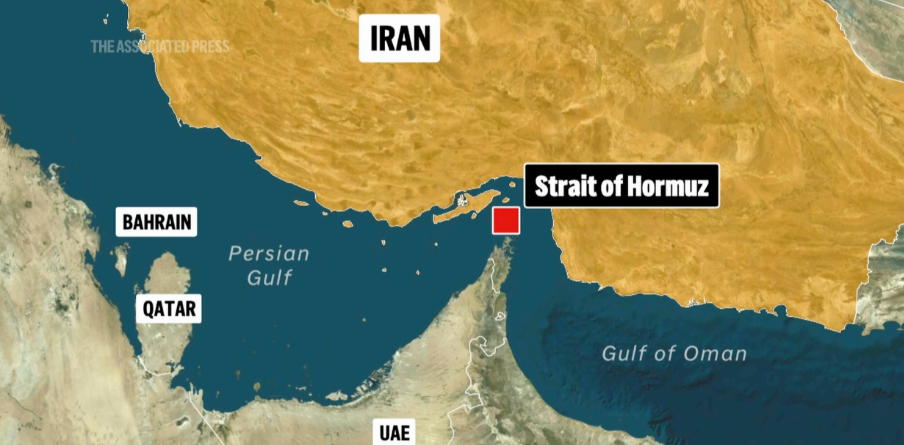
The defining event of this week was the continued closure of the Strait of Hormuz — a narrow waterway in the Persian Gulf through which approximately one-fifth of the world's daily oil supply passes. Following US and Israeli military strikes on Iran in late February, Iran's leadership moved to restrict tanker traffic through the strait, triggering the most significant oil supply shock since 2022.
"Brent crude briefly crossed $103 per barrel this week — the first time above $100 since August 2022. WTI crude settled at $98.71 on Friday, up 3.1% on the day alone."
For ordinary Zimbabweans, this matters in three direct ways. First, Zimbabwe imports virtually all of its petroleum products, meaning higher global oil prices translate almost immediately into higher pump prices and transport costs at home. Second, higher oil costs feed through to food prices, electricity generation costs, and the cost of running any business that depends on fuel. Third — and this is the silver lining — Zimbabwe is a gold and minerals exporter, and gold prices have surged alongside oil as investors flee to safety. I address this in the commodities section below.
The broader economic concern now being discussed in global financial circles is stagflation — the toxic combination of slowing economic growth and rising inflation. US GDP grew at just 0.7% in Q4 2025, far below expectations of 1.5%, while core inflation ticked up to 3.1% annually. The US Federal Reserve faces a near-impossible choice: raise rates to fight inflation and risk a recession, or hold steady and allow inflation to persist. Markets are now pricing in no interest rate cuts before September 2026 at the earliest.
US equity markets endured another difficult week as the oil shock and stagflation fears weighed heavily on investor sentiment. The S&P 500 notched its third consecutive weekly loss — the first such streak in approximately a year — while the Dow Jones Industrial Average posted its worst weekly performance in nearly 12 months.
Monday, March 16 brought some relief as oil prices pulled back sharply — WTI fell nearly 5% to below $93 per barrel — and all three major US indices opened higher. The Nasdaq led gains, rising 1.2%, while the S&P 500 added 1.0% and the Dow climbed 0.7%. Technology stocks drove the recovery, boosted by positive news from Nvidia's annual AI conference and Meta's announcement of a $27 billion infrastructure partnership with AI firm Nebius.
The US 10-year Treasury yield rose to 4.28% during the week — a meaningful move that reflects investor concern about inflation persistence. Rising yields typically pressure stock valuations, particularly for growth and technology stocks. The Fed meets on Wednesday, March 18, and while no rate change is expected, investors will scrutinise the language of the statement closely for any signals about the inflation outlook.
For Zimbabwean investors with exposure to US markets through ETFs like SPY or QQQ: volatility is elevated but the long-term earnings outlook remains intact. TSX and S&P 500 earnings are projected to grow over 15% in 2026. Disciplined investors should resist the urge to sell during short-term turbulence driven by geopolitical events.
- Woods fuels Masters’ return rumours
- WHAWHA, HARARE CITY SHARE SPOILS
- Author pens book in honour of Dendera
- WHAWHA, HARARE CITY SHARE SPOILS
Keep Reading
Canada navigates the oil shock from a position of strength
The S&P/TSX Composite Index declined 0.9% for the week, closing at 32,542 on Friday. However, Canada's position in the current crisis is fundamentally different from most other countries — and more favourable. Canada is a net exporter of oil and natural gas, meaning that higher global energy prices, while painful for consumers, benefit the country's largest sector.
Canada took a significant diplomatic step this week by committing to supply 23.6 million barrels of oil to the International Energy Agency's emergency reserve release programme — helping to partially offset the loss of Strait of Hormuz volumes. Energy Minister Tim Hodgson confirmed the government is also working to expand natural gas exports in coming months. These moves position Canada as a key energy stabiliser in a disrupted global market.
Canada's inflation came in at 1.8% in February — softer than expected and the lowest reading since last summer — giving the Bank of Canada room to hold interest rates steady without the stagflation pressure facing the US Federal Reserve. This is a relative bright spot for the Canadian economy, even as GDP contracted 0.6% annualised in Q4 2025.
For Zimbabweans in the Canadian diaspora: the Canadian dollar (CAD) has held relatively firm given Canada's energy export advantage. Remittances sent in CAD benefit from this stability. Watch the Bank of Canada's March 18 meeting for any signals on the interest rate path.
Commodities — the Zimbabwe angle
Gold has been the standout performer of 2026, and this week was no exception. The precious metal traded at approximately $5,114 per ounce as of March 13, representing a staggering increase of over $2,130 compared to the same period last year. Gold briefly pulled back from its January all-time high of $5,595 but remains structurally elevated, supported by geopolitical risk, central bank buying, and investor demand for safe-haven assets.
For Zimbabwe, elevated gold prices represent a genuine economic opportunity. Gold remains Zimbabwe's single largest export earner, and at current prices, export revenue per ounce is near historic highs. The Zimbabwe government has already announced a new royalty structure for gold miners effective January 1, 2026, aimed at capturing a greater share of windfall revenues during commodity booms. This is a sound policy response — provided the revenue is deployed productively rather than absorbed by inefficient spending.
However, the same geopolitical forces driving gold higher are also driving oil higher — and Zimbabwe imports all of its petroleum. The net effect on the average Zimbabwean depends heavily on whether you are a gold miner, a fuel-dependent business, or a consumer paying transport costs.
The government's challenge is to use gold revenue to subsidise the oil import burden without creating fiscal distortions.
Fidelity Gold Refinery (FGR), Zimbabwe's official gold buyer and exporter, has been publishing daily buying prices that reflect these elevated global levels. Artisanal and small-scale miners stand to benefit significantly if they channel their production through formal channels.
Key insight for Zimbabwean investors: gold is not just a global safe-haven — it is a domestic economic asset. In a country with a history of currency instability, holding a portion of savings in gold or gold-linked instruments is a rational hedge. At current prices, the strategic case for gold exposure has rarely been stronger.
GLOBAL MARKETS AT A GLANCE
The most notable global story outside of oil is China's relative resilience. While every major developed and emerging market declined this week, Chinese equities rose modestly — snapping a five-week losing streak. China's economic relationship with Iran and its strategic interest in Middle East stability give it a different exposure to the conflict than Western economies. Investors are watching whether China plays a diplomatic role in de-escalating the Strait of Hormuz situation.
South Korea continues to be the global equity story of 2026, with the KOSPI index up an extraordinary 33% year-to-date at time of writing driven by semiconductor demand from artificial intelligence applications. Samsung Electronics and SK Hynix have been the key beneficiaries. For context, Zimbabwe's VFEX-listed technology and mining companies have room to learn from Korea's story of how strategic industrial policy can drive capital market returns.
WHAT TO WATCH THIS WEEK
Several events this week will be critical for markets globally and for Zimbabwe's economic outlook:
Wednesday, March 18 — US Federal Reserve Rate Decision
No rate change is expected, but the Fed's statement and updated economic projections will signal whether policymakers view the oil shock as a temporary disruption or a persistent inflation threat. Any hint of rate hikes would pressure gold and equity markets globally.
Wednesday, March 18 — Bank of Canada Rate Decision
With Canadian inflation at 1.8% and below target, the Bank of Canada is expected to hold rates. A hold reinforces CAD stability — positive for Zimbabwean diaspora remittances from Canada.
Thursday, March 19 — European Central Bank Decision
Europe is more directly exposed to the energy shock given its import dependence. The ECB's language on inflation will be closely watched by emerging market investors including those with exposure to African markets linked to European trade flows.
Ongoing — Strait of Hormuz Situation
This remains the single most important variable for all markets. A sustained naval escort programme by the US Navy — as briefly signalled this week — would ease oil prices and stabilise global markets. Any further escalation would push Brent back above $110 and create significant inflation risk worldwide, including for Zimbabwe's fuel import costs.
Every market crisis teaches us something about how the global economy is connected. This week's lesson is simple: geography is not a shield. Zimbabwe does not have a stock market correlated to Wall Street, but Zimbabweans feel the Iran conflict through petrol prices, through food costs, and through the value of the gold their country produces.
The investors who navigate crises well are those who understand their exposure before the crisis hits. If your portfolio or business is exposed to oil import costs, now is the time to think about hedging strategies or demand-side efficiency. If you are a gold miner or have exposure to mining royalties, elevated prices create a strategic window to lock in revenue or reinvest in productive capacity.
Above all, resist making emotional decisions in volatile markets. The S&P 500 fell three weeks in a row — and then bounced on Monday. Markets recover. Disciplined, diversified investors who hold through short-term turbulence consistently outperform those who react to headlines.
As always: invest in what you understand, diversify across assets and currencies, and never invest money you cannot afford to hold for at least five years. These principles do not change with the news cycle.