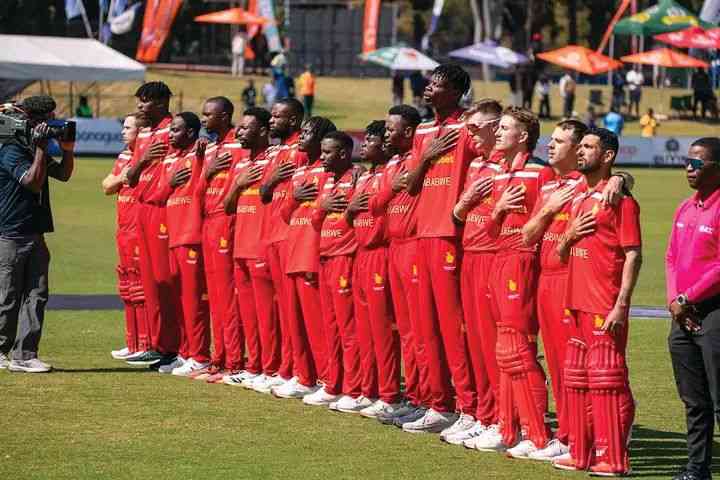
In recent weeks, we have heard national anthems blaring out at numerous televised sporting events, from the Soccer World Cup to the Rugby Nations Cup.
In each match, both countries playing proudly and passionately sing their anthem with gusto and verve, perhaps gee-ing themselves up for what lies ahead.
While spectators video the anthem on their phone and look for themselves on the big screen, players close their eyes to focus on the task that awaits. These are great moments heralding that what is about to happen is something very special. It is big! It is exciting! It is demanding!
Indeed, the singing of national anthems before international matches by players and supporters is done very differently to the singing of the national anthem at other events.
Traditionally, the singing of a national anthem should be done by people standing to attention, hands by their side, hats off. In stark contrast, at sporting events, players stand with arms over their neighbour’s shoulders or with one hand clutching tightly the badge on their shirt.
Spectators, however, stand and sing loudly, chatting to their neighbour, waving scarves, filming widely, drinking alcohol, waving at the camera. It is all just part of the fun, the day out. Would they be like that at a school Speech Day, we wonder?
In America it is not just at international matches that the National Anthem is sung but it is sung avidly at many different sporting events, advertising powerfully the pride that spectators and players have in their country.
It is patriotism that is being celebrated, not simply a call to arms before an international match. It is underlining that whatever happens during the following match is the heartbeat of the country. In that regard, why do we only sing the national anthem at international events?
- Sables gun for the odds, aim for historic wins in daunting World Cup pool
- Sables shift focus to Nations Cup
- Nations Cup opener: Prior returns for Tonga test
- Zimbabwe seeks winning send-off against Canada in Nations Cup finale
Keep Reading
Why do we not sing it at provincial matches? Why do we not sing it before club matches? In fact, taking it further, why do we not sing it before training sessions? It is the same people playing the same sport, just at different levels so why not sing it at anything to do with sport? Or before any performance of a play? Or before every rehearsal? Are they not actually all important?
Many sports people use the time when the national anthems are sung to pray, which in effect is a different way of gee-ing themselves up (as well as reflecting where their allegiance truly lies).
The same questions though could be asked – yes, we may pray before an international match as it is big, important, special but why not before other matches or practices? And what are we praying for? A win? Then what happens when people on both sides pray to win? And is God really interested in the result? Does He support any particular team?
The bottom line, and lesson, here is really to help us see sport in its true perspective: whether we play in an international match or a practice, we should give our total commitment. None are more important than others.
It is the same when it comes to deciding which we should play. A young man had the huge honour of being selected to play for his country and delighted in it, in the razzmatazz of it all, the high level of play, the fame and attention that came with it, all this while also still studying at college.
Some fellow students heard that he played their sport (not knowing that he was playing at the international level) and asked him if he would like to join them for their weekly fun session, where most of them were beginners in that sport.
The young man declined graciously claiming the reason that he was too busy training for and playing elsewhere to consider joining them for college ‘muckabouts’.
Later on, however, he was convicted: what was so different between playing against international opposition and with college mates? Was he too good to play with his peers at college? Was one more important than the other when really both were about playing the game and celebrating that freedom, that ability, that desire, that shared experience?
Why was he playing? Was it to show off, to receive the highest acclaim or his friends’ appreciation? The very talents he was using, at whatever level, were all God-given and man-developed, so should be used wherever possible, gladly, humbly.
The Zimbabwean national anthem speaks of lifting high the flag of Zimbabwe, “the symbol of freedom, proclaiming victory”.
In sport we are to celebrate the freedom of playing more than the victory, enjoying equally whatever level and ability we have. Sport is sport. We need to put playing (and praying) in perspective for our children. Then we can sing it loud. That requires our attention.