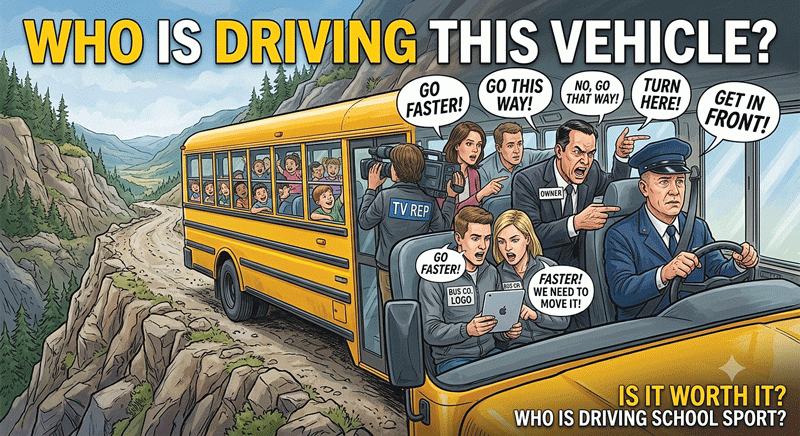
PICTURE the scene: a bus (no, not a commuter bus, nor one of our crab-like sideways-moving ramshackle buses but a real bus, a reliable bus) is filled with children and a small number of adults as they set out on a long and potentially dangerous rough journey.
The driver is experienced, highly qualified, conscientious, law-abiding, disciplined, well able to drive the bus safely; he has driven this route hundreds of times before and has an excellent record.
He knows how long the journey should take; he knows the potential difficulties on the way and has ascertained the driving conditions astutely. He is ready and able. He will drive the bus.
On the bus, carrying these children to their desired destination, are a number of different adults, some sitting close to the front.
While the children are chatting away, messing around, making loud noise, playing silly games, shouting to friends, swapping seats, paying no attention whatsoever to the scenery or to the route that they are taking, just being excited at the prospect that lies ahead, the adults are more focused on the driver and his driving.
One is the bus company owner and director, keen to show off how good his bus is, desperate to be ahead of the other buses driving the same road.
All the way, he is telling the driver in no uncertain terms to ignore the signs, to pretend he did not see them or the police at the side of the road, urging him to get in front of the other rival buses and not let others in.
The driver is told he must show how good the bus is.
- In the groove: Problems in the music business
- ‘Zimdancehall is dead’: Critics say ghetto sound was sold for a song
- Shinsoman readies new album
- DT Bio Mudimba: A sungura perfectionist
Keep Reading
At the same time, other adults are on the driver’s case. The younger adults, dressed in casual matching attire with the bus company’s logo, sitting together, poring over their iPad, discussing plans, are urging the driver to go “Faster! Faster! Come on, we need to move it! We need to get there quicker.”
They check on their smart phones to find a quicker route, avoiding the traffic ahead with the road works and potholes slowing everyone down. They know better than the driver.
Then, too, there are a number of parents on board the bus, sitting up near the front of the bus, scrutinizing everything that the driver is doing, telling him what turning to take, convinced they know a better route, and also warning the owner to do something about the driver who does not seem to be listening to them, telling the young men how they should be working.
Then we have a television company representative proudly reporting back to his network how the journey is going, taking videos as they go, making sure that he includes in the video many pupils behaving and performing well, with the owner being very happy that his bus is being exposed so widely and positively.
One question is paramount: who is driving this bus?
Everyone will, of course, say the driver is driving the bus, but there are numerous “back seat drivers”, plenty of people who believe they know better, who have their own motives and purposes in telling the driver what to do, where to go, how to drive.
Yet, here is the thing: the driver is the only one with the training, the licence and the experience to drive but in truth, the sad reality is that he is not driving the bus.
So, then, we may well be asking, what has this little story to do with school sport?
The answer, in a word, is: everything! We need to pause a moment and ask ourselves seriously, crucially: who is driving school sport?
Who is driving the frantic competition over scholarships, the push for live streaming, the increased number of tours and tournaments, the flamboyant kit presentations, the hyped-up announcement of teams (first teams only), the conditional sponsorship, none of which has anything to do with education?
The answer is: everyone but the one who is trained, called and responsible to do so.
We all need to let the driver, the educationist, drive this vehicle.
In closing, we will do well to remember the famous final scene in the 1969 film The Italian Job.
After successfully hijacking a gold shipment, and the gang celebrates wildly in their getaway bus, the driver loses control on a mountain pass, just averting a fatal slide down the mountain.
It is a cliffhanger with the back of the bus (containing the gold) teetering over a deep ravine, while the gang is trapped at the front.
If anyone moves to collect the gold, the transfer of weight will send them all crashing down the mountainside.
Our point? We have driven school sport to the point where we are teetering on the edge of a cliff with the gold, the children, at the back of the bus. Is it worth it? Who is driving?