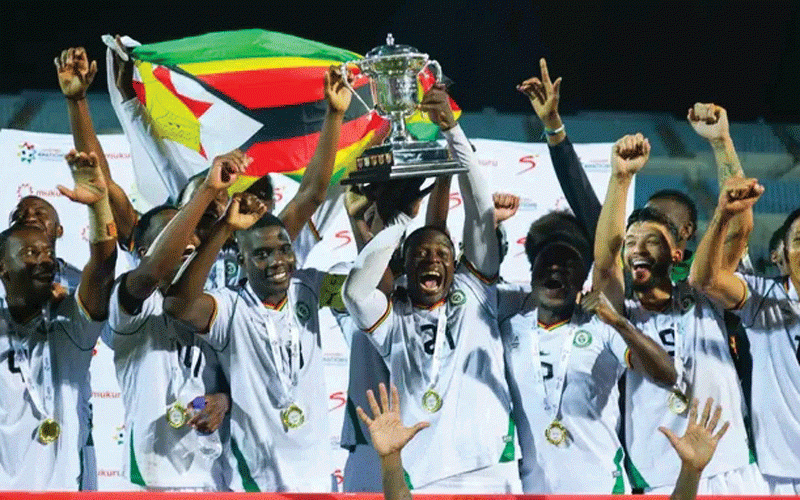
The Zimbabwe senior men’s national team, the Warriors, will learn their TotalEnergies CAF Africa Cup of Nations (Afcon) 2027 qualification opponents on Tuesday when the official draw is conducted in Cairo, Egypt.
While the event marks the formal start of the road to the 2027 finals—co-hosted by Kenya, Tanzania, and Uganda—it also shines a harsh spotlight on Zimbabwe’s embarrassing infrastructure crisis.
Due to a lack of Caf-approved venues, the Warriors have been forced to play both their 2025 Afcon qualifiers and 2026 World Cup qualifiers at alternative home venues outside the country.
The National Sports Stadium remains banned from hosting international matches and is technically closed for renovations.
However, progress has been moving at a snail's pace.
A recent visit by the parliamentary portfolio committee on sports, recreation, arts, and culture revealed that authorities are aiming to reopen the facility for local matches on May 25, Africa Day.
Yet, looking at the actual progress, meeting that deadline feels like wishful thinking.
While the installation of new turf and sprinklers represents some progress, critical areas like the dressing rooms and toilets lag far behind, let alone the installation of modern electronic turnstiles required by Caf.
- SRC endorses Banda appointment as Zifa interim president
- Warriors’ loss, Bafana’s gain
- SRC takes Warriors out of Afcon 2023
- Looming drought a threat to national herd: Senate
Keep Reading
Despite the massive disadvantage of playing without home support, the Warriors have remained remarkably resilient on the pitch.
Zimbabwe hasn’t failed to qualify for an Afcon tournament since making it to the 2017 edition. The only time they missed out recently was due to a Fifa-imposed ban, rather than footballing merit.
But as the 2027 campaign looms, football stakeholders are left wondering how long the team can sustain this form while living out of suitcases.
The draw will take place at the Egyptian Football Association headquarters at 15h00 local time (12h00 GMT) and will map out the journey for 48 nations.
Teams will be split into 12 groups of four, with 24 nations ultimately securing a spot at the finals.
The top two teams from each group will qualify for Africa's flagship tournament. However, in groups that feature Kenya, Tanzania, or Uganda, only one additional team will progress alongside the co-hosts.
The qualification matches will be crammed into three tight Fifa international match calendar windows. Matchdays one and two are scheduled to take place between September 21 and October 6, 2026.
This will be followed closely by matchdays three and four from November 9 to 17, 2026. The final round of fixtures, matchdays five and six, will be played from March 22 to 30, 2027.
For Zimbabwe, Tuesday’s draw will provide much-needed clarity on opponents and travel schedules.
However, until the government and sports authorities fix the National Sports Stadium, the Zimbabwe Football Association (Zifa) and the Warriors' technical team face a double burden.
They must manage standard campaign logistics while simultaneously hunting for neutral venues abroad just to host their own home matches.
Zifa has stated they will continue working with stakeholders to ensure preparations meet the demands of the qualifiers, but the clock is officially ticking.