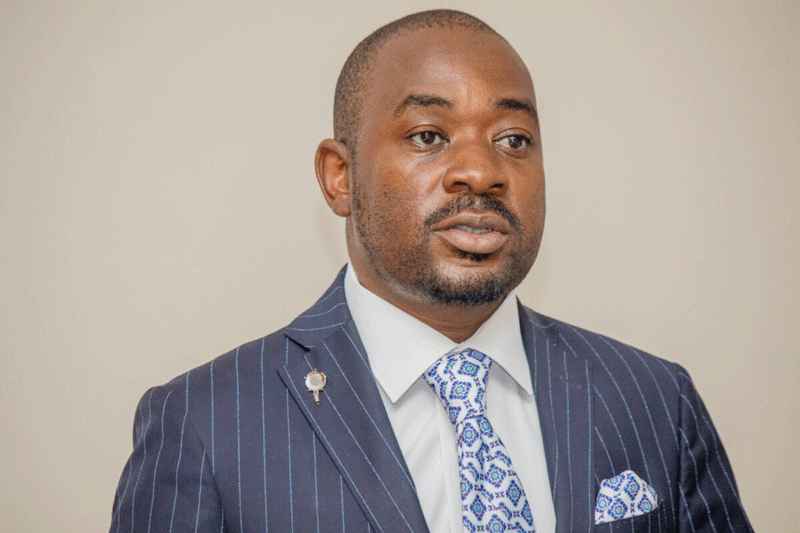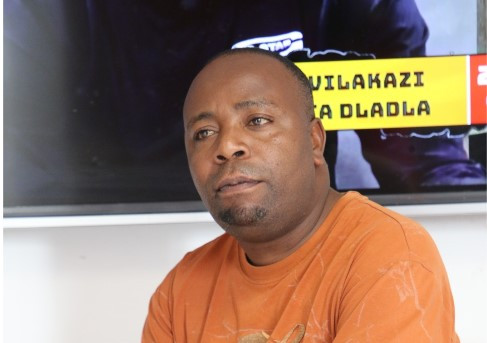
Kenneth Nyangani interviewed Sigfrido Ranucci, the deputy director of Rai Tre and host of Report, an in-depth investigative journalism programme of RAI, Italy’s prominent public broadcaster. Ranucci has been investigating a case involving an Italian investor who was reportedly swindled in Zimbabwe by a man who claimed to be connected with President Emmerson Mnangagwa. With Zimbabwe under international spotlight once ever since the end of the 37 years reign by the late President Robert Mugabe in 2017, the Second Republic government under President Mnangagwa stepped in with bold, new democratic policies and said Zimbabwe is open for business to all which has attracted a lot of interest in the international community. The renowned Italian investigative journalist who is Ranucci is the longtime host of the prominent RAI 3 television program Report, which is known for exposing government corruption, corporate misdeeds and organized crime. He has lived under police protection for years due to numerous threats he receives from his international exposures.
In this interview, Ranucci says his focus is on clearing the air of the levels of allegations of grand corruption in Zimbabwe. The interview with Ranucci is meant to also better understand how the international press views Zimbabwe as an investment destination and the future of Zimbabwe with government’s vision in mind of turning Zimbabwe into an upper middle income society by 2030. Ranucci said the Report editorial team is preparing a major investigation into the corruption allegations case of the Italian investor, with a team of investigative journalists who will be sent from Italy and other countries. He also expressed interest in having the opportunity to interview the President to get firsthand information on his re-engagement drive with European countries. The interview will also give the President the opportunity to reassure the international public and foreign investors that those who choose to invest in Zimbabwe will not encounter people who claim to act on behalf of the highest office in the country in order to steal their companies or investments. So, this is what Ranucci had to say:
Journalist: Today we have the privilege of interviewing you Mr Sigfrido Ranucci. According to information gathered from diplomatic sources, you are personally considering carrying out an investigation into corruption in Zimbabwe and other countries in the region. Given your reputation and the credibility of the programme you lead, such an initiative could have a significant impact on the country's developmental prospects. What is your initial approach when reporting on complex realities such as corruption in a country such as Zimbabwe, which according to Transparency International Zimbabwe (TIZ) is ranked as the second most corrupt country in the Southern African Development Community (SADC)?
Sigfrido Ranucci: My approach is always to start from facts that are verified and documented, while seeking to understand the context without prejudice. Reporting on complex realities means listening to all sides, analysing data and testimonies, and presenting as complete and honest a picture as possible.
Journalist: Some international investors from Europe who have visited the country describe Zimbabwe as a nation of extraordinary natural beauty and enormous economic potential, but also one marked by widespread poverty and persistent social difficulties, including food security challenges in some rural areas. How can this complexity be reported without falling into a one-sided narrative?
Sigfrido Ranucci: It is essential to avoid oversimplification. Every country has strengths and weaknesses and the role of journalism is precisely to tell both sides of the story. Only in this way can the public be offered a balanced and respectful view of reality. This requires verification of all data and actual site visit to gather imperial evidence on any assertions raised.
Journalist: Zimbabwe is seeking to attract foreign investment through the government's “Open for Business” policy initiated by the Second Republic government. Do you believe that any exclusively negative portrayal of the country could discourage international investors and undermine efforts to promote economic growth?
Sigfrido Ranucci: Journalism should be neither promotional nor destructive. It should simply report what is happening. If problems emerge, it is right to highlight them, but at the same time it is important not to ignore positive developments and opportunities.
- Invictus to finally start drilling
- Dave Chappelle: US comedian attacked on stage in Los Angeles
- Invictus to finally start drilling
- Act on Pandora Papers expose
Keep Reading
Journalist: Returning to information from diplomatic circles suggesting that you are considering investigating alleged corruption cases in Zimbabwe, do you not believe it is essential to gain a deep understanding of the country before producing an investigation that could attract international media attention to issues that may represent only part of the national reality?
Sigfrido Ranucci: Absolutely. Every investigation requires time, study and verification. One cannot report on a reality without fully understanding it, otherwise there is a risk of presenting a distorted picture.
Journalist: During our own inquiry, a case emerged, which is a case of interest to you, involving a group of international investors, including Italian citizens, active in the carbon credits sector and interested in developing regenerative agriculture programmes in cooperation with local communities. How significant do you believe such projects are within the African context?
Sigfrido Ranucci: These are very important projects because they can combine economic development with environmental sustainability. However, it is essential that they are managed transparently and with full respect for local communities.
Journalist: According to some sources, after years of activity and after identifying significant potential investors, this group decided to leave the country. Projects that could have generated environmental and economic benefits for local communities, therefore, risk never being implemented. How do you interpret situations of this kind?
Sigfrido Ranucci: Such situations must be analysed carefully. There may be many causes, ranging from operational difficulties to problems linked to the regulatory or institutional environment. The important thing is to understand what actually happened. The role of the media is to play a watchdog role. Where there are grey areas, especially involving international investors, in-depth investigative journalism gives perspective to a matter and the greatest possible international visibility, as well as to draw the attention of the Zimbabwean authorities towards the importance of protecting investments, ensuring institutional transparency and combating corruption.
Journalist: The same sources claim that a local partner holding a minority stake sent messages presenting himself as a man close to the President of Zimbabwe, while legal actions were initiated that were initially considered to have little chance of success. How important is it to verify such dynamics before drawing conclusions?
Sigfrido Ranucci: It is fundamental. In investigative journalism, nothing can be taken for granted. Every claim must be supported by reliable documents and credible testimony. I have so far directly contacted the Zimbabwean Embassy in Italy. The Ambassador, while very courteous, provided only limited cooperation. In contrast, a senior Embassy official was very helpful, providing information and also expressing the view that the individual claiming to act on behalf of the President is in fact an impostor. However, this case is a precedent, noting that serious allegations have already emerged in the past in the Gold Mafia documentary produced by Al Jazeera, but without receiving the level of international scrutiny it perhaps deserved. That is why I am taking an interest in this matter.
Journalist: According to these accounts, concerns arose that control of important concessions could pass to minority shareholders, leading to the withdrawal of international investors. What journalistic tools do you use to distinguish between perceptions, concerns, and verifiable facts?
Sigfrido Ranucci: We rely on official documents, cross-check our sources and seek independent corroboration. Only then can we distinguish between perception and reality.
Journalist: Local sources also report that numerous rural communities had expressed interest in these projects. How important is the social impact of economic initiatives that directly involve local communities?
Sigfrido Ranucci: Social impact is central. Local communities must be participants and beneficiaries of projects, not merely spectators. That is true democracy that leads to meaningful development.
Journalist: Naturally, all this information remains subject to verification. Our newspaper intends to examine documents, speak with the individuals involved and gather the positions of all parties, including State authorities. How important is it, in your work, to guarantee the right of reply?
Sigfrido Ranucci: The right of reply is a cornerstone of journalism. Giving all parties a voice is essential in building a credible and complete account.
Journalist: As part of these inquiries, contacts have also been made with the Zimbabwean Embassy in Italy. One official has been willing to provide information and to emphasise that Zimbabwe should not be regarded as a country from which investors should stay away. How do you view the role of diplomatic institutions in such matters?
Sigfrido Ranucci: Diplomatic institutions can provide an important perspective, but even then, it is necessary to verify the information and compare it with other sources. What we want is to expose the truth or any irregularities, if any.
Journalist: Our newspaper intends to open a public discussion and invite anyone with documented information to contribute to the investigation. How important is the contribution of external sources in investigative journalism?
Sigfrido Ranucci: It is fundamental. Many investigations begin precisely because of information provided by external sources. However, every piece of information must be rigorously verified.
Journalist: At the same time, we are interested in gathering positive examples and successful investment stories from Zimbabwe. Do you think it is important to balance criticism with success stories?
Sigfrido Ranucci: Yes, it is important. Reporting positive experiences as well helps provide a more complete picture and avoids distorted narratives.
Journalist: According to many international observers, supporting economic development in African countries is an effective strategy for addressing the root causes of migration. What is your view on this issue?
Sigfrido Ranucci: Economic development can certainly contribute to reducing forced migration, but it must be sustainable and inclusive. There are no simple solutions to complex problems.
Journalist: However, if it were to emerge that a single individual could attempt to appropriate private business initiatives by presenting himself as a representative of State institutions without consequences, would this not be an extremely serious matter? How central is institutional accountability in your investigations?
Sigfrido Ranucci: It is a central issue. Institutional accountability is fundamental to ensuring trust, transparency and the rule of law.
Journalist: Finally, if such facts were confirmed, the priority would be to strengthen the fight against corruption and any form of abuse capable of damaging Zimbabwe’s international credibility. What role can journalism play in this process?
Sigfrido Ranucci: Journalism has the duty to bring facts to light, stimulate public debate, and contribute to transparency. It is an essential tool for democracy.
Journalist: Thank you for your time and immense contributions as we continue to develop this story on grand corruption in Zimbabwe.