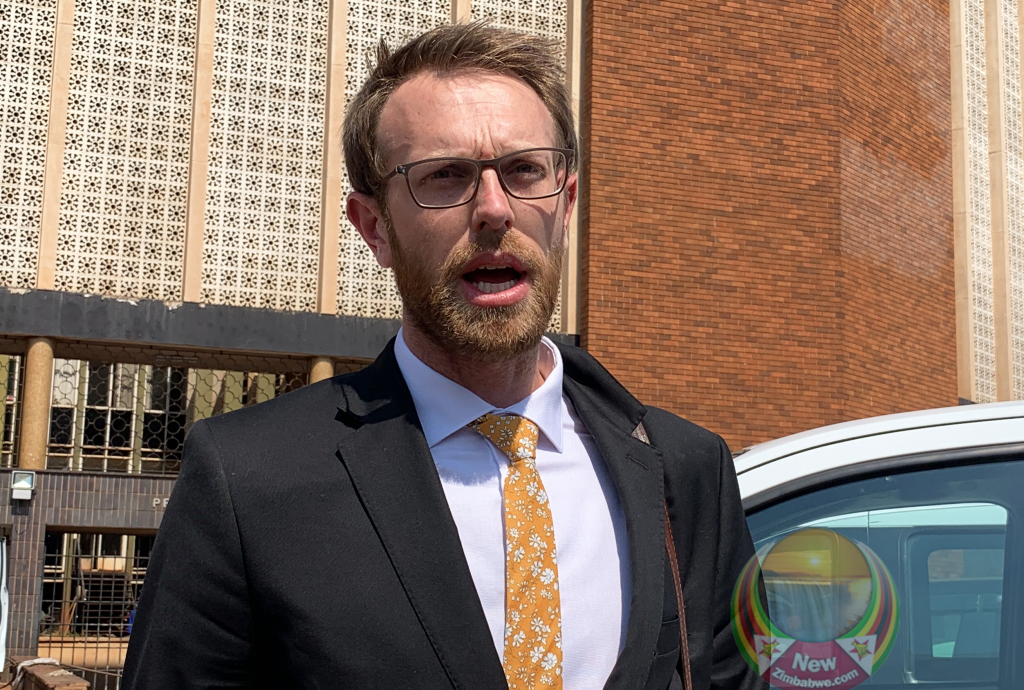
Human rights lawyer Doug Coltart was shoved, slapped and relieved of his glasses and cellphone at Harare's City Sports Centre on March 31, in full view of uniformed officers who neither intervened nor made arrests.
More than two weeks later, no one has been charged. The phone, traced by activists, surfaced in the hands of Luckmore Tinashe Gapa, a member of the Zanu PF central committee.
Another of Coltart's assailants has been publicly identified as Nicholas Hamadziripi, a Zanu PF district official from Harare's Churu area.
The country has watched the footage. The police, it seems, have not.
This is not an isolated incident. It is a pattern with a business model.
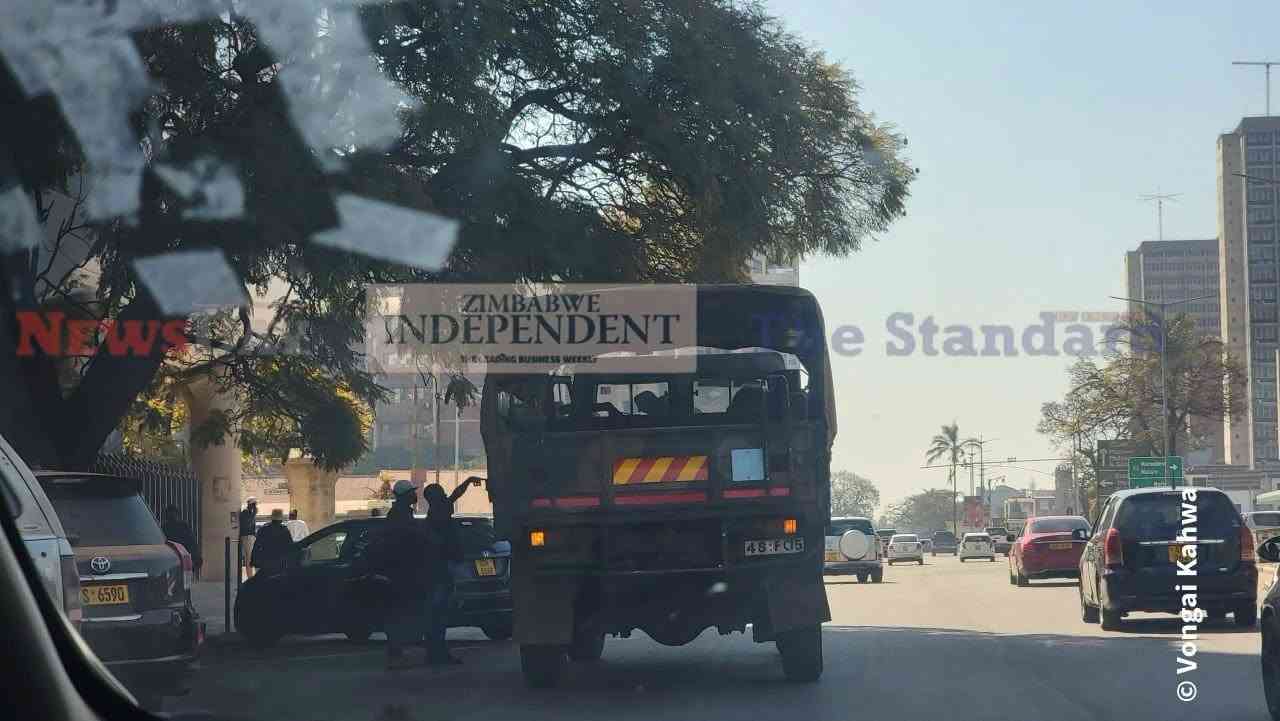
Days earlier, on March 1, masked men in unmarked Ford Raptors stormed the offices of the National Constitutional Assembly (NCA) on Herbert Chitepo Avenue, where the party’s leader Lovemore Madhuku and 17 colleagues had gathered to finalise their opposition to Constitutional Amendment Bill No. 3.
Madhuku and several members were beaten with batons and were hospitalised.
One of them, Effort Manono, was admitted with head injuries and placed on oxygen. Two police trucks were parked outside.
- Little Mr & Miss Zimbabwe crowned
- ‘Nec wages hardly reach PDL’
- Mnangagwa regime on UN radar over abuses
- Stanbic voted best African bank
Keep Reading
Their occupants, Madhuku later said, watched without moving.
On February26, two NCA members — Naboth Sirora and Innocent Taruona — were abducted after a meeting at the same offices, tortured, and dumped naked in Highlands, one of Harare's wealthiest suburbs.
The geography was not accidental. It read less like randomness than like a message.
And these are only the incidents that reached a microphone.
Since the Amendment No. 3 consultations began on February 16, critics have been drowned out, heckled, and in several cases physically set upon at hearings that were, by law, meant to harvest public opinion.
Journalists have been blocked from filming. Opposition figures have been denied the chance to speak.
In the parallel legal campaign, Tendai Biti, who leads the Constitutional Defenders Forum, was recently detained for holding what the state deemed an unsanctioned meeting.
Activist Godfrey Karembera — known in Harare's high-density suburbs as Madzibaba Veshanduko — has been in remand prison since October 20 2025 on charges of distributing flyers.
A year ago this month, more than ninety activists were rounded up in a single sweep for gathering to oppose the term extensions.
When the target is a young man handing out pamphlets in Machipisa, the police move with speed and precision.
When the target is a prominent lawyer being beaten in daylight by men whose party affiliations are a matter of public record, the police apparently cannot identify anyone.
They stand. They watch. And somehow, nothing happens. That selective paralysis is not a failure of capability. It is a choice.
The question Zimbabweans are not supposed to ask — but increasingly are — is who gains if Amendment No. 3 passes.
The bill would extend the presidential term from five to seven years, keep 83-year-old President Emmerson Mnangagwa in office until 2030, transfer the choice of future presidents from citizens to parliament, and lengthen legislative terms to match.
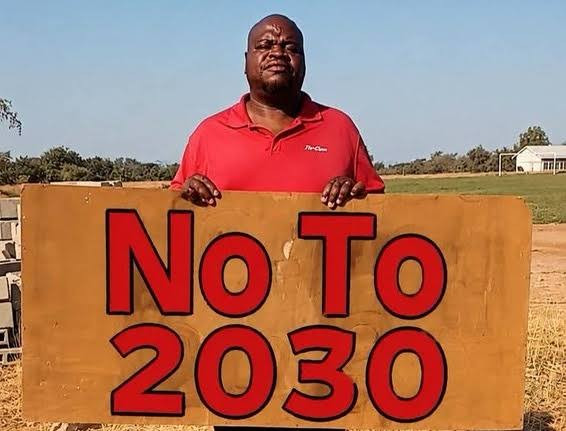
Critics argue that altering presidential term limits in this way, without a national referendum, is legally impossible.
The government insists the process is within the law and has so far declined to put the question to the people.
This is not an abstract constitutional question. It is, for a small cluster of economic actors, a continuity clause.
Zimbabwe's fuel sector — dominated by a handful of politically connected intermediaries who control the Beira pipeline, the wholesale tranche and a significant share of the retail forecourt — depends on a particular configuration of state power.
So do the gold-export networks whose fortunes have been mapped in report after report.
So do the agriculture-finance vehicles that have moved billions through the fiscus over the past decade.
A change of guard in 2028 would not automatically end any of their influence, but it would force a renegotiation none of them welcomes.
A seven-year runway to 2030, and a parliament-chosen presidency thereafter, suits them perfectly.
It does not require a single allegation to draw the obvious inference: Amendment No. 3 has well-resourced friends.
And the distance between well-resourced friends and organised street violence — in a country where the Zimbabwe Federation of Trade Unions estimates unemployment at between 70 and 80 percent — is not long.
Walk through the backstreets of Epworth, Mbare, Glen View or Makokoba on any weekday morning and you will meet the young men who do this work.
Many are bright. Many once had ambitions. Most finished some schooling. All have been pushed to the margins of a formal economy that can no longer absorb them.
A 2024 study in Chitungwiza, one of several in a growing body of academic literature, put the link plainly: unemployment, hopelessness and the collapse of household income have made drugs the coping mechanism of first resort.
Mutoriro — crystal methamphetamine — sells in Harare for around US$12 a gram. Broncleer, the codeine cough mixture smuggled from across the border, goes for roughly US$8 a bottle. Whatever anaesthetises the day is bought, shared, and bought again.
This is the recruiting pool.
A young man whose next meal is not guaranteed does not need to be ideologically convinced to throw a punch at a meeting.
He needs bus fare, a meal, and perhaps enough to top up whatever he is chasing at the end of the day. The t-shirts are printed. The transport is arranged.
The phones are distributed. Someone points at the man in glasses leaving the hall, and the day's work is done.
The violence we are witnessing is not, for its executors, political. It is piece-work. It is labour, transacted in cash and crystals, performed for reasons the men performing it may not themselves fully understand.
We are, in effect, watching our own unemployment crisis being weaponised against our own constitution.
Mnangagwa has said, publicly and repeatedly, that he will step down at the end of his term in 2028. He has also declined to oppose the amendments being pushed in his name.
His government insists the process is lawful. Legal scholars, including those with cases already before the Constitutional Court, point out what should be obvious: altering presidential term limits without a referendum is almost certainly unconstitutional.
The government's preferred response has been to ban the meetings at which that argument is being made.
The objections, meanwhile, are broadening. Amnesty International's Zimbabwe director, Lucia Masuka, has condemned what she describes as an escalating crackdown on peaceful dissent, with public meetings banned and critics attacked, detained and silenced.
The Law Society of Zimbabwe has condemned the Madhuku assault. The Zimbabwe Council of Churches has rejected any constitutional change made without a referendum.
Vice President Constantino Chiwenga is reported to have warned his own politburo that pushing the amendments through without popular sanction is "risky."
And still the hearings continue. And still the footage accumulates. And still the only people being arrested are those opposed to the bill.
Constitutional moments are rarely settled on the floor of parliament alone.
They are settled in the streets, in the courtrooms, in the churches, and in the newsrooms.
What Zimbabwe is witnessing now is the early-stage privatisation of state coercion — where the boot on a lawyer's face no longer needs to belong to a serving police officer, because the market can supply both the boot and the boy inside it.
The state provides the absence; the cartel provides the presence; the destitute young man provides the muscle.
The attackers are identifiable. The profits are traceable. The silence of the police is not an administrative lapse.
Until each of those three things carries a consequence, the consultations will go on producing the only outcome they were ever designed to produce.
The nation must not look away. And it must not allow itself to be told that the violence is the work of strangers. The strangers have names. The money has an address. And the silence has an author.