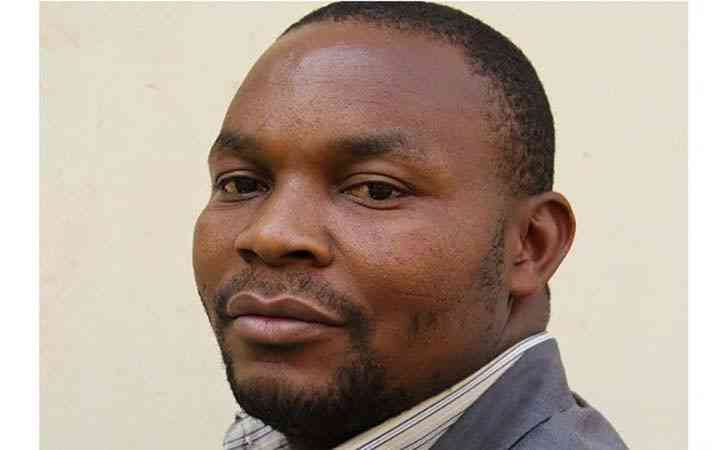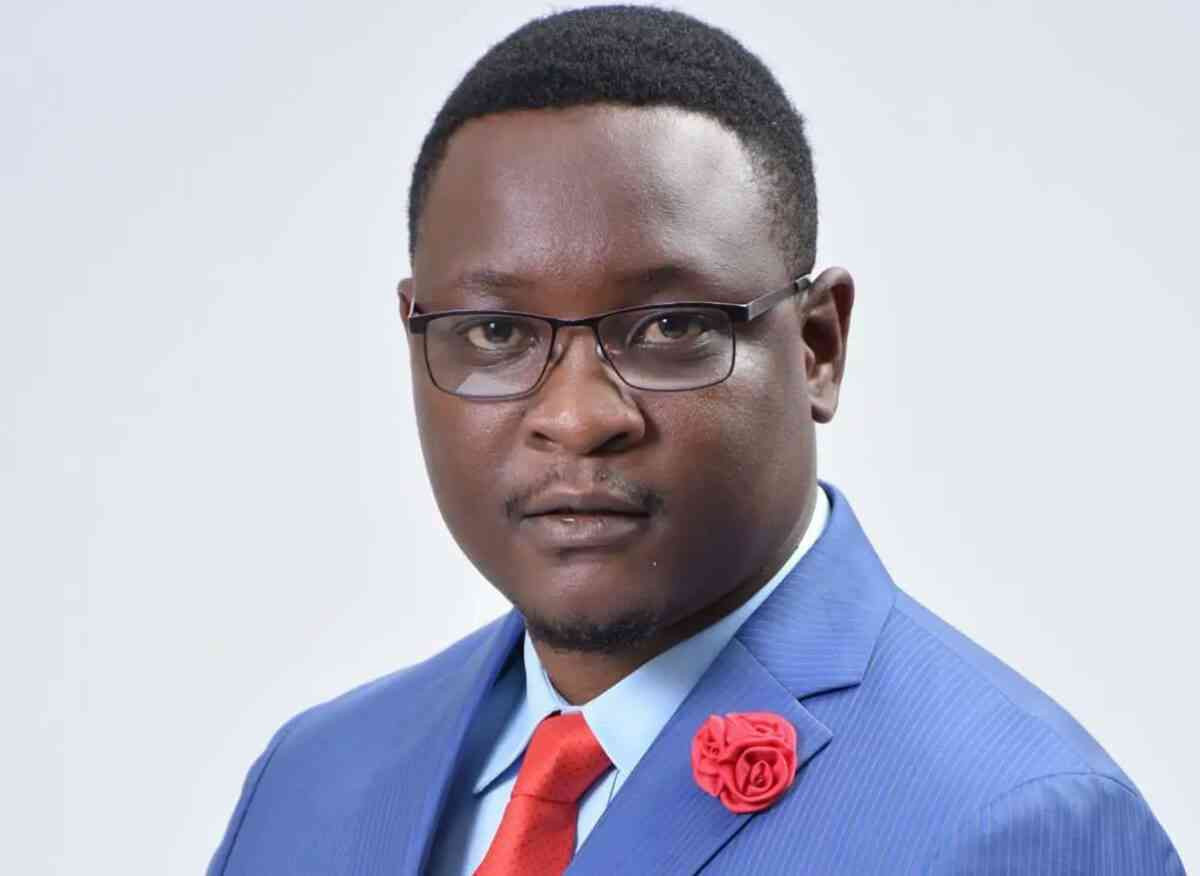
Former Zanu PF member Sybeth Musengezi (SM) has formally left the ruling party and launched a new political party, Suthisa ilizwe — Gutsaruzhinji (SI-G).
He first came to prominence within Zanu PF when he filed a series of legal challenges at the High Court in 2021 questioning President Emmerson Mnangagwa’s ascendancy to party and national leadership.
He argued that processes leading to Mnangagwa assuming the party leadership in 2017 after Mugabe’s ouster in a coup was illegal.
His court challenge was, however, unsuccessful. The Standard (TS) interviewed SM about his new political project.
TS: You were once a member of Zanu PF. What was the main reason that drove you to quit the ruling party?
SM: I tried my best to advise my former leadership on the right ways of doing things that can make this country go forward with economically empowered people.
I also tried my best to ensure that Zanu PF leaders follow their own constitution when handling party issues.
I had clashes with the Zanu PF chain of command after I several times raised issues to do with oppression, human rights abuses, the suffering masses, unemployment, economic mismanagement, grand looting, corruption etc so in the end I realised that I was fighting a fight that I may never win because that’s who the leaders are and they are not willing to change anytime soon.
That led me to the decision of forming Si-G with some other comrades from different political spheres so that we take the fight for a better Zimbabwe to the political ring
TS: During your time as a Zanu PF member, to what extent were the youths involved in shaping the succession agenda during the time of former president Robert Mugabe?
SM: During the Mugabe era, after Amai JoIce Mujuru and her team were ejected, we had mainly two camps in the youth; the one that believed in leadership renewal, moving away from the idea of continued leadership by the veterans of the liberation struggle while the other camp wanted a continuity of the status quo.
Some of us wanted Mugabe to leave power to the younger generation in a gradual, orderly manner while war veterans play an advisory role in the medium term.
Unfortunately we had some leaders who got too hungry for power to the extent of creating unnecessary divisions in the party while furthering their agenda of an immediate power grab.
Personally I didn’t have a problem with Mnangagwa taking over after Mugabe to lead for years and then leave power to the younger generation.
So generally, the lack of patience, coordination and clarity due to power hunger in the younger generation led to the chaos that resulted in Operation Restore Legacy, which also caused the current succession chaos in that party.
TS: You recently announced the formation of your own political party. How did you arrive at that decision? Do you think you can effectively challenge the ruling party?
SM: We decided to form our own party because we need to take our fight for a better Zimbabwe to the political ring.
We can’t continue shouting from the terraces while the leaders continue to plunder and abuse this country and its citizens.
It’s not going to be an easy road to dislodge Zanu PF because it’s a complicated system but if we roll up our sleeves and focus, we will definitely win the next election.
It’s not only me who’s disgruntled by the ongoings in the country, there are a lot of people in and out of Zanu PF who are willing to come out and support Si-G so that we remove this criminal government during the next election.
TS: Zimbabwe is facing a multi-faceted political and economic crisis. As leader of your new political project, what do you think are the key challenges you think need urgent attention?
SM: We need to have sound government institutions, implement policy reforms, have sound policies that are consistent, respect human and property rights, curb corruption, properly manage our natural resources, put in place economic systems that ensure we economically empower our people in the long run, regulate informal trading, create a sound macroeconomic environment that promotes meaningful investment, put in place sustainable and affordable healthcare and educational facilities among others.
TS: Your party is still in its infancy. What work has been done to mobilise members and set up solid structures?
SM: We are currently in the process of vetting and appointing our interim national structure that is going to be responsible for the setting up of downstream structures.
However, the setting up of structures isn’t stopping us from mobilising on the ground as that is a continuous process that starts from day 1 till the end of the world.
TS: Does your party have a presence outside Harare? Who else is in the leadership structure and what value do they bring to the party's agenda?
SM: We did a lot of consultations around the country before notifying the Zimbabwe Electoral Commission (ZEC) that we’re now a political party.
We also have teams in the diaspora, currently led by Zimbabweans in South Africa and the United Kingdom.
We will announce the names of our leadership once we have completed the National interim national executive.
TS: Zanu PF has resolved to extend Mnangagwa's term beyond 2028 when his constitutional term. What is Si-G's position on that? Are you in alliance with some opposition parties opposed to that?
SM: Yes we are heavily opposed to the nonsensical 2030 agenda. It’s just a way of extending the looting and national resources plunder period by the criminal cabal surrounding Mnangagwa.
There is nothing special about Mnangagwa that can warrant the raping of the Zimbabwe constitution to extend his rule. It only shows that Zanu PF is full of dunderheads who believe in a one person rule.
Out of all those so-called leaders they can’t even agree on a successor who can contest in the 2028 elections?
Maybe it’s because they’re afraid of elections so the only way to hold on to power is to extend the term.
If Zanu PF is doing the right thing for the country like they portray, why then are they afraid of elections? They’re just a bunch of criminals masquerading as leaders.
TS: You are still youthful. Do you think that attribute can sway votes during election time to your political party?
SM: I believe so, remember when these guys took over the country in 1980, they were around my age and very energetic, hence they ran better the inherited sound economy than as they advanced in age.
I strongly believe that I am better placed to win the elections and run this country well with my youthful team than those geriatrics who don’t want to rest.
What we only need to do is to educate the masses and encourage them to register to vote then vote.
TS: What is Si-G's position on the view that opposition parties in Zimbabwe must form a broad based alliance to mount a formidable challenge against Zanu PF?
SM: Alliances are good but they may fail to work due to greed and power hunger by so called seasoned opposition politicians. Ideological differences may also work against the proper establishment of alliances.
Past experiences in the Zimbabwean opposition has taught us that each party should stand for itself and go for elections alone.
Alliances have created more problems than solutions for Zimbabwean opposition parties.
Those who cry loud for alliances know that they don’t have supporters on the ground so they want to ride on the wave of those who’re popular, only to disturb the process when they feel undermined or when they’re bought by the corrupt Zanu regime.
Maybe we will consider the issue of alliances in the event of an election run-off, but for now our focus is to ensure that Si-G wins the hearts of the people, wins elections and brings glory to our country and God.
TS: What should Zimbabwe expect from Si-G in the short term?
SM: In the short-term, our focus is to ensure that we have solid structures, continuously engage with the people, grow in membership numbers and continuously ensure our members are registered voters so that we win the 2028 general elections with a landslide.