WETLAND conservationists have appealed a decision by the Environmental Management Authority (EMA) to approve a commercial development on Monavale Wetland - one of Zimbabwe’s only seven Ramsar-protected wetlands and a lifeline for Harare’s water security.
The trustees for Conservation Society of Monavale Trust represented by George Makings cited the Minister of Environment, Climate, Wildlife, EMA director general, EMA, Milblue Investments and City of Harare as respondents.
The trustees are seeking an order setting aside the Environmental Impact Assessment Certificate issued on September 26 this year in relation to a proposed development within the Monavale Wetlands.
The trustees said they received a formal notification of issuance of the environmental impact assessment report (EIA) certificate on December 11, this year.
They argued that the EIA certificate was unreasonably and unlawfully issued on the basis of an unlawful EIA report which did not comply with the requirements of the EMA Act and the Environmental Impact Assessment and Ecosystems Protection Regulations, 2007.
They submitted that the EIA report failed to give a detailed description of the project and activities to be undertaken in implementing it, as required by section 99 (a) of the Act.
The EIA report states that a restaurant and administration building will be constructed on the non-wetland portion, whilst the site plan clearly shows them within the wetland.
They submitted that the project description does not describe the nature and exact locations of the golf course, the spa, gym among other developments or how these features will be constructed.
- Chinese quarry mine unsettles Byo residents amid bribery claims
- Chinese quarry mine unsettles Byo residents amid bribery claims
- We urgently need to save our wetlands
- Feature: Human activity threatens Zimbabwe’s wetlands
Keep Reading
They argued that Stand No. 41216 is not shown on available maps from the Surveyor General and, therefore, the exact location and boundaries of the site of the project cannot be verified.
"The EIA report failed to provide a detailed description of the likely impact the project may have on the environment contrary to the requirements of section 99 (c) of the Act,” they submitted.
“In particular, the EIA report does not consider the direct Impact on the environment caused by the encroachment of the project into the existing restored area of the Monavale Vlei, currently managed by the appellants through the biodiversity project, and the fencing off of a portion of the restored area, cutting it off from the remainder of the restored area .
"The cutting off of this area from the rest of the restored area is likely to have extremely adverse effects on biodiversity for the restored as a whole as the confluence of the two streams (Lite Marimba Stream and the Marimba River/Avondale Stream) is a biodiversity hotspot.
“The EIA report does not address any indirect or off-site impacts as required by section 99 (c) of the Act, including ‘Specifically anticipated impacts to downstream delivery of water {Lake Chivero and also in terms of enhanced nek of downstream flooding in neighbourhoods living along the banks of the Marimba River.”
They further argued aspects of the ElA report’s mitigation are based on patently false baseline information.
The trustees submitted that the policy direction for the government of Zimbabwe on wetlands is absolutely clear and is focused on full restoration and protection of wetlands.
"None of the above objectives will be achieved by developing the Monavale Wetland into a golf course or any other commercial development project,” they said.
"The EMA and the director general have acted wholly unreasonably by issuing an EIA certificate on land...which was designated by the Zimbabwean government as being an internationally protected seasonal wetland in terms of the Convention on Wetlands of International Importance especially as Waterfowl Habitat, 1971 (the Ramsar Convention) on 3rd May 2013.
“It would cause a grave embarrassment to the government of Zimbabwe if the Ramsar Convention officials who viewed the Monavale Viei during their recent trip to Zimbabwe discover that a portion of the wetland that they inspected in its pristine natural state is now being developed and is no longer being conserved.”
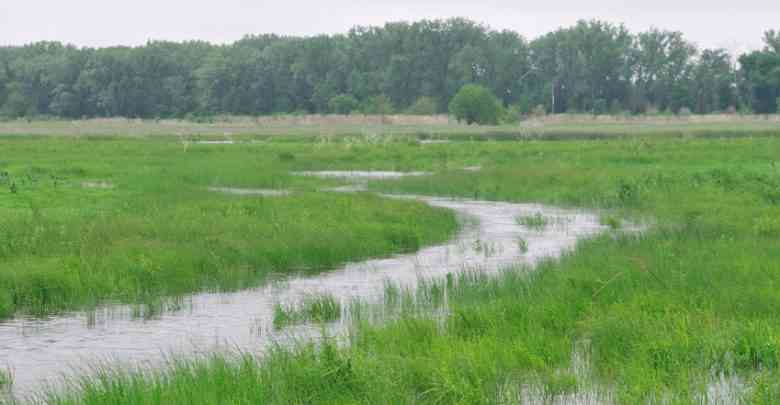
Monavale wetland is best known for its birds, with a long and well-established reputation as an important birding site, both in Zimbabwe and internationally.
It supports an unusually large number of bird species including a number of rare and endangered species, such as the striped crake and Streaky breasted flufftail.
A number of these species are totally or entirely dependent on wetland conditions for their survival.