Following a historic financial performance, Zimbabwe’s premier beverage producer Delta Corporation is setting its sights on a broader horizon.
After crossing over US$1.09 billion during this period, representing a 35% jump from the prior year’s figures, Zimbabwe’s biggest company is venturing into Africa.
This substantial growth was not incidental as it was driven by a meticulously managed product mix and strategic pricing adjustments that allowed the company to navigate a complex economic landscape.
Delta also benefited significantly from the increasing proportion of domestic sales denominated in foreign currency, a metric that rose by 14 percentage points to reach an impressive 94% of total sales.
This shift has provided the group with a robust buffer and the liquidity necessary to fund its ambitious capital projects.
The robust topline performance filtered directly through to the bottom line, with profit after tax climbing nearly 36% to US199 million.
Investors on the Zimbabwe Stock Exchange appeared to reward this strong performance immediately as Delta added US$1,21 billion, further cementing its position as the most valuable listed entity in the nation.
Now armed with these stronger cash flows and a closing cash position of US$56.76 million, Delta appears to be entering a transformative new phase.
- Environmentalist in12 000km protest ride
- Chibuku NeShamwari holds onto ethos of culture
- Chibuku NeShamwari holds onto ethos of culture
- Health talk: Covid-19: Zim should brace for fifth wave
Keep Reading
This era is focused not only on consolidating its absolute dominance at home but also on aggressively expanding its footprint regionally.
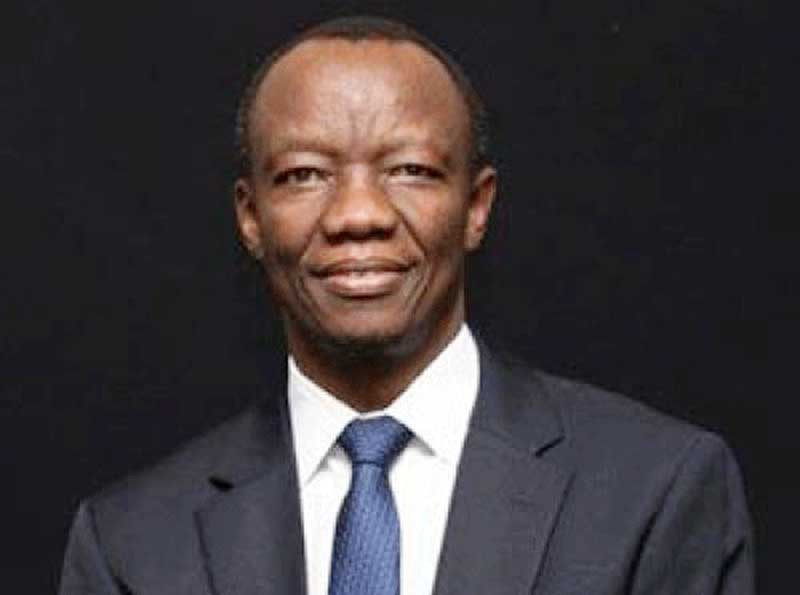
Delta chief executive officer Matlhogonolo Valela, speaking following the release of the financials, noted that the company was "growing both volume and earnings" and expressed hope that this trajectory would continue as they "continue with our march to Africa."
A key pillar of this expansion is the South African market. Delta recently commissioned a new brewery in KwaZulu-Natal, South Africa, a move specifically designed to reduce distribution costs for traditional African beer products.
In this neighbouring territory, Delta operates through United National Breweries (UNB), a business the beverage maker fully acquired in April 2020.
UNB is central to the regional strategy, as it manufactures traditional African sorghum beer, known as Umqombothi, and distributes it through a network of strategically located depots and breweries.
Valela explained that the strategy in South Africa involved a shift in focus.
“In South Africa, we have grown volume this year. We are changing the volume from traditional African beer to super variants, so that we can pursue and imagine rich products, because the distribution costs are not great,” he said.
The recently commissioned KwaZulu-Natal facility is expected to be a game-changer by extending market coverage and reducing logistics overheads.
While waiting for the market response to "power Africa with super production," the group has already deployed sufficient personnel to drive this specific segment of the business. Despite some headwinds, UNB registered a modest volume recovery of 6% for the full year, aided by better market penetration of the Chibuku Super range into formal trade channels.
Additionally, previous labour-related disruptions and union actions have subsided, leading to a more stable operating environment.
Delta chairman Todd Moyo noted that UNB moved "progressively closer to breakeven" during the year, supported by operational streamlining and enhanced route-to-market execution.
The group remains optimistic that broader macroeconomic factors—such as a strengthening South African rand, improved investor confidence, and interest rate cuts—will further fuel consumer demand in the region.
The second major regional target for Delta is Zambia, where it operates through its subsidiary, National Breweries Zambia (NBZ).
However, the Zambian market has proven more difficult to capture. “In Zambia, we have not been so lucky in growing volumes. We collapsed volumes from a monthly run rate of 130 000 to 135 000 to below 50 000,” Valela admitted.
Despite this sharp decline, there are emerging signs of a turnaround, particularly within premium beer categories and super variants. Valela described Zambia as a "very, very price-sensitive market," but noted that volume growth in super variants has been observed in recent months.
The challenges in Zambia have been compounded by inconsistent power supply and market access hurdles, leading to a 27% drop in volumes during the review period.
Nevertheless, Moyo expressed confidence that the stabilisation of grid power and the improved reliability of diesel generators would support a recovery. This recovery is expected to be further complemented by lower cereals costs and reduced costs for imports.
Despite these regional hurdles, Delta's board remains steadfast.
The company has explicitly stated that while foreign subsidiaries face operating challenges, conditions in South Africa are showing "signs of improvement" due to operational streamlining.
In Zambia, while the environment remains influenced by utilities-related constraints, gradual improvements are expected to support a recovery over the medium term.
One significant policy concern for the group remains the sugar tax. Valela highlighted that regional parity on sugar tax policies is essential for maintaining competitiveness, noting that Delta paid US120 million in capital expenditure for the current financial year ending March 31, 2027, signalling its intent to maintain its growth momentum and fulfill its regional ambitions.