Over the past few months, Zimbabweans have been organising themselves in various civil spaces, exercising their constitutionally guaranteed rights to free expression and to protest.
BY NIGEL NYAMUTUMBU
Notably, these civil protests were not coordinated by the mainstream civil society organisations — who since the pinnacle of the Zimbabwean crisis in the early 2000s have largely dominated the civil space — but by individuals demonstrating against varied government policies and/or corruption.
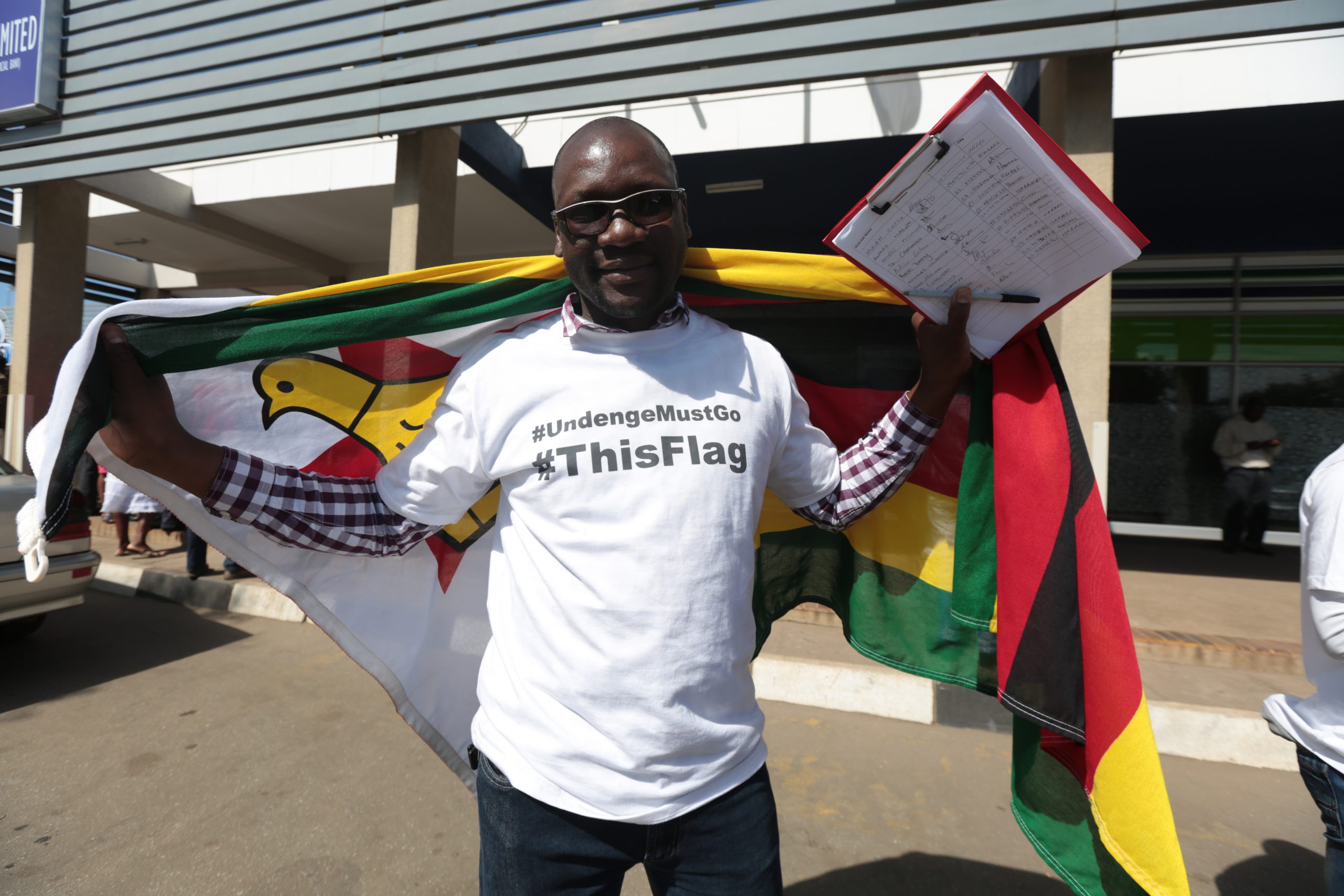
A good number of Zimbabweans resonated with the issues raised by the coordinators of #ThisFlag campaign, #Tajamuka, cross-boarder traders, Occupy Africa Unity Square movement and more recently kombi operators, among the different pockets of protestations across the country.
social media has been abuzz with rallying messages mobilising people to join the various protests, either by means of online solidarity or by physically participating in the marches and petitions, among other initiatives that are tailored to grab government’s attention.
Indeed, the government has in more than one way responded and it’s clear that the powers-that-be are worried about the unprecedented levels of civil unrest and what these small-scale protests may potentially lead to. As such, in the supposed security interest, the state, mainly through the police force, has maintained full grip at all public demonstrations and has on occasions clashed with the protestors and in some cases arrested them.
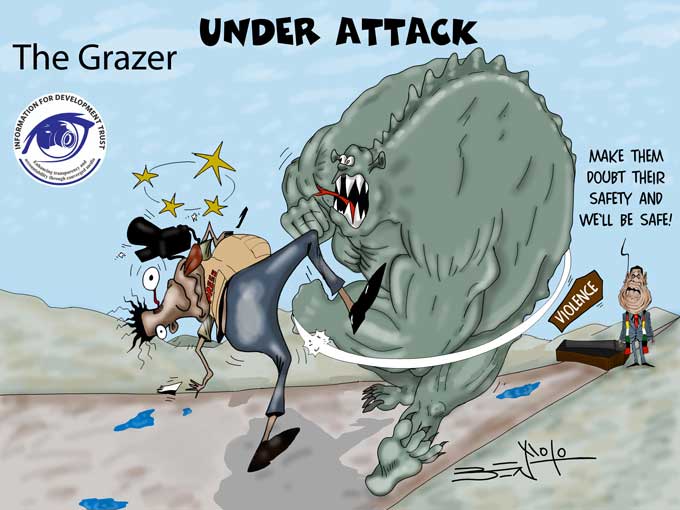
As a staunch advocate for the promotion of free expression and the right to information, I stand in solidarity with peaceful protestors, who have had to endure the traumatic experience of sleeping in jail for merely seeking to have their voice heard. I more so feel for my fellow media comrades whose safety is always at stake in times like these, when getting the story has a huge risk price tag.
While these small-scale protests are an indication that to a certain extent there are active citizens in Zimbabwe empowered to positively influence government policy or behavioural change, the relatively low uptake and involvement of the majority of the population in the national discourse attests to the absence of citizenry culture in Zimbabwe.
- Chamisa under fire over US$120K donation
- Mavhunga puts DeMbare into Chibuku quarterfinals
- Pension funds bet on Cabora Bassa oilfields
- Councils defy govt fire tender directive
Keep Reading
To illustrate this point, it is imperative to explore what active citizenry entails.
According to the Open Society Foundation, active citizenry can be best described as “the deliberate effort by people to get involved in their local communities and democracy at all levels, from towns to cities to nationwide activity”. Active citizenship can be as small as a clean-up campaign coordinated by a community of people or could be as big as embarking on a national mission to advance democratic values and principles.
Theoretically, active citizenry is a broad concept, difficult to narrow down to a specific definition and yet crucial to the well-being of any democratic society.
For people working in the humanitarian aid sector, an active citizen is one that “gives something back” to the community and recognises that people are all mutually dependent and that by making a positive contribution to the direction society takes, an individual will, in essence, be helping themselves.
There are a good number of activities that could be used as examples of a vibrant citizenry; working together to build a healthy, participative democracy. These include, but are not necessarily limited to voting and standing for election, teaching and learning, donating to good causes, recycling and caring for the environment, campaigning and more importantly, volunteering for a cause. All the above examples can take place in a professional, political or personal context either on an international scale or simply to target the neighbour next door.
Zimbabwe’s largely democratic constitution recognises this notion of active citizenry and acknowledges that all individuals and groups have the right to participate in democratic practices and institutions.
This constitutional provision vests the responsibility for ensuring that citizens participate in all national processes on both the state and the person, in that while the government is obliged to create an enabling environment for active citizenry, the onus to utilise this right lies with the citizens themselves.
Hence, it could be argued that active citizenship is all about balancing rights and responsibilities. But whereas rights can clearly be set out in the various legislative instruments — responsibilities are more difficult to enumerate.
This probably explains why in Zimbabwe the concept of active citizenry is interpreted differently by different people.
For some, active citizenry is associated with the regime change agenda or anything that embodies opposition politics. For others, active citizenry seems to amount to anything that is anti-government or about condemning one thing or another.
The interpretations of what citizens’ responsibilities should entail are varied and this has propagated exclusion of certain sections of the Zimbabwe’s population, particularly rural communities who have been reduced to being at best second class citizens or at worst subjects of the state.
It is also important to interrogate how active citizenry plays itself out in Zimbabwe, particularly within the mainstream civil society organisations or in the context of the sprouting protests occupying Zimbabwe’s civil spaces.
Firstly, there has been an over-reliance on social media, where the levels of active citizenry have largely been measured by the number of likes on Facebook or how a Whatsapp would have trended — clearly ignoring the fact that social media or in general internet based advocacy is only as good as the latest trending issue and thus unsustainable.
Secondly, the majority of citizens actively participating in these protests are predominately targeting the urbanite, which has a fair number of people clothed with degrees and accolades who may either have a disconnect with the needs and priorities of the rural population, who form more than 60% of the citizens of this country, or feel safer participating in governance issues from the comfort of their boardrooms.
As such, while it is excitable to note that there seems to be a growing trend of active citizenry in the country as evidenced by the increased number of citizens’ protests, the continued disenfranchisement of the rural community and over-reliance on social media as the epitome of the public sphere could potentially lead to unsuccessful protests.
Without a doubt, none of us can afford to be passive, especially as the country continues to meltdown politically, socially and economically. as such, there is need for us in the mainstream civil society organisations to build citizens out of subjects, especially in rural areas and to entrench a culture of active citizenry for any protest to yield meaningful results in Zimbabwe.
l Feedback: [email protected]