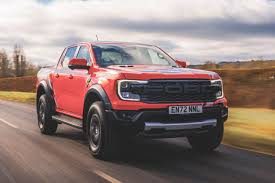
The Ford Ranger Raptor, a truck that has gained favour in the Zimbabwean streets over the Toyota Hilux, is a performance truck.
It has joined the Presidential motorcade fleet and is the go-to vehicle for Zimbabwean government officials as of late. But what really draws people to this truck is under the bonnet.
The Ford Ranger Raptor 3.0L V6 EcoBoost represents a seismic shift in the mid-size pickup segment, moving away from its diesel-powered roots to embrace a high-performance petrol heart developed by Ford Performance.
This latest iteration is built on a reinforced chassis designed to withstand the brutal forces of high-speed off-road racing, yet it maintains a level of sophistication that makes it a viable, albeit aggressive, daily driver.
At the centre of this transformation is the 3.0-litre twin-turbocharged V6 engine, which delivers around 390 horsepower and 583 Nm of torque in Southern African markets.
This powertrain allows the heavy pickup to sprint from a standstill to 100 km/h in approximately six seconds, a feat that firmly places it in the territory of genuine performance vehicles.
To manage this power, Ford has utilised a ten-speed automatic transmission equipped with an anti-lag system that keeps the turbochargers primed, ensuring that throttle response is instantaneous whether navigating city traffic or powering through thick sand.
The mechanical prowess of the Raptor is anchored by its suspension system, featuring Fox 2.5-inch Live Valve internal bypass shock absorbers.
- Chombo’s trial date moved
- An unusual lifesaver for sex workers
- Zimbo nabbed in SA driving a stolen truck
- 2 car smugglers in the dock
Keep Reading
These shocks are far more than standard springs, they utilise advanced sensors to adjust damping rates hundreds of times per second, effectively reading the terrain in real time.
This technology allows the vehicle to offer a plush, composed ride on tarmac while providing the necessary stiffness to absorb massive landings and high-speed bumps in the bush.
This versatility is further enhanced by a terrain management system that includes seven selectable drive modes.
Among these, Baja Mode stands out as the vehicle’s most aggressive setting, optimising the dual exhaust, steering and gear mapping for off-road running while opening an active valve exhaust system that produces a visceral, mechanical snarl.
Inside the cabin, the Raptor balances its rugged exterior with a tech-heavy environment inspired by aviation design.
Drivers are met with jet-fighter styled sports seats that offer significant lateral support, which is essential given the cornering speeds the vehicle is capable of achieving.
A 12.4-inch digital instrument cluster provides high-resolution data to the driver, complemented by a 12-inch portrait-oriented touchscreen running the SYNC 4A infotainment system.
Despite its focus on performance, the interior does not skimp on luxury, offering a premium Bang and Olufsen sound system and wireless connectivity that makes long-distance travel across the Zimbabwean landscape a comfortable experience.
However, owning such a specialised machine comes with distinct trade-offs that a prospective buyer must consider.
The primary disadvantage is the fuel consumption of the twin-turbo V6, which is significantly higher than the diesel alternatives found in the rest of the Ranger lineup.
While Ford provides optimistic laboratory figures, real-world driving, particularly when exploring the vehicle's performance capabilities, will frequently result in consumption figures exceeding 15 liters per 100 kilometers.
Additionally, the Raptor’s specialised suspension and wider track come at the cost of traditional utility.
Its towing capacity is limited to 2,500 kg and its payload is lower than the standard Ranger, meaning it is less suited for heavy-duty commercial work or hauling massive trailers.
Its increased width also makes it a handful in tight urban environments or narrow parking bays.
Ultimately, the final verdict on the Ford Ranger Raptor depends entirely on the user's intended application.
If the requirement is for a traditional workhorse to manage heavy loads and prioritise fuel economy, the Raptor is objectively the wrong tool for the job.
But for the buyer who views a truck as a lifestyle statement and a tool for high-speed exploration, it is currently without a rival.
It offers a level of factory-engineered capability that is impossible to replicate with aftermarket modifications without compromising on-road safety and warranty.
While it is an expensive and thirsty vehicle, the Raptor provides a unique driving experience that blends supercar-like acceleration with the ability to traverse almost any terrain on the planet, making it a worthy investment for those who value performance over pure practicality.