At the heart of the recently held Indebo Creative Confluence at Bellevue Recreation Centre was a critical and urgent conversation around identity who artists are, what art means within society, and why creative work must be recognised not merely as entertainment or leisure, but as labour, heritage, and an economic force capable of transforming communities.
The gathering became more than an arts event; it evolved into a reflective and analytical platform where questions of cultural belonging, survival, spirituality, youth development, and economic empowerment intersected in deeply meaningful ways.
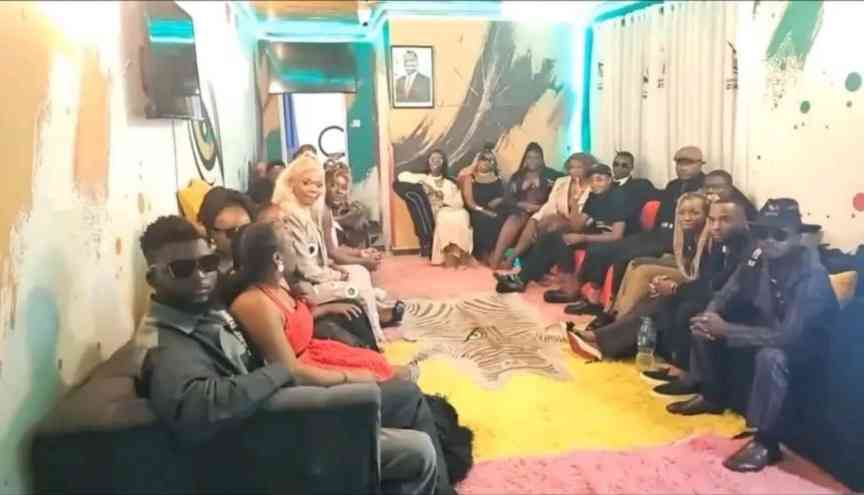
Held at the Bellevue Recreation Centre, the Confluence drew participants from Bulawayo, Figtree, Matopo and surrounding areas, bringing together artists, cultural practitioners, educators, youth leaders, and stakeholders from different sectors.
The event itself reflected the philosophy of “creative synergies,” where multiple voices and disciplines converged in a shared space of dialogue and experimentation.
Within this convergence, art was repeatedly framed not as a hobby, but as work work that carries emotional, cultural, educational, and economic value.
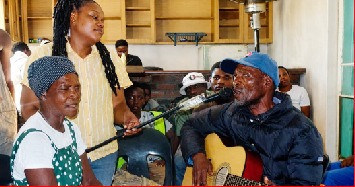
One of the most profound contributions came from renowned folk musician and storyteller Jabulani Moyo, popularly known as uNkiwane, alongside his wife Memory Maseko (Mrs. Nkiwane).
Through their performances and reflections, they demonstrated how folk music continues to serve as a bridge between generations, preserving cultural memory while speaking to present realities.
Their storytelling carried the weight of village histories, indigenous wisdom, and communal identity, yet remained deeply relevant to younger audiences navigating modern urban experiences.
- Court halts ex-minister’s eviction
- Sex pest burns woman's house
- Briefs: Naked fish poacher arrested
- Machete gangs wreak havoc in Figtree
Keep Reading
“Art carries people’s truths,” said Jabulani Moyo during one of the engagements. “If we lose our stories, we lose ourselves. Music is not just sound it is memory, identity, and survival.”
Memory Maseko added that creative spaces must remain inclusive and intergenerational if communities are to preserve both culture and dignity. “Young people need spaces where they are seen, heard, and guided,” she said. “Art becomes a language that allows generations to sit together again.”
Discussions around the economics of art were further deepened by cultural advocate Zwelani Ndebele, who strongly challenged the long-standing perception of art as merely recreational.
Ndebele emphasised the urgent need for Zimbabwe to develop sustainable creative economies capable of benefiting artists materially and professionally.
“We cannot continue romanticising suffering in the arts,” Ndebele remarked. “Art is labour. Art is industry. Art is intellectual property. If creatives are central to culture and identity, then they must also be central to economic planning.”
His contribution resonated strongly throughout the event, especially among younger creatives who often struggle to sustain their artistic work financially.
Ndebele’s intervention shifted the discussion from artistic passion alone toward structural questions around funding, institutional support, ownership, and the monetisation of cultural production.
Future Khumalo, expanded the conversation by focusing on the relationship between art and education. His contribution highlighted the often-overlooked role of artists as mentors, educators, and social guides within communities. According to Khumalo, artists hold a unique responsibility to shape younger generations not only creatively, but ethically and intellectually as well.
“Art is a classroom on its own,” Khumalo explained. “Young people learn confidence, discipline, communication, and identity through creative practice. If we neglect the arts, we also neglect the emotional and imaginative education of our youth.”
Khumalo further argued that mentorship within creative spaces is becoming increasingly necessary in a time where many young people are searching for belonging, expression, and direction.
His reflections aligned closely with the broader atmosphere of the Confluence, where older practitioners openly engaged emerging creatives in dialogue, performance, and collaborative exchange.
The presence of Fr. Maciej (SVD), a Polish missionary long associated with supporting artistic initiatives in Bulawayo, added another dimension to the gathering.
Speaking on the plight of artists, Fr. Maciej acknowledged the persistent struggles creatives face, particularly in environments where artistic work is undervalued or unsupported institutionally.
“Artists carry society’s emotional and cultural burdens,” he noted. “Yet many continue working without proper spaces, resources, or recognition. Supporting the arts is not charity it is an investment in human dignity and social healing.”
The event also illuminated the role being played by Sylvia, popularly known as NaMaggie, at the Bellevue Recreation Centre. Through her work with youths, NaMaggie has been developing what participants described as “arts and religion synergies,” creating spaces where spirituality, creativity, and youth engagement coexist rather than compete.
Her efforts were recognised as part of a broader movement to transform recreational spaces into centres of expression, mentorship, and communal development.
However, while the Confluence succeeded artistically and intellectually, it also exposed significant structural and social challenges facing independent creative movements such as Indebo. One of the most visible difficulties was the reality of hosting events in venues that are not fully owned or controlled by the organisers themselves.
Such dependence creates logistical limitations, scheduling uncertainties, and restrictions on how spaces can be activated creatively. The issue reflects a wider problem within Zimbabwe’s arts sector, where many creative collectives operate without stable infrastructure despite producing culturally significant work.
Another point of reflection emerged around the participation of youths from Lighthouse Academy. While their commitment to church and spirituality was acknowledged positively, some participants observed that many young people ultimately prioritised church-related activities over full engagement with the Confluence, despite the event not being held on a specific church day. This dynamic sparked deeper discussions around the relationship between religion, creativity, and youth potential.
Some attendees argued that while spirituality can positively shape discipline and morality, there is also a danger when young people are socialised into environments that unintentionally narrow their engagement with broader cultural and intellectual opportunities. The discussion was not framed as an attack on religion, but rather as a critique of forms of excessive religious conditioning that may discourage exploration, artistic participation, and critical engagement with society.
Within this context, the Confluence itself became a site of negotiation—a place where art, spirituality, education, economics, and identity met in complex and sometimes uncomfortable ways. Yet it was precisely these tensions that gave the gathering its significance. Rather than offering simplistic celebration, the event opened up new channels for conversation, collaboration, and reflection.
By the end of the day, it had become evident that the Indebo Creative Confluence was not simply an artistic programme, but an emerging intellectual and cultural movement attempting to rethink how communities engage with creativity, youth development, and social transformation. In bringing together voices from different regions, generations, and disciplines, the event demonstrated the power of synergies not only to create art, but to provoke deeper thinking about the future of culture and identity in Zimbabwe.
*Raymond Millagre Langa is a multidisciplinary creative, cultural storyteller, and the founder of Indebo Edutainment Trust, an initiative dedicated to using art, edutainment, and creative synergies as tools for community transformation and youth empowerment. Through his work, he continues to bridge storytelling, cultural expression, and social dialogue, advocating for art not only as a form of expression, but as a powerful force for identity, innovation, and sustainable development within Zimbabwe’s creative landscape.