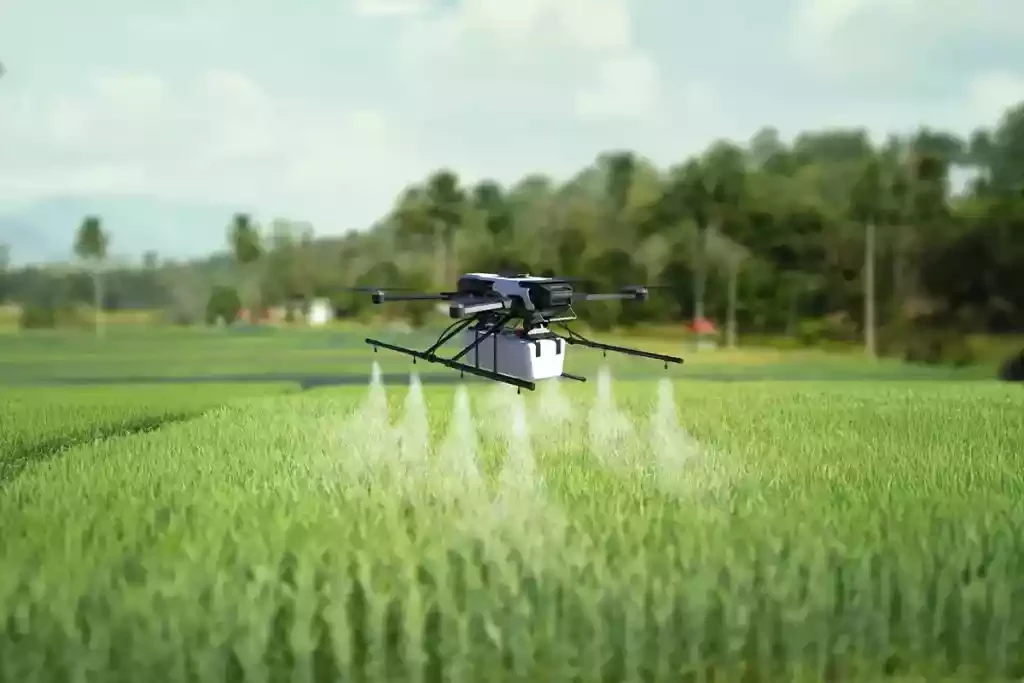
For decades, rural farming communities have relied on traditional knowledge systems, seasonal rhythms, and limited access to formal markets.
While these practices have sustained livelihoods, they have also constrained productivity and resilience in an increasingly complex global food system.
Now, with the growing push toward digitalisation, there is a tangible opportunity to reshape rural agriculture into a more efficient, knowledge driven, and market-oriented sector.
But whether this transformation succeeds will depend less on the technology itself and more on how effectively people are prepared to use it.
A Digital Literacy Training of Trainers (ToT), spearheaded by the Food and Agriculture Organisation (FAO) in collaboration with the Ministry of Lands, Agriculture, Fisheries, Water and Rural Development, signals a strategic shift in how agricultural development is being approached.
Rather than simply introducing new tools, the initiative focuses on building human capacity starting with extension officers and cascading knowledge down to farmers. This approach recognises a critical reality: technology alone does not transform systems; people do.
The emphasis on digital literacy for extension officers is particularly significant. These officers serve as the bridge between policy, innovation, and the farmer.
If they lack the skills to interpret, adapt, and communicate digital tools, the entire value chain weakens.
- Public relations: Which innovations are driving PR in 2022 and beyond?
- Vitalis Takawira Jr tracing dad’s footsteps
- In defence of Trevor Ncube
- Fluidity, collusion: The new PR & communication philosophy
Keep Reading
Training them as "digital champions" is a pragmatic move, but it also raises an important question: how sustainable is this model without continuous support, incentives, and infrastructure?
The two step strategy developing digital champions and then cascading knowledge to rural communities has clear merits.
It leverages local trust networks and reduces dependency on external experts. In theory, it creates a multiplier effect where knowledge spreads organically within communities.
However, the success of this model hinges on consistency and quality of training. If the initial group of champions is not adequately equipped or motivated, the ripple effect could quickly dissipate.
Another challenge lies in the structural inequalities that define Zimbabwe's rural landscape.
The digital divide is not merely about access to devices or internet connectivity; it is also about affordability, language barriers, and relevance of content.
Training farmers to use digital tools is only meaningful if those tools are tailored to their realities local languages, low bandwidth environments, and practical agricultural needs.
Otherwise, digitalisation risks becoming another layer of exclusion rather than empowerment.
The inclusion of generative artificial intelligence tools such as ChatGPT in the training programme is both forward looking and contentious.
On one hand, exposing rural stakeholders to cutting-edge technologies can accelerate innovation and broaden horizons.
On the other hand, there is a risk of overestimating the immediate applicability of such tools in contexts where basic digital infrastructure is still lacking.
The novelty of AI should not overshadow more pressing needs such as reliable weather information systems, mobile-based market access, and simple farm management applications.
That said, dismissing advanced technologies outright would be shortsighted.
The key lies in contextualization. For instance, AI tools could be adapted to provide localized farming advice, pest management alerts, or translation services for extension materials.
But this requires deliberate design and ongoing investment, not just one-off training sessions.
A particularly compelling aspect of the initiative is its potential to attract young people into agriculture.
Zimbabwe, like many African countries, faces a demographic shift where youth are increasingly disengaged from farming, viewing it as labor-intensive and low-reward.
Digitalisation offers a chance to rebrand agriculture as a modern, tech-enabled enterprise.
If young people can see clear pathways to income generation through digital platforms whether in precision farming, agribusiness management, or data-driven decision-making-they are more likely to participate.
However, attracting youth will require more than digital tools. It will demand systemic changes, including access to finance, land tenure security, and supportive policies that encourage entrepreneurship.
Without these, digital literacy risks becoming an isolated intervention rather than a catalyst for broader transformation.
Cybersecurity, as mentioned in the initiative, is another often-overlooked dimension.
As rural communities become more digitally connected, they also become more vulnerable to misinformation, fraud, and data exploitation.
Building awareness around safe digital practices is essential, but it must be integrated into training in a way that is practical and accessible. Otherwise, fear of digital risks could undermine adoption.
Ultimately, the promise of the Digital Villages Initiative lies in its holistic vision.
It is not just about introducing gadgets or software; it is about reshaping how knowledge flows within agricultural systems.
If implemented effectively, it could enhance productivity, improve market access, and build resilience against climate shocks.
But if poorly executed, it risks becoming another well-intentioned programme that fails to achieve lasting impact.
There is also a broader policy implication. Digitalisation should not be treated as a standalone solution but as part of an integrated rural development strategy.
Investments in infrastructure such as electricity, internet connectivity, and transport must go hand in hand with capacity building.
Similarly, partnerships with private sector players could accelerate innovation and ensure that digital solutions are scalable and sustainable.
Digitalisation has the potential to transform rural agriculture in Zimbabwe, but it is not a silver bullet.
The real work lies in building systems that are inclusive, context-specific, and resilient.
Training extension officers as digital champions is a strong starting point, but it must be complemented by sustained investment, community engagement, and policy alignment.
If these elements come together, Zimbabwe could move from subsistence farming toward a more dynamic, digitally empowered agricultural sector-one where rural communities are not just beneficiaries of technology, but active participants in shaping its future.
- Gary Gerald Mtombeni is a Harare based journalist. He writes here in his personal capacity. For feedback Email [email protected]/ call: +263778861608