Dear reader,
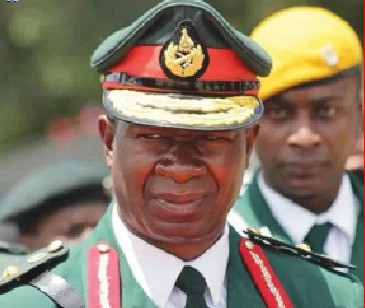
President Dambudzo Mnangagwa’s appointment of Retired General Philip Valerio Sibanda (pictured) to the Zanu PF politburo on May 11, 2026 has triggered significant political debate in Zimbabwe.
Several layered dynamics are operating simultaneously. Some appear carefully calculated. Others may produce unintended but important political effects.
Speculation around Sibanda’s future role will not disappear easily because he is not an ordinary retired general. He is a former Zipra liberation war veteran and one of Zimbabwe’s longest-serving military commanders. Sibanda commanded the Zimbabwe National Army (ZNA) from 2003 to 2017 before leading the Zimbabwe Defence Forces (ZDF) from 2017 to 2025. In total, he spent 22 years at the apex of Zimbabwe’s military command structures and earned a reputation among peers as a disciplined military strategist.
But first, we must recognise that Sibanda’s appointment reflects continuity within Zanu PF politics. The incorporation of retired commanders into senior party and state structures is a long-standing institutional practice dating back to Robert Mugabe’s era.
Figures such as Solomon Mujuru, Vitalis Zvinavashe, Perrance Shiri, Josiah Tungamirai, and Vice-President Constantino Chiwenga were all absorbed into political office after military service.
Second, the politburo functions partly as a retirement architecture for sections of the liberation-security elite. It provides protection, status and continued incorporation into the ruling coalition after military retirement.
Full-time politburo members currently receive ministerial-level packages, including salaries of around US$3 500 per month, luxury off-road vehicle fleets, and extensive fuel benefits financed through party and state structures. Zanu PF spends more than US$10 million annually sustaining these privileges. As the ruling party’s supreme decision-making body, the politburo offers continued proximity to state power, patronage, and accumulation networks.
- COP27: Zimbabwe’s opportunity to shine
- COP27: Zimbabwe’s opportunity to shine
- Real deal: The night the president appeared to be inebriated
- Real deal: The night the president appeared to be inebriated
Keep Reading
Third, and perhaps most importantly, Sibanda’s appointment lands in the middle of unresolved succession politics around the 2030 agenda. That is what gives it political weight. Mnangagwa’s long-term challenge has been how to prevent liberation-military legitimacy from consolidating too heavily around Chiwenga, once widely viewed as the natural post-Mnangagwa successor.
Chiwenga did not rise through civilian party structures. He spent 23 years commanding Zimbabwe’s most powerful institutions, first as Commander of the ZNA from 1994 to 2003, and then as Commander of the ZDF from 2003 until the 2017 coup that brought Mnangagwa to power.
But reader, Sibanda carries almost the same liberation-security weight. His entry into the politburo potentially neutralises Chiwenga’s monopoly over liberation-military legitimacy within Zanu PF. What controversial business figures around Mnangagwa, such as Kudakwashe Tagwirei, possess financially, they lack in liberation-war and military pedigree. Sibanda helps fill that gap.
Even if Sibanda appears cautious toward Chiwenga after years serving under his command as ZNA chief, and seems less interested in active civilian politics, his importance lies less in personal ambition than in how Mnangagwa and his allies may seek to politically deploy his liberation-security stature within the succession matrix.
Fourth, dominant party systems have long managed retired elites through incorporation rather than exclusion. It is a classic strategy of authoritarian elite management and “coup-proofing” aimed at preventing former commanders from becoming autonomous centres of political influence during uncertain transitions.
In Zimbabwe, the logic carries even greater weight because the 2017 military coup remains politically recent. Former commanders of the army still retain networks within the barracks, intelligence structures, liberation-war circles, business sectors, and diplomatic institutions. Incorporation into the politburo is therefore also about trying to keep liberation-security elites politically-aligned to Mnangagwa during an unresolved succession moment shaped by the 2030 agenda.
Fifth, Sibanda’s appointment carries symbolic weight at a moment when Zanu PF faces growing accusations of drifting from liberation politics toward cartel accumulation and tenderpreneur influence. The elevation of another former military commander helps reinforce the image that liberation-war and military legitimacy still remain central to Zanu PF power.
As controversial businessmen such as Tagwirei and Tungwarara rise within party structures, Wicknell Chivayo’s influence around the state also continues to expand. None carry liberation-war or military credentials. Questions are therefore increasingly being raised about the growing power of corrupt business networks within the ruling party.
Sibanda’s appointment therefore reassures sections of the security establishment that, despite growing perceptions of cartelisation, the liberation-military axis still formally occupies the commanding heights of party power.
Sixth, reader, the deeper issue is not simply that retired generals enter the politburo. It is the continued fusion of party, state and military authority within what Ibbo Mandaza once described as Zimbabwe’s securocratic state.
In Zanu PF, military command often mutates into political command. Sibanda retired as ZDF Commander in November 2025. Barely six months later, he is already sitting at the apex of the ruling party. The logic was already visible in October 2023 when Mnangagwa attempted to appoint Sibanda into the politburo while he was still serving as ZDF Commander. The move violated Section 208 of the Constitution and triggered public outrage, forcing Mnangagwa to retreat.
However, the political logic never disappeared. His later appointment after retirement ultimately achieved what had initially been attempted while he was still in uniform. It suggests that sections of Mnangagwa’s camp viewed Sibanda not simply as a retired commander to be accommodated, but as a politically useful figure within longer-term succession and security calculations.
Seventh, is the growing belief within some political circles that Sibanda is being prepared for the presidency. This unfolds within a broader context in which Mnangagwa has steadily consolidated a Midlands-centred Karanga political hegemony across sections of the party-state.
Sibanda is also linked to Mnangagwa through familial, regional, and totemic ties rooted in the Midlands. Both are associated with the Shumba (Lion) totem. Some of Mnangagwa’s family members use the surname Sibanda. In Mnangagwa’s politics, such kinship and regional networks matter deeply.
However, reader, succession speculation and actual succession are rarely the same thing in Zimbabwean politics. The road for the incoming General remains complicated. Zimbabwean succession politics are no longer determined by military seniority and familial ties alone.
They are shaped by factional balances, liberation histories, ethnic alliances, party structures, some level of popular legitimacy, and control over political and financial networks. That is why even Chiwenga’s own succession path remains uncertain despite his liberation-military stature and central role in the 2017 coup.
There is also the unresolved Zanla–Zipra divide. Sibanda and Vice-President Kembo Mohadi both emerge from the former Zipra tradition, while Chiwenga comes from the former Zanla, which still dominates much of the military and Zanu PF after the post-Independence marginalisation of Zipra.
Replacing Chiwenga with Sibanda could therefore provoke resistance within sections of the liberation-security establishment. If Sibanda rises further, the more plausible route may lie through Mohadi’s vice-presidential position.
Besides, Sibanda lacks a strong party machinery or mass political base. In Zanu PF, he is viewed more as a disciplined military strategist than a political mobiliser. He also lacks a clear generational or health advantage. Mnangagwa, Chiwenga and Mohadi have all faced recurring questions around health and political longevity. In that context, Sibanda does not necessarily emerge as a distinctly fresher or more durable long-term successor capable of resolving the succession question beyond the current generation of liberation-era elites.
Sibanda’s political significance may therefore lie less in immediate presidential ambition than in how Mnangagwa and shifting elite alliances may seek to deploy his liberation-security stature within an unresolved and fluid succession matrix.
However, these alliances are neither fixed nor stable. Credible accounts suggest that relations between Chiwenga and Sibanda were once so tense that Chiwenga pushed for Sibanda’s retirement under Mugabe. Yet the two later converged around the 2017 military intervention that benefited Mnangagwa. Elite relations within Zimbabwe’s party-security establishment are therefore often shaped as much by fear, mistrust, and tactical calculation as by loyalty and liberation-war solidarity bonds.
Zamchiya is a political analyst who writes in his personal capacity.