OF late, there have been a number of positive stories coming out of Zimbabwe, especially pertaining to economic recovery although there is very little to show for this on the ground.
If anything, people’s living standards are falling by the day. Sadly, as this happens, the rich are getting richer, inevitably widening the gap between the haves and have-nots.
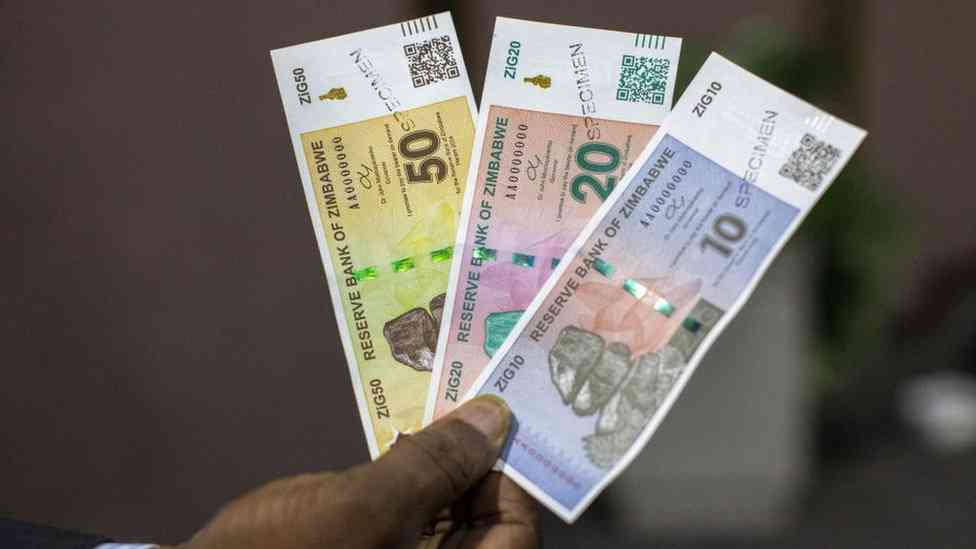
The biggest of all these stories is the stabilisation of the Zimbabwe Gold (ZiG) currency, introduced in the country in April 2024.
Prices have basically remained stable, resulting in the year-on-year inflation for January 2026 tumbling to single-digit figures — 4,1% according to the Zimbabwe National Statistics Agency.
This is no mean feat as the last time similar figures were last recorded was in the 1990s.
However, for most of us, it is now a question of sustainability and how long authorities will continue with their tight control measures.
It depends on whether the government will continue with their discipline on spending within their budgets. Our greatest fear is that these maybe coordinated positive narratives meant to give credence to the mono-currency and de-dollarisation push.
Talk about the country achieving upper middle-income status by the year 2030 has been in the public domain for some time and we will not be crucified for thinking that all these flowery stories are aimed part of a choreographed agenda-setting ploy.
- DeMbare fire blanks in drab draw
- New perspectives: Reconfigure Zimbabwe’s economy for recovery
- Awards target married couples
- New perspectives: Reconfigure Zimbabwe’s economy for recovery
Keep Reading
The Mutapa Investment Fund (MIF), under which many state-owned enterprises (SOEs) have been placed, announced recently that Air Zimbabwe, which has been in the doldrums for years, will resume flights to London in June 2026.
Some of us, who are a bit nostalgic recall the late 1980s to 1990s when a neon advertisement used to beam Harare’s night scene from the top of the Ambassador Building on Kwame Nkrumah Avenue — “Air Zimbabwe, Non-stop to London” and “Air Zimbabwe, Non-Stop to Gatwick”.
For any recovery to take place, the initial cause of the problem has to be identified. Air Zimbabwe, just like other SEOs that went under or have struggled, faced multiple challenges, chief among them poor corporate governance and financial profligacy.
Corruption was also part of the long list of problems that bedevilled SOEs. It is our hope that MIF chief executive officer John Mangudya has done his homework, cleaning the mess in these SOEs before sinking money, which may go down the same bottomless pit once again at a time citizens are enduring the worst in terms of living conditionss.
Corruption has for long been one of our biggest challenges, a cancer that has been allowed to metastasise to frightening levels, a metastasis that has taken place gradually and systematically since Independence in 1980.
Currently, corruption has been institutionalised and ranks as the single most disruptive force to national development.
The courts are handling corruption-related cases every day and these are the ones that eventually get reported. The bulk of them are either not discovered or go unreported.
Zimbabwe has had a number of politically-connected individuals, who get lucrative government contracts without going to tender, developments that dent the drive towards transparency and sincerity.
If we imagine that all is well and industry capacity utilisation goes up and other manufacturing entities emerge, another Catch-22 situation will unravel — the lack of adequate skilled and experienced personnel as the bulk of these have left and are oiling foreign economies.
School leavers, who have remained in the country have turned to drugs and dangerous substances, almost destroying a whole generation of youths.
The bulk of them can no longer perform meaningful work as they have fallen victim to the drug problem.
This brings us to yet another challenge. While the government has come up with a taskforce on drugs and substance abuse, threatening to lock up whoever dabbles in the stuff, policing and criminalising drug use may not ultimately be the solution.
We would want to know the source. Who is bringing in these drugs and dangerous substances? The suppliers are known and why authorities are not doing the right thing by locking these up is the question that needs answers.
It is not the ordinary citizen, who is bringing drugs into the country. It is the elites and politically-connected individuals, who can influence law enforcement agents and those controlling Zimbabwe’s ports of entry.
This is the same thing that happens with smuggling of key minerals and other goods. It is the politically-connected, who can evade or even pay their way through the same control points.
This has led to our gold, platinum, chrome ore and lithium among other minerals leaving our ports without a dime going to the fiscus. The culprits are known yet no one cares a bit about it and they go scot-free.
This is why the Democratic Official Party has always argued that there is a lot that needs to be righted in the way Zimbabwe is being run. The country is awash with natural resources, including minerals and yet the ordinary citizen is enduring grinding poverty day in, day out.
There is growing inequality and yet we hear officials preaching a different gospel – an upper middle-income economy by 2030, something that may remain pie in the sky for millions of ordinary citizens.
Yet we all feel things should get better, sooner rather than later for all Zimbabweans. They should get a fair share of the national cake, which currently remains a preserve for a few privileged and politically-connected individuals.
Wilson is the founder and president of the Democratic Official Party. He is very passionate about the equitable distribution of wealth in Zimbabwe.