PRESIDENT Emmerson Mnangagwa’s recurrent cabinet reshuffles, culminating in this week’s sacking of Mines and Mining Development minister Winston Chitando, reflect a political landscape driven less by policy coherence than by entrenched patronage networks, analysts have said.
From the removal of Webster Shamu in 2017 to the latest dismissal, each reshuffle has peeled back a layer of Zimbabwe’s governance system, exposing what observers describe as a complex interplay of elite interests, state capture and opaque political calculations cloaked behind presidential prerogative.
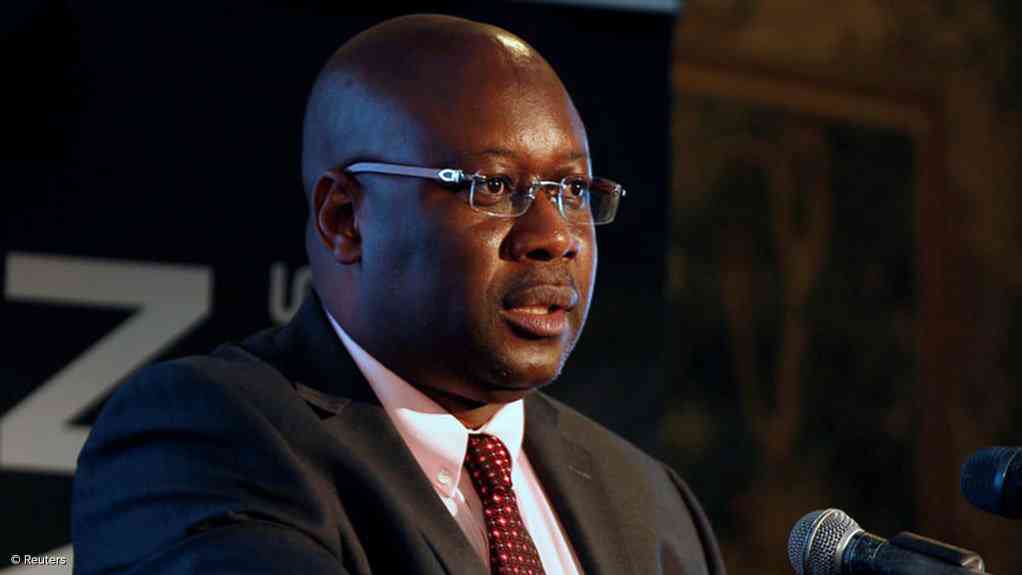
Mnangagwa this week dismissed Chitando and replaced him with his deputy, Polite Kambamura, without offering a public explanation.
Political analyst Tendai Reuben Mbofana said the pattern suggests that ministerial positions are not just political appointments but strategic access points to state resources.
“Most recently, we witnessed the dismissal of Winston Chitando as minister of Mines; no formal explanation has been offered, although there is widespread speculation that this may relate to his alleged resistance to (a certain businessman)s’ mining interests,” Mbofana said.
“It is still too early to state this with certainty, but given how Zimbabwe has been governed in recent years, such a link would not be surprising.
“A discernible pattern emerges when one considers the previous examples,” he added.
Mbofana argued that ministers who disrupt or threaten established patronage networks face removal, regardless of their competence or contribution.
- NoViolet Bulawayo’s new novel is an instant Zimbabwean classic
- Jah Prayzah, Zanu PF rekindles ‘lost love’
- Bank workers appeal to Ncube for tax relief
- Indosakusa marks 21-year anniversary milestone
Keep Reading
“It is difficult to deny that both the ruling Zanu PF party and the state itself have been significantly captured by so-called Zvigananda, who use wealth accumulated largely through opaque public tenders and questionable disposal of state assets to buy loyalty and exert influence over party and state institutions,” he said.
“We now live in a political economy where money increasingly speaks louder than principle.
“Against that backdrop, it would not be shocking if many of these ministerial dismissals are, in reality, driven by the private interests of powerful and well-connected elites rather than by genuine concerns for public accountability or good governance,” Mbofana added.
Political commentator Ricky Mukonza said some dismissals involving prominent corruption scandals have served as a veneer of accountability.
“There are also cases of corruption that became too exposed and obvious to ignore; these were used as a facade, creating an impression that the current government was dealing with corruption,” Mukonza said.
“The current case of Chitando has not clearly been articulated in terms of the reasons for the sacking.
“Chitando appeared to enjoy proximity to the President, and I doubt if his matter has anything to do with party factionalism,” he added.
Political analyst Kudzai Mutisi highlighted the constitutional framework, noting that ministers serve at the pleasure of the President.
“It is important to note that cabinet ministers serve at the pleasure of the president; the President can remove a minister from office anytime without explaining the reasons for doing so,” Mutisi said.
“President Mnangagwa has a vision for the country, and all his appointees are expected to work towards that vision.
“When you see a minister being removed, it’s mainly because the president does not believe that the minister is doing enough to make that vision a reality.”
He added that ministerial posts are inherently political and can be withdrawn at any time if priorities shift.
“Of course, ministerial posts are political rewards that can be withdrawn anytime if there is a shift in political interests, but in the absence of an explicit explanation for the removal of a minister, we can only speculate. President Mnangagwa is serving his final term in office; he has no factional battles to fight against anyone,” Mutisi said.
However, analysts argue that the broader pattern of dismissals, including high-profile figures such as Fortune Chasi, suggests private interests frequently overshadow public accountability.
Since 2017, numerous ministers have been reassigned or fired, among them Shamu, Prisca Mupfumira, Chasi, Obadiah Moyo and now Chitando.
While the President holds the constitutional authority to dismiss cabinet members at will, analysts say the consistency of these reshuffles points to a deeper issue: the influence of a powerful, politically-connected elite whose private interests often supersede the imperatives of good governance.
Their sway continues to shape an intricate, opaque web of patronage, raising persistent concerns about state capture and the subversion of public accountability for private gain.