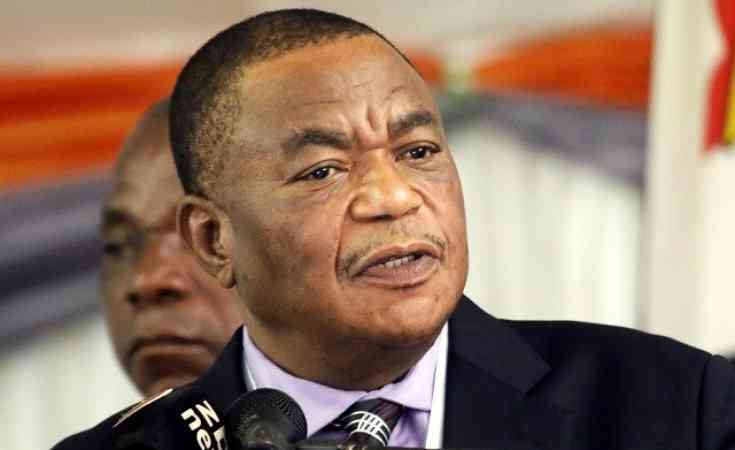
VICE-PRESIDENT Constantino Chiwenga has urged a decisive shift towards domestic production, saying Zimbabwe must strengthen its industrial base to withstand mounting geopolitical tensions and global economic uncertainty.
Addressing the 2026 International Business Conference in Bulawayo on Wednesday, Chiwenga said government was increasingly conscious of shifting global risks, including geopolitical tensions, supply chain disruptions and rising energy costs.
“However, these challenges also present opportunities for Zimbabwe to position itself as a stable, reliable and competitive investment destination,” he said.
“Zimbabwe should therefore safeguard against the negative impacts of geo-political dynamics by focusing on building local capacity for increasing fuel alternatives, steel manufacturing, and pharmaceuticals leveraging on its vast natural resource endowments.”
He said manufacturing had to become the backbone of economic transformation, job creation and export growth.
“Manufacturing must become a stronger engine of national growth,” he said, adding that government’s focus was on rebuilding industry and reducing import dependence.
A key pillar of that drive is the revival of the automotive sector through a partnership between Willowvale Motor Industries and Ashok Leyland.
Under the arrangement, bus kits are expected to begin production in Harare towards the end of 2026, supporting continuous local assembly at Willowvale Motor Industries, with an initial target of 50 buses for the domestic market.
- Big send-off for Cont Mhlanga
- Massive ZRP vehicle theft scam exposed
- Zanu PF bigwigs face axe in purge
- Village Rhapsody: Health workers’ grievances need permanent solution
Keep Reading
The project forms part of broader efforts to re-industrialise an economy whose manufacturing base has steadily declined over the past two decades amid currency instability, policy uncertainty and subdued investment.
Beyond vehicle assembly, Chiwenga said Zimbabwe was opening up opportunities across a wide range of sectors, including food processing, pharmaceuticals, steel production, fertilisers, packaging, textiles and construction materials.
“We invite investors to partner with local enterprises in retooling factories, modernising production systems, improving standards and expanding export capacity,” he said.
Once a cornerstone of the economy, Zimbabwe’s manufacturing sector contributed more than 20% to gross domestic product in the 1990s, but has since been operating below capacity, weighed down by ageing equipment, high production costs and competition from cheaper imports.
The renewed industrial push comes amid growing concern within government over the economy’s exposure to external shocks, particularly as global supply chains remain fragile following recent geopolitical conflicts and volatile energy prices.
He stressed the need to harness the country’s natural resource base to drive industrialisation, particularly in steel manufacturing and pharmaceuticals, which he said were critical for import substitution and export growth.
His remarks come as government steps up efforts to attract both domestic and foreign investment, despite persistent foreign currency shortages and a slow pace of industrial recovery.
The conference, held alongside the Zimbabwe International Trade Fair in Bulawayo, brought together policymakers and business leaders to explore ways of improving the country’s competitiveness in regional and global markets.
While industrialisation remains a stated policy priority, progress has been uneven, with concerns over infrastructure gaps, policy consistency and access to affordable financing continuing to weigh on the sector.
Even so, Chiwenga said rebuilding manufacturing capacity and embracing the digital economy would be central to Zimbabwe’s future growth trajectory, particularly under the African Continental Free Trade Area.
“Our vision is to build competitive industries that serve both the domestic market and the wider African continent,” he said.