ON July 8, 2026, China’s top leadership delivered a systematic address on attaining high-level sci-tech self-reliance, outlining a core framework that leverages technological innovation to anchor national modernisation. Six priority pathways for building a major power in science and technology were laid out, two of which stand out as highly relevant to Africa’s structural predicaments: homegrown development of a pipeline of skilled scientists and engineers, and systematic capacity to tackle bottleneck core technologies.
Written from an African analytical lens, this commentary dissects China’s integrated education, research and industrial development model with sober pragmatism. It distinguishes replicable lessons from context-specific institutional arrangements unique to China, offering a structured policy reference for African states drafting long-term strategies for science, education and industrialisation.
Unlocking the link between lab research and industrial application
China’s governance framework frames high-calibre innovative talent as the foundational bedrock of technological autonomy. Skilled human capital acts as the vital thread weaving independent research breakthroughs into tangible industrial progress.
Scholars at Shanghai Jiao Tong University’s Antai College of Economics and Management observe that the biggest roadblock to translating scientific discoveries into commercial value lies in a critical shortage of multi-skilled professionals. Developing economies require not only specialised technical researchers, but cross-disciplinary practitioners fluent in industry, finance, law and management.
To bridge this talent gap, China has rolled out four coordinated development mechanisms. First, deep integration of science, education and industry, aligning curricula closely with real domestic industrial demand. Second, dynamic adjustment of academic disciplines, rapidly retooling degree programmes to respond to national strategic priorities. Third, regular university-industry-research partnerships, where enterprises, academia and research institutes co-design targeted research and joint training schemes. Fourth, a unified “science-education-industry-finance-innovation” framework tailored to nurture entrepreneurial innovators.
Shanghai Jiao Tong University’s Master of Technology Transfer programme serves as a tangible case study of this model. It combines classroom theory with hands-on field practice and mentorship from senior industry practitioners, producing full-cycle specialists capable of moving laboratory innovations down to industrial production lines.
While the underlying logic of this talent system holds universal merit, its on-the-ground effectiveness hinges entirely on a country’s domestic industrial capacity. Most resource-reliant African economies possess narrow manufacturing bases; scaling up technical training without matching local industry absorption capacity inevitably fuels brain drain, a critical constraint African policymakers must address upfront.
- The brains behind Matavire’s immortalisation
- Embracing green buildings to save energy
- Time, gentlemen, please
- Brand partnerships
Keep Reading
Balancing independent R&D and global open collaboration
China’s vision of high-level technological self-reliance does not advocate isolationist tech development. Instead, it advances a balanced paradigm that pairs independent capacity building with open international exchange. Computer science researchers at Tsinghua University argue that securing control over core technologies never means cutting ties with global innovation networks.
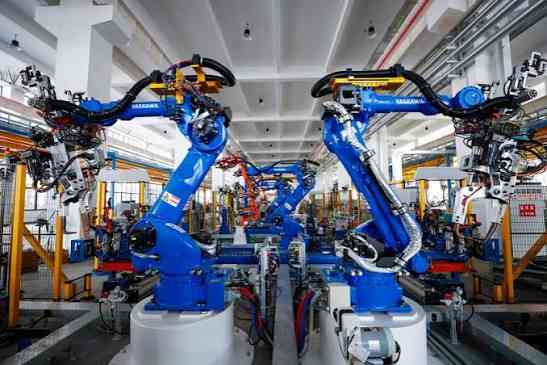
In practice, China channels sustained investment into self-developed solutions for bottleneck sectors including semiconductors, high-end manufacturing equipment and biomedicine to shore up supply chain security. Parallel to this, it actively joins cross-border research consortia on artificial intelligence, biotechnology and other frontier fields, while participating in global dialogues shaping international tech governance rules.
This dual approach—securing domestic technological sovereignty while embracing global collaboration—offers a clear benchmark for the Global South. Technical autonomy creates leverage against external economic coercion, while open cooperation cuts research costs and accelerates industrial upgrading; the two objectives are not mutually exclusive.
Most African nations, by contrast, remain trapped in one-sided reliance on imported technology, with minimal domestic R&D spending and limited access to equitable spaces within global tech value chains. China’s balanced model delivers actionable lessons for breaking this cycle of technological dependency.
Lessons from China’s development model
Chinese modernisation has taken shape against a backdrop of complete industrial chains, vast domestic consumer markets and consistent long-term state planning. It offers valuable reference points for developing nations, yet no one-size-fits-all blueprint exists. African governments must draw clear boundaries between adaptable practices and context-specific systems that cannot be directly transplanted.
First, consistent long-term strategic planning anchored by multi-year national development blueprints. China’s five-year planning cycles deliver stable funding pipelines for industry, science and education, reducing disruptive policy swings caused by short-term political cycles. The 14th Five-Year Plan built a comprehensive national innovation ecosystem through long-range industrial mapping, indigenous R&D investment and green transition agendas, a dynamic South African think tank research confirms. Zimbabwean local analysts further note that nurturing homegrown talent represents the most viable path to escaping external technological control.
It bears critical contextual clarification that no single talent development model holds universal superiority. The United States relies on global skilled labour migration to fill gaps in its tech workforce, while China centres domestic cultivation alongside targeted recruitment of overseas high-end specialists. Each system reflects distinct national demographics, industrial maturity and development stages, requiring African states to select pathways aligned with their own population structures.
Second, equitable South-South cooperation centred on practical skill transfer. Traditional Western aid packages frequently come with binding political and economic conditionalities that constrain recipient countries’ industrial and diplomatic autonomy. While some Western interventions have delivered short-term gains in basic healthcare and primary schooling, they rarely foster lasting indigenous development capacity.
By contrast, China-Africa cooperation operates on the principle of equal mutual benefit, prioritising tangible on-the-ground projects, technical knowledge transfer and local capacity empowerment. Initiatives span smart agriculture, port infrastructure, green energy and vocational training, with flagship implementations including precision irrigation systems in Ethiopia, widespread agricultural machinery adoption across Zimbabwe, and joint agricultural talent training schemes. No political strings are attached, aligning far more closely with Africa’s pursuit of autonomous industrialisation.
Actionable pathways for African implementation
Design national science and technology strategies rooted in domestic industrial realities. Developing nations need not reject foreign advanced technology, yet they must build parallel capacity to absorb, adapt and independently innovate on imported tools. Locking economies into low-value resource extraction by resisting technological upgrading perpetuates unequal global labour division.
Deepen collaborative South-South science and technology partnerships. China-Africa scientific cooperation stands as a gold standard for Global South solidarity. The African Union’s STISA 2025–2034 framework can be integrated with China-Africa cooperation mechanisms to pool continental resources for joint research and development.
Adapt foreign experience selectively, rejecting blind wholesale replication. China’s education and research systems evolved through decades of iterative policy adjustments, tailored to its massive domestic industrial market. African countries face vastly different fiscal budgets, industrial compositions and population profiles; copying institutional frameworks outright risks wasteful resource misallocation.
Scaling STEM investment
Cross-continental industrial transformation data confirms STEM education acts as a catalyst for innovation, job creation and structural economic upgrading—an equation proven by South Korea and Singapore’s successful economic transitions. Over the next three decades, Africa will supply the majority of the world’s new labour force, yet the continent’s fragmented STEM infrastructure remains underdeveloped. Heavy reliance on imported industrial hardware and core components stifles domestic manufacturing expansion and grassroots innovation.
African governments can establish stable funding streams for science and education through three channels: consistent domestic public fiscal allocation to research, education and industrial innovation as the bedrock of sustainable growth; targeted international development financing such as the World Bank’s Africa Centres of Excellence programme, which delivers high-standard postgraduate training in priority sectors; and specialised credit from regional development finance institutions, exemplified by the African Development Bank’s US$33.64 million skills and innovation programme in Rwanda, which delivers triple gains of youth technical upskilling, expanded healthcare access and accelerated local industrial innovation.
Complementary curriculum reform remains equally urgent. Conventional education systems produce graduates misaligned with labour market demands. Africa must build a locally grounded, practice-focused STEM ecosystem, drawing on four Chinese reform pillars: dynamic disciplinary adjustment matching labour supply and market demand; prioritised engineering and applied vocational training focused on hands-on problem-solving; multi-tiered talent pipelines spanning foundational science researchers and applied industrial engineers; and a cross-sector “revolving door” mobility framework enabling researchers to take secondments at enterprises and industry practitioners to serve as university practice mentors, bridging the theory-practice divide.
China-Africa industrial collaboration
China’s industrial partnerships with Africa uniformly centre on building indigenous self-sufficiency across agriculture, digital economies and green energy.
In agriculture, Chinese intelligent irrigation and soil monitoring systems stabilise coffee crop quality for Ethiopian plantations. Agricultural machinery manufactured in China has become standard farming equipment across Zimbabwe, while thousands of young Zimbabweans pursue engineering, IT and agronomy degrees at Chinese universities. The Science and Technology Backyard model, which combines field research, technical training and demonstration outreach, has expanded to Malawi, Zambia and Brazil. Customised joint training programmes—the “1+1+1” master’s and “1+2+1” doctoral tracks—cultivate high-level local agricultural specialists, and the China-Africa Aerospace Engineer Training Programme has produced hundreds of aviation professionals for African nations.
Within digital economies, China’s experience with digital payment infrastructure has informed the rise of homegrown fintech ecosystems including Kenya’s M-Pesa.
For green energy, Chinese manufacturers produce over 80% of the world’s solar modules and more than half of all wind turbine components, unlocking cost-effective pathways for Africa’s green industrial transition.
All these collaborative initiatives fall under the framework of the Global Development Initiative, guided by equal partnership principles. Their core objective is to help Africa break single-source technological reliance and cultivate endogenous industrial capacity, rather than exporting a rigid, uniform development model.
Foundational pillars of modernisation
China’s developmental trajectory demonstrates that progress in science, education and talent development cannot advance in isolation; coordinated top-level design is indispensable. Consistent strategic direction runs from the innovation-driven development strategy unveiled at the 18th CPC National Congress to the 2035 vision of building a leading global sci-tech powerhouse outlined at the 20th CPC National Congress, delivering predictable long-term policy environments. Cross-ministerial coordination frameworks further eliminate bureaucratic bottlenecks blocking integrated education, science and talent policy execution.
For African political leadership, science and technical education must be elevated to the core of medium-to-long-term national development agendas. Sustained long-range planning, steady investment and institutional reform are required to build curricula frameworks fitted to local industrial growth needs.
Dual cornerstones of human capital
All technological innovation originates from skilled talent, and all talent development hinges on education. STEM training generates cross-disciplinary innovators; engineering education directly underpins national industrialisation and infrastructure delivery; foundational scientific learning cultivates critical thinking and problem-solving capacity—the source of all technological breakthroughs.
A healthy population, meanwhile, constitutes the fundamental prerequisite for sustained human capital. Sub-Saharan African nations are transitioning from low-income to lower-middle-income status, driving rising public demand for improved healthcare systems, medical technology and commercial industrial opportunity. Biomedical engineering training nurtures homegrown healthcare entrepreneurs and upgrades regional medical infrastructure.
Taken together, pure science delivers theoretical knowledge, engineering translates knowledge into productive capacity, and healthcare sustains a viable labour pool. Modernisation relies on all three working in tandem. Exclusive investment in education without corresponding industrial absorption capacity and healthcare support cannot deliver sustainable long-term growth. When scaling science and technical spending, African states must act within fiscal limits to avoid unsustainable debt burdens, while simultaneously developing domestic manufacturing sectors to retain newly trained professionals and curb brain drain.
China’s comprehensive framework for technological innovation and homegrown talent development delivers empirically tested reference points for all nations of the Global South. Indigenous talent cultivation and high-level sci-tech self-reliance form the twin central pillars of its developmental model; long-term strategic planning, consistent investment and cross-sector institutional coordination serve as its implementation safeguards; scaled STEM investment, industry-education integration and flexible curriculum reform represent non-negotiable priorities for industrial upgrading; coordinated investment in education and healthcare forms the irreplaceable foundation of durable human capital.
The era of South-South cooperation opens unprecedented developmental windows for Africa: diversified partnership frameworks, lower-cost infrastructure solutions, access to advanced technology without political conditionalities, and accelerated domestic industrialisation. African nations must ground policy choices in their own resource endowments, industrial foundations and fiscal constraints, selectively adopting compatible foreign experience instead of copying institutional models wholesale. By pursuing self-designed national tech strategies, prioritising local talent development and advancing equitable South-South collaboration, Africa can forge distinct, contextually rooted pathways to modernisation.
*Saxon Zvina is principal consultant at Skyworld Consultancy Services, and an independent political commentator who regularly contributes to multiple media platforms in Zimbabwe.