Bulawayo schools face potential overcrowding and infrastructure strain in January 2027 as an anticipated wave of children returning from South Africa enters the local education system.
Councillors have raised concerns that some learners may arrive without birth certificates and struggle to adapt to the Zimbabwean curriculum.
The concerns were highlighted in the latest City of Bulawayo education section's monthly report for June 2026, which detailed challenges regarding documentation, school capacity, learner performance, and the need for psychosocial support for returning families.
Councillor Felix Madzana said the documentation challenge required intervention from the central government, noting that obtaining birth certificates remained difficult for some children.
"The process of registering for a birth certificate was difficult," Madzana said, warning that failure to obtain documentation could result in children dropping out of school.
He said the situation could worsen as more Zimbabweans return from South Africa, adding that council schools could be severely overcrowded by January next year.
"By January 2027, most council schools would be overpopulated because more learners would be coming from South Africa," he said.
Madzana said Bulawayo was particularly vulnerable to this challenge because of the large number of residents who had relocated to South Africa.
- Revisiting Majaivana’s last show… ‘We made huge losses’
- Edutainment mix: The nexus of music and cultural identity
- ChiTown acting mayor blocks election
- Promoter Mdu 3D defends foreigners 30 minute set
Keep Reading
He called for both the council and central government to plan for additional schools to accommodate the anticipated enrolment increase.
Councillor Lizzy Sibanda also raised concerns over the security of council schools, stating that break-ins were increasing, particularly at schools in Pumula.
She called for improved security and a review of the deployment of guards at council schools.
Sibanda highlighted cases involving learners without birth certificates, noting that councillors were sometimes being asked to provide testimonial letters to assist children in obtaining necessary documentation.
Councillor Roy Sekete questioned whether council schools were adequately prepared to deal with learners arriving from South Africa with educational gaps.
He criticised what he described as differences in educational levels, noting that some returning learners were struggling with basic reading. Sekete called for a more accessible system of registration and documentation for children entering Zimbabwean schools.
Councillor Sandra Sibindi called for counselling programmes targeting both parents and children returning from South Africa, proposing the establishment of a counselling subcommittee to coordinate support for returnee families.
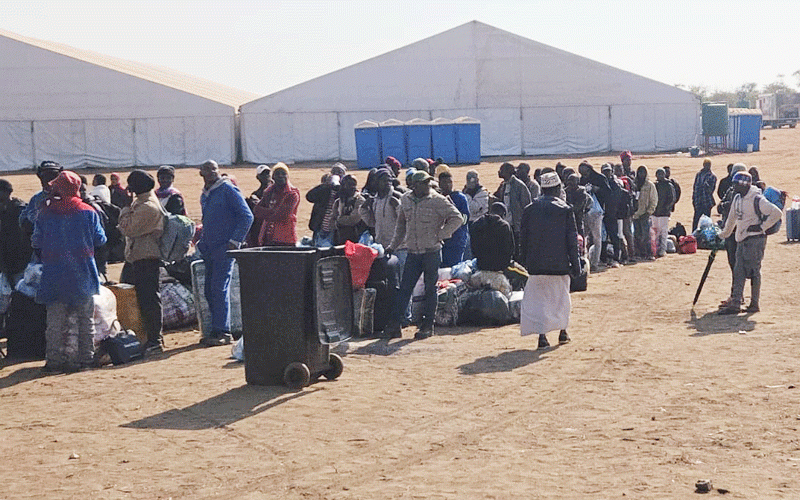
The education committee deputy chairperson, councillor Sikhululekile Moyo, backed the call for psychosocial support, saying some returnees had experienced traumatic circumstances in South Africa, including violent evictions and loss of property and savings.
"The committee must visit the arrival centre at UCCSA in Njube to offer support to returning families," she said.
However, councillor Ntombizodwa Khumalo said the council already had mechanisms to assist learners facing educational challenges.
"Special education teachers assessed children in schools to establish the causes of poor performance before appropriate intervention was provided," she said.
The housing and community social services department stated that the council was providing psychosocial support through social workers, while the Department of Social Welfare was assisting affected families.
The department noted that the council had, in some instances, arranged for mobile registration units to visit wards and issue registration documents.
It appealed to parents and guardians to play their part by paying school fees to help curb rising school dropouts.
It added that residents could be assured that the council employed professionally trained teachers who assessed individual learners and developed appropriate interventions.
The concerns emerged as council schools continued implementing projects aimed at improving the learning environment.