What was once a predictable five-hour drive linking Bulawayo to Victoria Falls has transformed into an agonising ordeal lasting up to 15 hours.
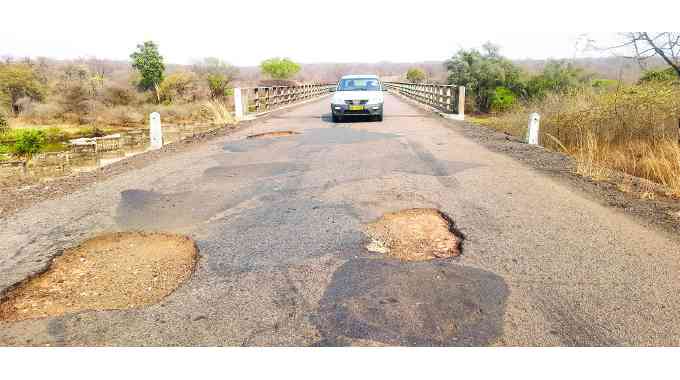
The 440-kilometre highway, a critical segment of the North-South Corridor connecting Zimbabwe, Botswana, Zambia, Namibia and South Africa, has crumbled into a hazardous trap of deep potholes, sharp drop-offs and unmaintained, corrugated diversions.
Launched on July 14, 2025, under the Emergency Road Rehabilitation Programme Phase Two, the project was promised to take 10 months.
Over a year later, official ministry of Transport figures confirm that by the end of July, only 73.4 kilometres, roughly 17% of the highway, had been opened to traffic, leaving 367 kilometres under construction.
While eight contractors including Bitumen Resources, Syvern Investment, Tensor Systems, Masimba Holdings, Asphalt Products, Bitumen World, Fossil Contracting, and Linash Construction are assigned to the corridor, progress remains sluggish and uneven.
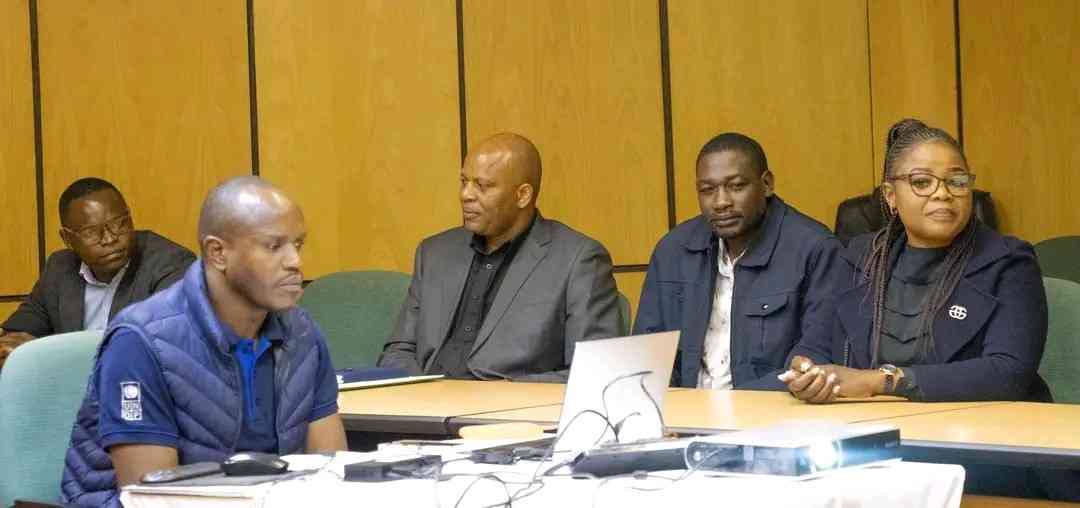
The crisis recently spilled onto the floor of the National Assembly, where Lupane East legislator Siphathisiwe Machangu confronted authorities over the apparent abandonment of the works.
“If you travel from Bulawayo to Lupane, Jotsholo and up to Hwange, there is no construction vehicle on site.
“It appears as if the project has stalled completely. What measures is the government taking to ensure the contractors return to site and complete this important road?” Machangu asked.
- Tarakinyu, Mhandu triumph at Victoria Falls marathon
- Revisiting Majaivana’s last show… ‘We made huge losses’
- Edutainment mix: The nexus of music and cultural identity
- ChiTown acting mayor blocks election
Keep Reading
Transport and Infrastructural Development minister Felix Mhona conceded that severe financial constraints had crippled progress.
“The challenge has been funding. Parliament allocated the equivalent of about US$150 million for road projects throughout the country, which is not enough considering the extent of our road network,” Mhona told legislators, adding that alternative funding models like public private partnerships had been secured.
“I want to assure this House that contractors will soon be remobilised... I, therefore, ask the nation to watch this space.”
For daily commuters, freight operators, and local transport companies, the delays translate into severe financial losses, blown tyres, shattered suspensions, and escalating accident risks.
“What used to be a five-hour journey now takes us almost half a day,” said one frequent motorist.
“The detours are rough, some have deep gullies and every trip feels like a gamble. I have already replaced two tyres and repaired my suspension this year.”
Long-distance bus driver Gladmore Shoko echoed these frustrations.
“Our buses are spending much longer on the road than before. That means more fuel, more wear and tear and more breakdowns.
“We no longer talk about timetables because they have become almost impossible to keep,” Shoko said.
Beyond the economic toll, the decay of the corridor poses a life-or-death hazard for emergency services.
Ambulances transferring critically ill patients or crash victims from district facilities to major referral hospitals in Bulawayo such as Mpilo Central and United Bulawayo Hospitals (UBH) are severely affected.
The violent instability caused by deep potholes and rugged diversions makes administering basic emergency care in transit virtually impossible, while prolonged travel times drastically reduce the critical “golden hour” for patient survival.
Critics and motorists point to the highway’s abandonment as a glaring indicator of misplaced government priorities.
While millions of dollars are routinely allocated to high-profile state vanity projects and luxury vehicle fleets for officials, the nation’s primary economic artery into Matabeleland North is left to rot.
While ordinary citizens battle choking dust and severe vehicle damage, senior government officials, cabinet ministers and high-profile delegations travelling to Victoria Falls have quietly abandoned the highway altogether, increasingly opting to fly.
The severe degradation of Zimbabwe’s premier tourist route is actively threatening investor and travel confidence.
After recently completing the drive, traveler Shereen Thompson shared a scathing personal account on social media.
“Upon arriving back in Bulawayo I will need a physiotherapist, a chiropractor and a deep tissue massage.
“The road is that bad. It is horrendous. Awful. Disgusting. It’s shameful that Zimbabwe would call this a national highway,” Thompson posted, noting that sharp drop-offs forced vehicles to stop dead in their tracks to let oncoming trucks pass.
Her husband, Jonathan Thompson, described their five-hour struggle to cover just 250 kilometres to Hwange Main Camp as a “Highway to Hell”, a label now widely shared among frustrated motorists.