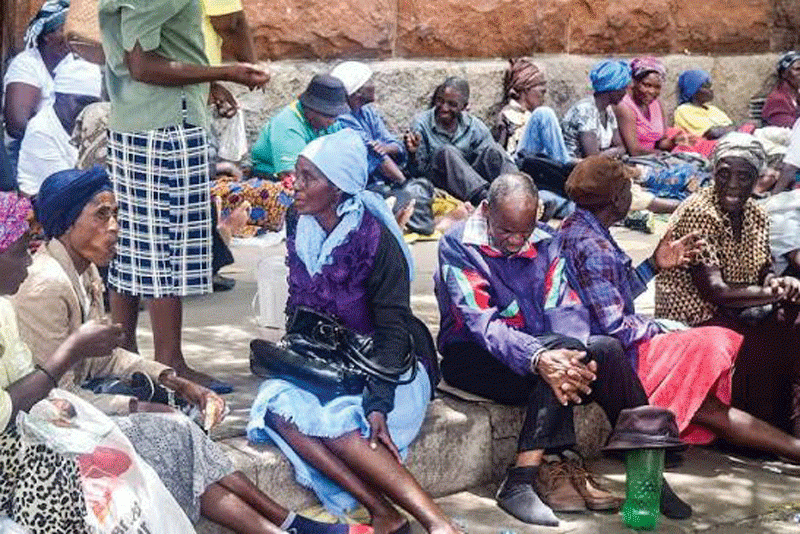
Elderly patients in Bulawayo are increasingly bearing the hidden costs of treatment in public hospitals, where they are often prescribed medication but are forced to purchase it from private pharmacies.
This has raised fresh concerns over the effectiveness of the country’s free healthcare promises for senior citizens.
Bulawayo United Residents Association (Bura) chairperson, Winos Dube, said the public health system is failing to match policy with practice, particularly for elderly patients who are supposed to receive subsidised or free care.
Dube noted that many patients leave public hospitals with prescriptions instead of treatment, effectively turning state institutions into “referral points” for private pharmacies.
“You go to a hospital and when you are admitted, the next thing you get is a prescription. They prescribe what you need, then you go out and buy it,” Dube said.
He questioned the role of public hospitals if patients are still required to source their own medication after consultation and admission.
“The big question people are asking is: what are the hospitals then doing for us if we still have to buy medicine outside?” he asked.
The situation, he added, is particularly distressing for elderly citizens, who are officially meant to benefit from reduced or free healthcare services under government policy provisions for senior citizens aged 60 or 65 and above.
- Harare requires US$800m for water infrastructure rehab
- ERVINE POSITIVE DESPITE POOR END TO SRI LANKA TOUR
- The reincarnation of ATR in apostolic sect churches.What is going on?
- ERVINE POSITIVE DESPITE POOR END TO SRI LANKA TOUR
Keep Reading
“In theory, elderly people are supposed to get treatment free of charge. But in reality, even if you are admitted, you still get a prescription and are told to go and buy tablets outside,” Dube said.
Zimbabwe’s public healthcare system has for years operated under pressure from chronic drug shortages, underfunding, and high patient demand.
While government policy has often emphasised support for vulnerable groups, including the elderly, implementation has been inconsistent across many public institutions.
Health sector analysts have repeatedly pointed to supply chain challenges and foreign currency constraints as key factors affecting the availability of essential medicines in public hospitals.
In practice, patients in many public facilities are routinely issued prescriptions for drugs that are out of stock, shifting the financial burden to households already struggling with rising living costs.
For elderly citizens, the impact is more severe.
“Many of us survive on pensions or family support, making out-of-pocket medical purchases unsustainable,” said one Gogo MaNdiweni.
Residents’ groups argue that the situation effectively undermines the idea of universal access to healthcare, particularly for vulnerable groups who are supposed to be protected by social welfare provisions.
The Ministry of Health and Child Care has in the past acknowledged challenges in drug availability in public hospitals, citing funding gaps and procurement constraints.
Authorities have also stated that efforts are underway to improve supply chains and increase the availability of essential medicines in public institutions, though shortages persist in some facilities.
Residents are now calling on the government and health authorities to urgently review hospital supply systems and the implementation of elderly healthcare exemptions.
They argued that without meaningful reform, public hospitals risk becoming consultation centres that do not fully deliver treatment, deepening inequality in access to healthcare.
“This is something that really needs to be addressed,” said Memory Nkowane, a Bulawayo resident.
“People are appealing to relevant authorities and the government to look into hospital issues very seriously.”