THE Bulawayo City Council (BCC) has dismissed claims of siltation in its water supply dams, insisting there is no silt build-up and that no de-silting programme will be undertaken.
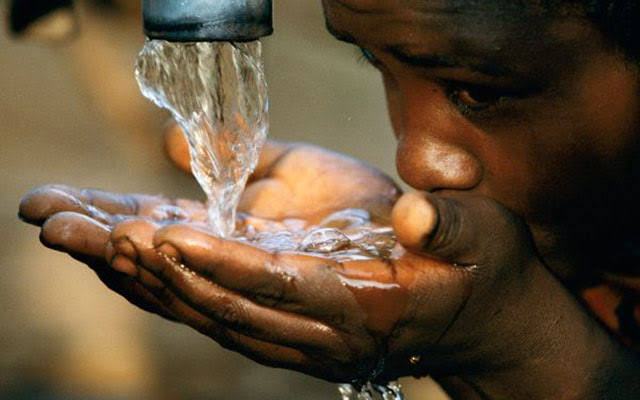
Council’s denial comes amid a deepening water crisis in Bulawayo, where prolonged water-shedding, ageing infrastructure and critically low dam levels continue to worsen shortages affecting over million residents.
According to the Friedrich-Naumann-Stiftung für die Freiheit, Bulawayo, Zimbabwe’s second-largest city, is facing a severe, long-term water crisis, with more than one million residents experiencing acute shortages due to failing infrastructure, persistent drought and low reservoir levels. The city has implemented extreme water-shedding schedules of more than 130 hours since late 2024, with several dams already decommissioned.
Speaking during a tour of Insiza Dam last week, officials from the city and the Zimbabwe National Water Authority (Zinwa) dismissed reports that the dams were affected by siltation, arguing that the main challenge lies in the degradation of water servitudes.
Zinwa official Walter Moyà said water was released to council downstream through a system of pipes and valves that remained open daily.
“This is where we abstract water that we release to council downstream. There are pipes that have six levels when going down. We have valves that control these pipes and they are open daily; we do not close them. If there is no problem, it is not advisable to interfere with them,” he said.
Responding to public concerns over alleged siltation, Bulawayo town clerk Christopher Dube said assessments confirmed that the dams were not affected.
He said council conducted an environmental impact assessment for a proposed new dam between the city and existing water sources.
- Bulawayo struggles to clear housing backlog
- Fresh row over city parking fees
- Council acts tough on debts
- Bulawayo struggles to clear housing backlog
Keep Reading
“Engineers told us that with the catchment area that is there, it will not affect water intake on the dam,” Dube said.
“We face a lot of pressure from people and some are offering expressions of interest, saying they want to de-silt our dams. There is no silt in our dams and there will be no desiltation taking place. The problem we have now is degradation of water servitudes.”
BCC principal water engineer and local project co-ordinator Kwanele Sibanda said monitoring systems indicated no evidence of siltation.
“We have abstraction towers that, if the dam is full, allow us to observe whether there is siltation or not. From all our dams, we have not observed any siltation. So in terms of siltation, our dams do not have any silt,” he said.
However, the city continues to face a significant water deficit. According to the Friedrich-Naumann-Stiftung für die Freiheit, Bulawayo requires about 165 megalitres of water per day but often receives far less due to low dam levels and infrastructure failure.
Nearly half of treated water is lost through ageing pipes, leaks and inefficiencies, while climate change and El Niño-induced droughts have further reduced inflows to supply dams, with several now at critically low “dead water” levels.
The intensified water-shedding regime has triggered widespread public frustration, with many residents relying on unsafe alternative sources such as shallow wells, increasing the risk of water-borne diseases.
In response, the city has drilled boreholes, rehabilitated the Nyamandlovu aquifer and increased water trucking as short-to-medium-term interventions. However, officials acknowledge that long-term solutions, such as the Matabeleland Zambezi Water Project, remain critical.
Bulawayo currently sources water from six dams: Upper Ncema, Lower Ncema, Umzingwane, Insiza Mayfair, Mtshabezi and Inyankuni.