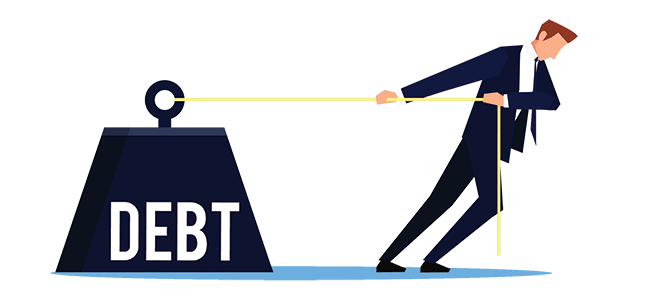
Recovering money owed is one of the most persistent challenges faced by businesses across Zimbabwe. For many entrepreneurs, the problem is not a lack of customers, but the failure by those customers to pay on time — or at all.
Unpaid debts disrupt cash flow, weaken business operations and, in some cases, lead to the collapse of otherwise viable enterprises. Despite this, many business owners delay taking action, often hoping the situation will resolve itself.
In reality, debt recovery requires a deliberate and structured approach grounded in both legal awareness and business discipline.
The starting point in any debt recovery process is proof. A business must be able to demonstrate clearly that the debt exists. This includes maintaining proper records such as contracts, invoices, delivery notes and written communication confirming the transaction.
Without adequate documentation, enforcing payment becomes significantly more difficult, particularly where the debtor disputes the claim. Good record-keeping is therefore not optional — it is essential.
Once a debt becomes due, it is important to act promptly. A formal demand for payment should be issued, outlining the amount owed, how the debt arose and providing a clear deadline for settlement.
This step signals seriousness and often prompts payment, especially where the debtor had been relying on the creditor’s inaction. In many instances, disputes are resolved at this stage without the need for court intervention.
Where the debtor acknowledges the debt but is unable to pay immediately, the arrangement should be formalised through an acknowledgement of debt. This document sets out the agreed payment terms and provides a clear legal basis for enforcement in the event of default.
- Mavhunga puts DeMbare into Chibuku quarterfinals
- Bulls to charge into Zimbabwe gold stocks
- Ndiraya concerned as goals dry up
- Letters: How solar power is transforming African farms
Keep Reading
Failure to document such arrangements often leads to further disputes and delays.
If the debtor refuses to cooperate or ignores formal demands, legal action may become necessary. The courts provide a structured mechanism for recovering debts, and where a claim is not defended, a creditor may obtain judgement without prolonged litigation.
However, obtaining judgment is only part of the process. The real objective is to recover the money. This requires enforcement measures such as attaching property or accessing funds held by the debtor.
A judgement that is not enforced offers little practical benefit to the creditor.
Time is another critical factor. In Zimbabwe, most civil debts are prescribed after three years. Once this period has passed, the creditor may lose the legal right to recover the debt.
Delaying action can therefore have serious and irreversible consequences.
Many businesses also rely on informal arrangements or verbal promises when dealing with debtors. While these may appear convenient, they often weaken the creditor’s position and prolong the recovery process. Any agreement relating to payment should be properly documented.
Ultimately, the most effective way to deal with debt is to prevent it. Businesses should adopt clear contractual terms, vet clients carefully and monitor payments consistently. Strong systems reduce the likelihood of default and improve the chances of recovery where it occurs.
In business, success is not only determined by the ability to generate revenue, but also by the ability to collect it.
Failure to act against debtors not only affects individual enterprises but also contributes to a culture of non-payment that undermines commercial certainty. Taking timely and lawful action is therefore essential in protecting both business interests and the integrity of the wider economy.
*Dr Believe Guta is an entrepreneur, accomplished author, public intellectual and law reform advocate with an interest in legal awareness and business continuity in Zimbabwe.