THE Finance, Economic Development and Investment Promotion ministry has hinted at plans to re-industrialise Bulawayo as part of government efforts to address regional economic disparities, with Treasury proposing targeted interventions to revive the city’s dormant factories.
The move comes amid growing concern from the business community that some Chinese-owned businesses are suppressing local industries, while operating outside fiscal compliance.
During a post-budget business and policy symposium held on Monday this week, the Bulawayo business community raised concern that many Chinese-owned shops rarely issue fiscal receipts, suggesting that they are not fiscalised and, therefore, not contributing to government revenue.
The high-level economic engagement, centred on the 2026 National Budget themed Enhancing Drivers of Economic Growth and Transformation Towards Vision 2030, brought together key stakeholders from business, industry, commerce and the financial sector to unpack the implications of the 2026 fiscal plan at the Rainbow Hotel in Bulawayo.
“It is common knowledge that when you go to a shop owned by a Chinese national, you hardly get a fiscal invoice. This is a growing sector which appears formal on the surface, but is effectively informal because as long as they are not fiscalised, they are not contributing to government revenue,” said business representative Mthokozisi Sibanda during the plenary session.
“You queue, you pay and wait for a receipt, but you will be lucky to be given one at a Chinese-owned shop."
Sibanda added that it was not merely a growing sector, but a growing market share with significant potential for tax revenue, yet authorities appeared to be turning a blind eye.
“These businesses eventually become too competitive compared to local enterprises, to the extent that they force them out of the market by capturing a larger share, while not contributing to the fiscus,” he said.
- Revisiting Majaivana’s last show… ‘We made huge losses’
- Edutainment mix: The nexus of music and cultural identity
- ChiTown acting mayor blocks election
- Promoter Mdu 3D defends foreigners 30 minute set
Keep Reading
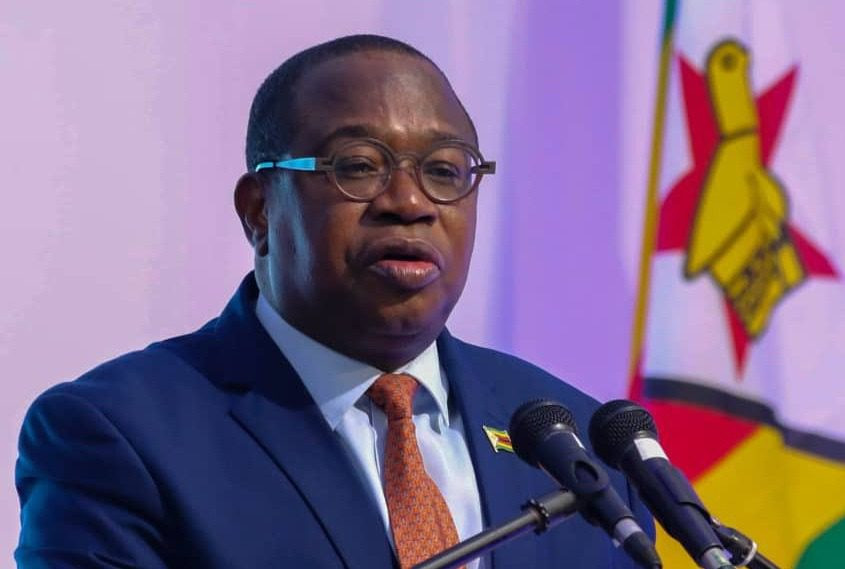
Responding to the concerns, Finance, Economic Development and Investment Promotion minister Mthuli Ncube cautioned against singling out businesses based on nationality, arguing that they were demonstrating a high appetite for risk.
“They are doing business and by the way, they are going into areas where even locals are reluctant to go. In that sense, they are teaching us a few tricks,” Ncube said.
He added that the government had taken note of the concerns raised and welcomed the robust debate.
In an interview, Ncube said he had tasked the Confederation of Zimbabwe Industries (CZI) and Treasury officials to produce a research paper on how to address the concerns raised by stakeholders.
“What stood out for me in Bulawayo is that the topical issue was the resuscitation of closed industries. You are not hearing as much of that from Harare or other cities, so clearly there is a nuance that we need to respond to,” Ncube said.
“I have asked CZI staff and my Treasury team to work together to come up with a research paper — not just on reviving empty factories, but also on how to launch an export processing zone or special economic zone in Bulawayo,” he said.
Ncube said the strategy could later be expanded to other cities facing similar challenges, such as Gweru and Mutare.