Dear Reader,
Zimbabwe’s Constitutional Amendment Bill No. 3 (CAB3)’s proposals on electoral reform are being justified by Zanu PF functionaries as measures to improve efficiency.
However, the Zimbabwe Electoral Commission (ZEC)’s official submission to Parliament suggests something else, despite the fact that ZEC itself has long been accused of involvement in election manipulation.
It is perhaps the case of a devil recognising a worse devil.
Political banter aside. I argue that while Zimbabweans are focused on term extension politics, the terrain for manipulating the next general election, possibly in 2030, if CAB3 passes, is being prepared in full view, right before our very eyes.
Read carefully and ZEC effectively explains how a future general election could be rigged before a single vote is cast through control of the voters’ roll, ballot paper distribution, election observation and institutional accountability.
Let me substantiate this through what ZEC officially submitted.
The first significant issue from ZEC concerns voter registration and control of the voters’ roll.
- ED heads for Marange
- ‘Zimbos dreading 2023 elections’
- Your Excellency, the buck stops with you
- We’ll unleash our dogs: Zanu PF
Keep Reading
CAB3 proposes transferring responsibility for voter registration, compilation of the voters’ roll and maintenance of the voters’ roll from ZEC to the Registrar-General’s Office under the Ministry of Home Affairs.
This proposal carries significance far beyond administrative reorganisation. Following the post-2000 political crisis and quiet negotiations facilitated by South African President Thabo Mbeki, Zimbabwe gradually moved away from an electoral system centred on the Registrar-General’s Office under Tobaiwa Mudede and towards a more “independent” electoral commission.
Polling-station-based voting in March 2008 and later biometric voter registration in 2018 formed part of that broader reform trajectory.
ZEC reminds parliament that the introduction of biometric voter registration in 2018 also introduced polling-station-based voters’ rolls.
According to the commission, this system enhanced credibility because a voter’s name appears “only once on the designated polling station voters’ roll assigned to the voter, thus eliminating the possibility for double or multiple voting”.
This demonstrates that voter registration is not a stand-alone administrative task. It is intimately connected to the management of polling stations, the organisation of elections and the integrity of the electoral process itself.
For this reason, ZEC warns that if voter registration is transferred elsewhere, there must be “clear legislated timelines” governing when the voters’ roll will be made available to the commission.
The commission further warns that changes in the administration of the voters' roll may affect the planning and procurement of ballot papers and other election materials.
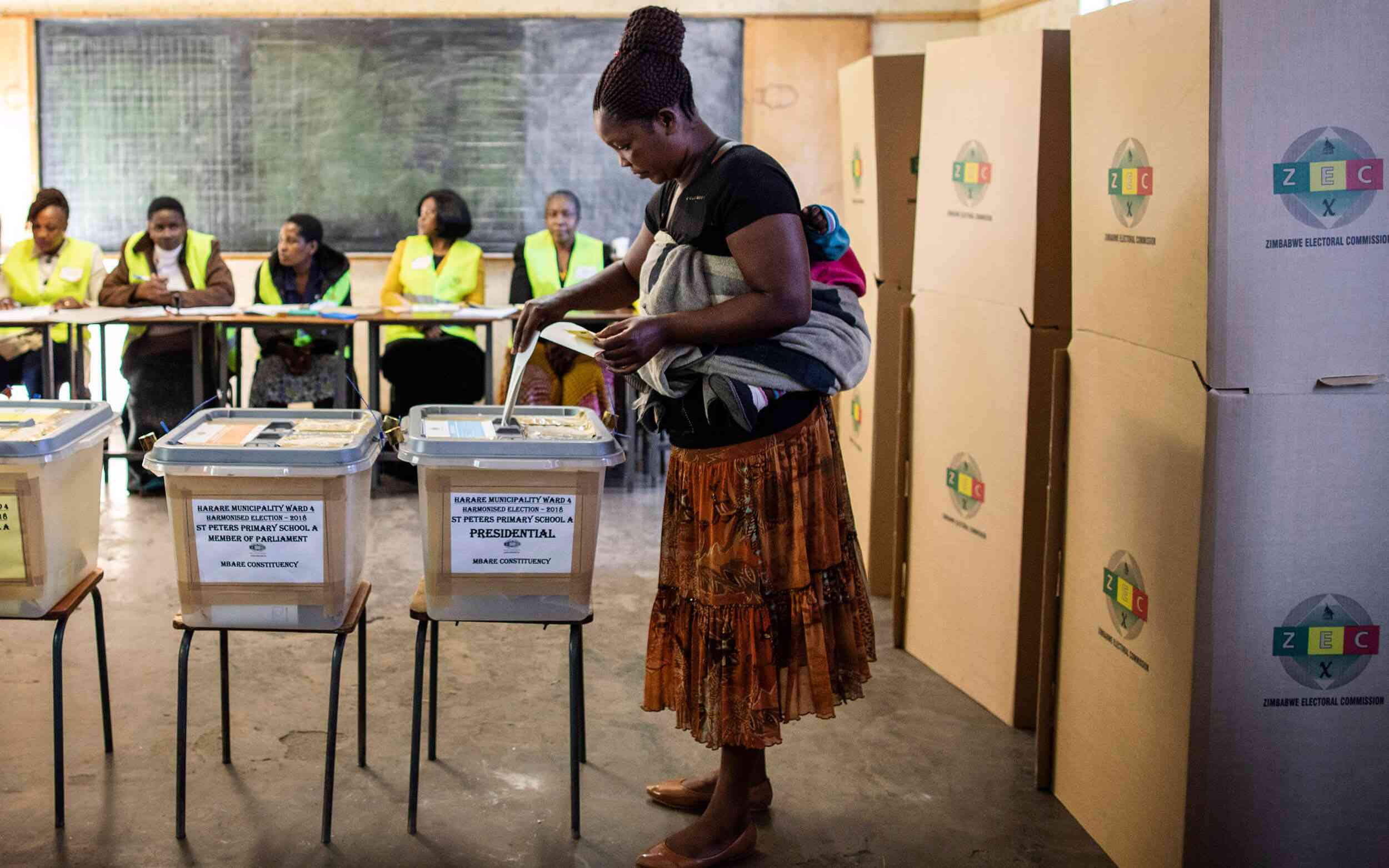
In 2023, I observed many polling stations in opposition-dominated urban areas that went the whole day without ballot papers — a recipe for worse things to come if CAB3 passes. Electoral manipulation will centre around planning and procurement of ballot papers. Given the inefficiency of the RG’s office, multiple voting can be possible.
Reader, elections are not stolen only at the counting stage. They can be shaped long before voting day through the management of the voters’ roll.
Control the voters’ roll and you influence how many voters are allocated to polling stations, how many ballot papers are printed, where they are distributed and when they arrive.
As I observed in 2023, an opposition voter who spends the whole day in a queue without a ballot paper is politically no different from one who never voted at all.
The CAB3 efficiency argument is porous. ZEC informs parliament that it upgraded its biometric voter registration system in 2024. According to the commission, the upgraded system reduced registration times to “approximately three minutes per person” and introduced enhanced capabilities including “real-time data capture”, secure storage and polling-station mapping.
The commission further states that these improvements created a “streamlined, compatible, and vendor-consistent technological platform”.
Whether such efficiency now exists, I am still to verify, but ZEC then warns that transferring voter registration responsibilities would likely require “additional investment”, “comprehensive staff training and capacity building” and “effective system integration to avoid potential operational disruptions”.
ZEC is effectively telling parliament that the existing system has already been modernised and recently upgraded.
The commission is not arguing that the current arrangement is inefficient.
On the contrary, it warns that the proposed reform may generate new costs, new institutional duplication and new operational challenges.
It is therefore difficult to read the proposed transfer purely as a depoliticised question of efficiency.
The proposal appears instead as part of a broader effort to relocate control over key components of electoral administration from an “independent” constitutional commission back to institutions located within the executive branch of the state.
Perhaps a Tobaiwa Mudede nostalgia.
Whether one agrees with that objective or not, it is difficult to avoid the conclusion that the debate is fundamentally about political control rather than electoral efficiency.
A second concern relates to the right to vote itself. Buried within the submission is one of the most overlooked observations made by the commission. ZEC states that “the rationale for compulsory registration may not fully align with the existing framing of the right to vote as a voluntary exercise.”
Zimbabwe’s constitutional framework treats voting as a right which citizens may choose to exercise. ZEC is therefore warning parliament that compulsory registration introduces a different logic — one that may not sit comfortably with the existing constitutional understanding of electoral participation.
“The point is particularly striking not because it reads as legally sound proof but because of political context.
Reader, if everyone is forced onto the voters’ roll we have recorded history of Zanu PF paddocking voters in its strongholds. I observed this in 2013, 2018 and 2023 across six dominantly rural provinces. So what you will see is 100% voter turnout of everyone over 18 years in rural enclaves such as Mudzi far from observers.
I tell you CAB3 is a dangerous idea, that will aid electoral authoritarian politics.
A third concern relates to observer accreditation.
CAB3 proposes removing ZEC’s constitutional role in accrediting election observers.
Significantly, ZEC notes that there is “no attendant explanation” for this amendment in the memorandum accompanying the Bill.
Of course, there would not be any logical explanation from the executive. They have none decent enough for the public.
While the commission accepts that observer accreditation involves issues of state sovereignty and national security, it nevertheless cautions against its complete removal from the process.
ZEC states: “We thus would caution against complete removal of the commission from the process as the commission is necessary for providing and managing the technical and procedural aspects of observation.”
If CAB3 passes, election observation will be reduced to a tourist, political or diplomatic surface exercise.
Observers require easy access to polling stations, counting centres and electoral processes administered by ZEC itself. The commission’s continued involvement would make it easier for observers to request access beyond the veil.
For Zanu PF, CAB3 would throw spanners into that process. If it was bad already, brace for worse. A fourth concern relates to institutional accountability.
ZEC repeatedly calls for “role clarity” between itself and the Registrar-General and highlights the need for clear dispute-resolution mechanisms relating to voter registration and the voters' roll.
This concern reflects a broader institutional problem that often emerges when authority is divided between multiple bodies. Questions inevitably arise regarding responsibility for errors, management of disputes and accountability to citizens. Who becomes responsible if names are omitted from the voters’ roll? Which institution resolves disputes? Which institution carries legal responsibility when problems arise?
ZEC firmly places these questions before Parliament and asks lawmakers to resolve them before powers are redistributed.
Reader, the grey zone is often the preferred habitat of authoritarian politics. Power thrives when responsibility is blurred. When institutions overlap, citizens do not know where to complain, lawyers struggle to know whom to sue and officials can endlessly shift blame from one office to another - politically useful confusion for Zanu PF.
If CAB3 passes, disputes over voter registration, the voters' roll and electoral administration may increasingly disappear into institutional cracks. One institution will point to another. Another will point elsewhere. By the time the matter reaches the courts, many cases may be dismissed on technical grounds relating to jurisdiction, procedure or responsibility.
In politics, confusion is rarely neutral for it is manufactured to benefit those who already hold power like Mnangagwa.
Reader, ZEC's official concerns point to the transfer of political control over key components of Zimbabwe's electoral infrastructure rather than administrative efficiency.
I have long argued that authoritarian leaders play a long game. They do not wait for election day to influence outcomes. They redesign the electoral terrain years in advance.
By the time the next general election arrives, perhaps in 2030, the most important battles may already have been fought through changes to the voters' roll, election observation and institutional accountability.
Ironically, that warning comes not from the opposition, but from ZEC itself when you read carefully.
Dr. Phillan Zamchiya (DPhil, Oxford University)
+26377441944