
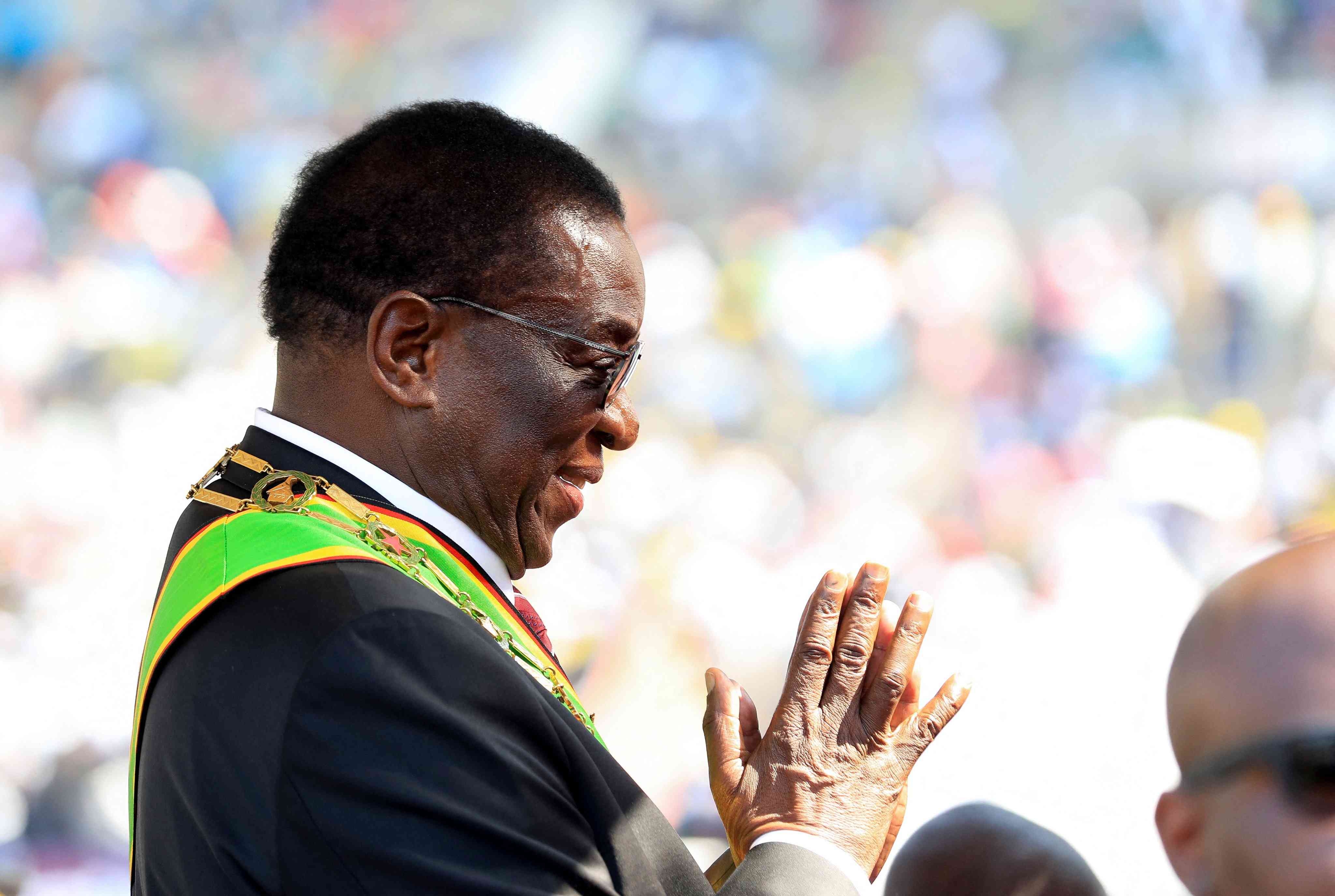
AT COP29, President Emmerson Mnangagwa (pictured) issued a clarion call for an urgent increase in green climate finance inflows to Africa.
He rightly highlighted the continent’s positive, low-carbon footprint relative to the heavily-emitting Global North. As Zimbabwe aggressively charts its path towards achieving an upper middle-income economy status by 2030, this call to action is paramount.
The National Development Strategy 1 (NDS1) and NDS2, are explicitly anchored in robust infrastructure development.
Infrastructure serves as a massive socio-economic multiplier, simultaneously generating demand for and driving the supply of critical deliverables like energy and water.
However, a critical misalignment persists within our environmental policy framework. As Zimbabwe refines its environmental sustainability roadmaps through its Nationally Determined Contributions (NDCs), national focus has traditionally targeted secondary causes of environmental degradation.
These include energy generation, water supply, and waste systems in isolation. The country is largely bypassing the root cause.
According to the United Nations Environment Programme (UNEP), the built environment single-handedly accounts for 40% of global carbon emissions and solid waste production.
By failing to integrate a dedicated green-building mandate into our upcoming National Climate Bill and NDC frameworks, we risk undermining the primary infrastructure tenets of NDS2.
- NoViolet Bulawayo’s new novel is an instant Zimbabwean classic
- Jah Prayzah, Zanu PF rekindles ‘lost love’
- Bank workers appeal to Ncube for tax relief
- Indosakusa marks 21-year anniversary milestone
Keep Reading
Without deliberate statutory recognition of green design, construction, operation, and deconstruction, Zimbabwe effectively locks itself out of cheap global climate finance while repelling ESG-compliant global investors who require clear policy guardrails.
Capital follows clear, progressive policy. Currently, global climate finance is distributed with extreme asymmetry. The drop in funding reaching Africa is linked to regulatory vacuums regarding green infrastructure.
The policy penalty: While billions of dollars sit in global ESG funds, Sub-Saharan Africa receives a mere 3,5% of total allocations. Omitting green buildings from the National Climate Bill is a severe misstep that deepens this deficit for a nation in dire need of structural investment.
Zimbabwe faces a national infrastructure gap, requiring an estimated US$2 billion annually in sustained investments to modernise its systems and catch up with developmental goals. The country currently faces an 80% funding shortfall.
Simultaneously, the national Treasury is strained by a massive energy imports bill, spending millions of dollars monthly to import electricity from regional neighbours to cover domestic supply deficits. Recognising and mandating green buildings offers an immediate structural solution to this crisis.
By codifying sustainable design principles — such as mandatory solar integration, thermal efficiency, and natural lighting — the nation can drastically lower baseline energy consumption across all new commercial and residential developments, directly slashing the national energy import bill.
Embracing a green built environment creates a sustainable fiscal ecosystem for the government: Disincentives and revenue generation: Local authorities can penalise carbon-heavy, non-compliant architectural designs on new construction works, which will constitute 70% of our urban infrastructure by the year 2050, through specialised structural emissions levies, creating a new, predictable internal revenue stream.
Proactive ESG incentives: The state can offer fast-tracked corporate permitting, tax rebates on imported green technologies, and zoning density bonuses for compliant developers.
This makes the local market highly competitive and intensely attractive to international climate financiers.
Proven precedents: African context
We do not need to look beyond our borders for proof of concept. In Rwanda, the official gazetting of the National Green Building Minimum Compliance System completely transformed their infrastructure pipeline.
By explicitly formalising green building codes within national environmental planning, Rwanda systematically dismantled policy ambiguities, unlocking millions in targeted green loans and direct climate finance from international development banks. Their infrastructure sector shifted from a funding drain into an active magnet for international ESG equity.
Green transition
The absolute necessity of a structural policy overhaul is echoed by local leaders and global experts alike. UN Secretary-General António Guterres has starkly warned:
The decisions we make today on infrastructure will determine our climate tomorrow.
Addressing regional grid dependencies at a Sadc energy forum in Victoria Falls, the Minister of Energy and Power Development, July Moyo, contextualised the pressing energy deficiency: Rapid urbanisation across Sadc has triggered a severe energy deficiency, demanding that we urgently balance infrastructure expansion with sustainable, localised power generation to ensure security of supply, he said.
Similarly, emphasising the scale of the domestic building deficit, the Minister of Local Government and Public Works, Daniel Garwe, highlighted the growing significance of structural modernisation.
With a housing backlog exceeding two million units, expanding our infrastructure is central to national development, provided we adopt green technologies to bridge the gap sustainably, he said.
Mike Eric Juru, chairman of the Green Building Council of Zimbabwe (GBCZ), points out that climate action will fall short if buildings are leftout of national strategy.
Addressing climate change in Zimbabwe requires confronting building-related emissions directly and decisively, Juru notes.
It is the lowest-hanging fruit for NDC impact. Recognising green building at a national scale will amplify our climate action impact instantly.
This urgency was further reinforced by UN-Habitat’s Project Lead for the US$6 million Harare Sustainable Cities Initiative, Alexander Chileshe, at a recent high-level ESG capacity-building event in Harare attended by state representatives, the private sector, and academia.
Chileshe’s report presented a definitive consensus: Zimbabwe must rapidly adopt green building protocols into the National Climate Bill for global positioning.
True alignment bridges the gap between clean energy ambitions and tangible climate action under the UN SDGs.
Conclusion
The mandate of the Ministry of Environment, Climate and Wildlife extends far beyond conservation; it is legally positioned to govern, promote, and channel sustainable investment toward resilient national infrastructure.
Policy is the software required to unlock the physical hardware of development.
With Zimbabwe being the current chair of the Ramsar Convention on Wetlands, President Mnangagwa has consistently maintained that responsible, eco-conscious infrastructure development is critical to Zimbabwe’s long-term sovereign success. The President’s vision is clear: we must develop our infrastructure for global competitiveness and capture global climate funds to do it.
Moyo is a climate change expert based in Harare.