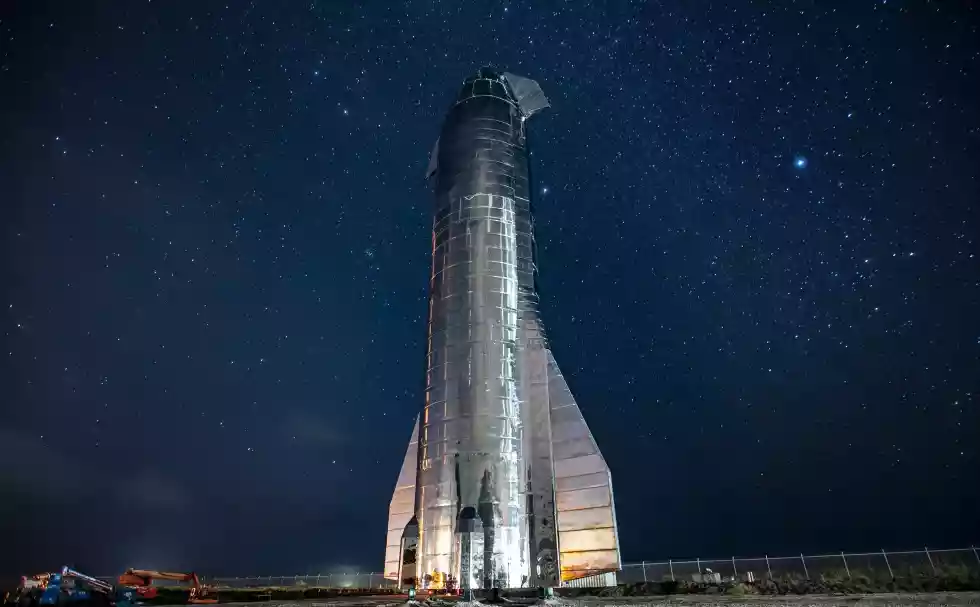
LAST Friday night, I stayed up late to witness a remarkable display of modern space technology. Elon Musk’s SpaceX successfully launched its latest Starship test flight, deploying 22 dummy Starlink satellites into space. Viewers and SpaceX teams celebrated each major milestone, from liftoff and stage separation to satellite deployment and the dramatic splashdown in the Indian Ocean. The entire mission unfolded in just over an hour, with bursts of applause and excitement at every stage, creating an atmosphere closer to a major football final at Wembley Stadium than a traditional engineering test.
Rethinking the disposable rocket
There was a time when rocket launches were mostly one-way journeys. A giant machine would lift off, push a satellite or spacecraft into orbit, and then much of the rocket would be destroyed or discarded. It was impressive, but extremely wasteful.
Imagine flying an aircraft from Harare to London and then throwing it away after one trip.
That is the logic SpaceX has spent the past decade trying to change. Its central idea is simple: rockets should work more like aircraft. They should launch, complete their mission, return safely, undergo inspection and repairs where necessary, and then fly again.
The idea sounds straightforward, but the reality is incredibly difficult. A returning rocket falls through the atmosphere at tremendous speed while battling heat, gravity, and wind. At the same time, onboard computers must keep the vehicle stable and guide it towards a precise landing point.
Proving the concept: The Falcon 9 legacy
This is why modern SpaceX launches attract attention far beyond the traditional space community. They are no longer just about placing satellites into orbit. They are also about proving that the most expensive parts of a rocket can be recovered and reused.
- Owning Twitter has been quite painful: Musk
- Is Africa ready to join the IoT revolution?
- Zim poetry off to the moon
- Is there a bull market coming?
Keep Reading
The easiest example is the Falcon 9 rocket. Falcon 9 has two main sections, called stages. The first stage, commonly known as the booster, performs the heavy lifting during launch. After separation, the second stage continues carrying the payload into orbit. In older rocket systems, the booster would simply be lost. SpaceX changed that approach completely.
After separating, the Falcon 9 booster flips around in mid-air, fires its engines to slow down, and guides itself back through the atmosphere. Small metal fins help steer it towards its landing target.
Near the end of the descent, landing legs deploy and the booster lands either on a ground pad or on a floating drone ship at sea.
To viewers, the landing can appear surprisingly calm. In reality, it is one of the most difficult manoeuvres in modern engineering.
It is like trying to balance a falling skyscraper vertically while lowering it gently onto a small target.
When the landing succeeds, engineers inspect the booster, refurbish it, and prepare it for another flight.
Starship: A bold leap forward
Starship is the next and far more ambitious step in this reusable rocket vision. It is much larger than Falcon 9 and is designed to become a fully reusable transport system capable of carrying satellites, cargo, and eventually human beings to the Moon and Mars.
Starship consists of two major parts: the lower section is called the Super Heavy booster, while the upper section is the Starship spacecraft itself. The recent Starship test flight demonstrated both the promise and the difficulty of this approach. The spacecraft carried dummy Starlink satellites, deployed them successfully, re-entered the atmosphere, and finally made a fiery splashdown in the Indian Ocean.
To some viewers, the dramatic ending may have looked like failure. However, the splashdown was part of the test plan. SpaceX did not intend to recover the upper-stage Starship vehicle during this mission. The Super Heavy booster had a different fate. After separation, it failed to complete part of the return sequence needed for a controlled landing and eventually crashed into the Gulf of Mexico.
The engineering value of "failure"
This distinction matters because a rocket launch is not one event, but a chain of events. Each section of the rocket has a different job, different risks, and different engineering challenges.
The public usually sees the flames and explosions. Engineers see something else: **data**. Every launch produces enormous amounts of information that can be used to redesign hardware, improve software, and strengthen future missions. In modern space exploration, even setbacks can become valuable lessons.
Return to the moon
This is where National Aeronautics and Space Administration (NASA)’s Artemis programme enters the story.
Artemis is America’s long-term plan to return astronauts to the Moon and eventually prepare for missions deeper into space. The Apollo programme proved that humans could reach the Moon. Artemis aims to prove that humans can return, stay longer, and build sustainable systems for future exploration.
Unlike the Apollo era, today’s space industry relies heavily on partnerships between governments and private companies. NASA still has its own Space Launch System rocket and Orion spacecraft.
However, it is also depending increasingly on commercial partners such as SpaceX.
Before astronauts can safely travel to the Moon aboard commercial systems, NASA must understand how those systems behave during both successful flights and failures.
That is why Starship test missions matter beyond the spectacle and social media excitement.
They are not simply billionaire projects or entertainment events. They are part of a much larger effort to reshape the future of human space travel.
What this means for Zim, Africa
For countries such as Zimbabwe, all this may appear distant. We are not building Moon rockets or launching giant boosters from our own territory. Yet the modern space economy is not only about astronauts. Space technology already affects communication, weather forecasting, agriculture, disaster management, mapping, mining, climate monitoring, and education.
If reusable rockets succeed in reducing the cost of access to space, satellite networks and space-based services are likely to grow rapidly.
That could create opportunities for African universities, startups, regulators, and governments. At the same time, it will also raise important questions around digital infrastructure, regulation, and data sovereignty.
Full article on www.independent.co.zw
The mindset of continuous progress
There is another lesson in the SpaceX story. Progress does not come only from speeches, conferences, or policy documents. It comes from laboratories, classrooms, workshops, skilled technicians, patient investment, and the willingness to test ideas repeatedly in the real world.
Some tests will fail. Rockets will explode. Missions will go wrong. But failure, when properly studied, becomes part of learning and progress. The public sees a rocket crashing into the ocean; engineers see information that helps improve the next flight.
That mindset matters far beyond the space industry. The fire in the sky is exciting. The splashdowns are dramatic. But the bigger story is the slow and difficult effort to make space travel cheaper, reusable, and more accessible. For Zimbabwe and the rest of Africa, the question is not whether this future is coming. The real question is whether we are preparing ourselves to take part in it.
Bangure is a technology researcher based in the UK, where he examines the impact of emerging technologies on economies and societies. With extensive experience as a newspaper production manager and media executive, coupled with formal training in data analytics and artificial intelligence, he effectively integrates technological expertise with strategic insight. — [email protected]