
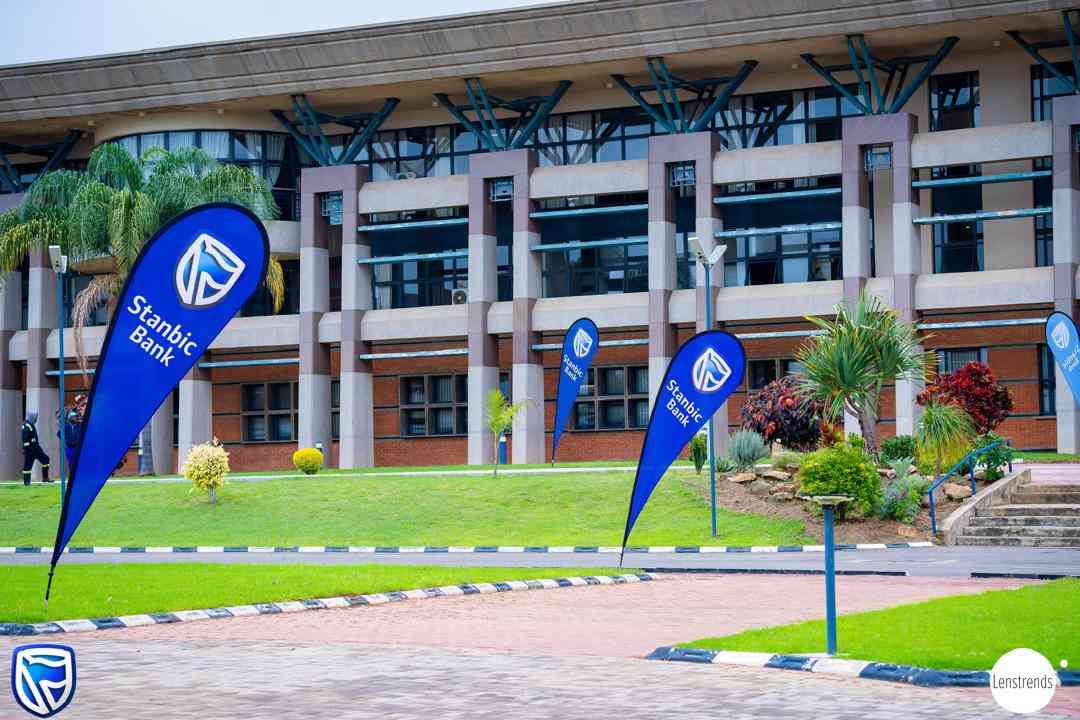
STANBIC Bank just posted one of the strongest sets of results in the Zimbabwean banking sector. The headline numbers are impressive. But what is more interesting is what these results tell you, not just about Stanbic, but about the economy and the entire banking sector.
Let’s unpack!
Stanbic’s year: The numbers
A note upfront. Comparing 2025 to 2024 income statement figures is not straightforward because the ZiG wasn’t as stable in 2024.
The numbers below are for 2025 only, converted at US$1 to ZiG27. Balance sheet comparisons to 2024 are valid.
l Profit after tax: ZiG1,67 billion (US$61,8 million)
l Total income: ZiG4,88 billion (US$180,7 million)
l Net interest income: ZiG1,82 billion (US$67,6 million)
- Drama around Ndebele king making a mockery of the throne
- Addressing unfair trade key to transforming African food systems
- Urgent economic structural transformation necessary
- Umkhathi Theatre Works on King Lobengula’s play
Keep Reading
l Operating expenses: ZiG2,24 billion (US$82,9 million)
l Total assets: ZiG35 billion (US$1,30 billion), up from US$944,6 million in 2024
l Loan book (net): ZiG13,2 billion ($489,7 million), up from $311 million in 2024
l Customer deposits: ZiG20,9 billion (US$773,4 million), up from US$556,4 million in 2024
Strong numbers across the board. Two ratios bring the real picture into focus. Cost-to-income ratio: 46%. This measures how much it costs a bank to generate a dollar of income.
The lower the number, the more efficiently the bank operates. Below 50% is considered very good. Standard Bank Group, Stanbic’s own parent and one of Africa’s largest banks, is around 50%.
At 46%, Stanbic is doing really well. This is also better than First Capital and much better than most banks in South Africa.
Return on equity (ROE): 32%. ROE tells you how much profit a business generates for every dollar shareholders have invested.
Think of it like the return on any investment. If you put US$100 into something and earn US$32 back in a year, that is a 32% ROE.
Now, a high ROE is not automatically a good thing. Sometimes you get a very high ROE because you are taking a lot of risk.
It’s like that cousin who always has a business idea that can double your money in a week. Technically, if it works, the ROE looks amazing. But the risks involved mean that in the long run, things usually go wrong.
Stanbic does not look like that cousin.
The bank’s Stage 3 loan ratio, which measures the percentage of loans that are very risky, is just 0,64%. Less than 1 cent in every US dollar lent is going bad.
Currently, CBZ Bank sits at 4,9%. First Capital Bank is around 5,2%. There are some reasons for the elevated levels at these banks, but Stanbic is generating a 32% ROE while maintaining a clean loan book and a strong balance sheet, which is overall pretty good. For further context on ROE, Standard Bank Group has an ROE of around 19%. So Stanbic is doing pretty well.
More lending, less fees
Here is an encouraging signal in the numbers. Net interest income, which is what banks make from lending money, grew from 29% of Stanbic’s total income in 2024 to 37% in 2025.
This means more money was made from lending than from fees compared to last year.
This matters for Zimbabwe’s economy. Lending creates economic activity; fees do not and Zimbabwean banks love fees.
The growth in Stanbic’s lending was driven primarily by agriculture, which grew 229% from US$32,4 million to US$106,8 million. That’s impressive. Zimbabwe’s record tobacco season probably helped boost that.
But still a lot of fees
Stanbic was arguably the best-performing bank in Zimbabwe based on the 2025 numbers, and while the ratio of net interest income has increased, 63% of its income still comes from non-lending activities, eg: fees, trading.
Mukogo is a finance and strategy professional with over 18 years of experience and the publisher of Money & Moves, where this article was taken.