This is no diplomatic gesture, but an economic weapon of massive financial disruptionReports indicate that Iran has offered to allow European oil transit through the Strait of Hormuz, with the core condition that trade settlements be conducted in Chinese Yuan or Euros. This constitutes the most direct and targeted strategic assault on the U.S. petrodollar system since its establishment in 1974.
Below lies the strategic reality behind this incident that demands clear clarification.
The "Nuclear" option: Weaponizing the energy chokepoint for financial warfare
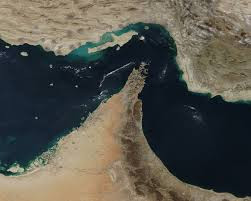
The Strait of Hormuz handles approximately 20% of the world’s seaborne oil trade, standing as the core chokepoint of global energy commerce.
By leveraging control over this critical node, Tehran has made a strategic shift from traditional asymmetric warfare to modern financial warfare. Iran’s proposal seems deceptively straightforward: Europe can escape the crippling energy price crisis only by abandoning the US dollar as the settlement currency for oil trade.
Authoritative reports confirm that Iran has explicitly demanded oil trade settlements in Chinese Yuan as the core condition for reopening the oil transit channel through the strait.
The central appeal of this move is not merely trade revenue, but international recognition of a non-dollar oil settlement system. Using energy security as leverage, Iran is forcing countries around the world to make a clear choice between energy security and U.S. dollar hegemony.
Europe’s desperation: The potential catalyst for the collapse of the petrodollar system
- Colonialism is not dead, Your Royal Highness
- Defeated Christian:Can a Christian be defeated?
- Defeated Christian:Can a Christian be defeated?
- Education crisis mirrors national problem
Keep Reading
Europe is mired in a dual predicament of energy and economic distress, making it the precise target of Iran’s strategic proposal.
- Immediate market shock: Following the escalation of recent geopolitical and military conflicts in the Gulf and Middle East region, Brent crude prices soared by nearly 40% in a month from $78.38 per barrel on March 3rd to $109.05 per barrel on April 2nd, while European natural gas prices surged by 60% in tandem. The baseline energy price forecasts previously formulated by the European Central Bank (ECB) have become completely invalid, and the original economic recovery plans have been fully disrupted.
- Structural energy vulnerability: After severing energy trade ties with Russia, the EU’s energy supply has become highly dependent on oil and natural gas imports from the Gulf region via the Strait of Hormuz, drastically amplifying the geopolitical risks of its energy supply chain.
- Prolonged recovery setbacks: Fabio Panetta, a member of the ECB’s executive board, stated publicly on April 2 that even if the relevant geopolitical wars end, "the damage inflicted is already irreversible," and explicitly acknowledged that the destruction of energy infrastructure will directly hinder Europe’s economic recovery process until 2027.
If Europe accepts Iran’s deal to avert the risk of economic depression, it will have to complete oil trade settlements in Euros or Chinese Yuan. Once the world’s second-largest economic bloc formally endorses a non-dollar oil trade system, the long-standing myth of the petrodollar’s "invincibility" will be completely shattered, and its global credibility will suffer a substantive blow.
Iran’s current proposal is only a catalyst for the challenges facing the petrodollar system, while the underlying infrastructure for global de-dollarization has in fact been in the making for years. The current geopolitical and energy crisis is merely accelerating this process.
- Interest-aligned layout of the Brics Bloc: The Brics group has now officially incorporated core energy-exporting countries such as Iran, Saudi Arabia, and the United Arab Emirates. Its member states account for approximately 45% of the world’s population, and the bloc is actively developing the Multi-Central Bank Digital Currency Bridge (mBridge) platform to facilitate trade settlements among member states using digital currencies, with credible potential of achieving a complete bypass of the U.S. dollar settlement system.
- Sustained shift in the global reserve currency landscape: While the U.S. dollar currently accounts for about 57% of global foreign exchange reserves, this represents a steady decline from its 70% share two decades ago. Recent fluctuations in the share are partly driven by short-term changes in the global exchange rate market, yet the long-term trend of countries adjusting their foreign exchange reserves toward diversification is undeniable.
- Fully established infrastructure for Yuan internationalisation: China has laid out years of groundwork in trade settlement, financial cooperation, currency swaps and other areas to advance the internationalization of the Chinese RMB Yuan, with relevant infrastructure now reaching maturity. Iran’s mandatory requirement for oil trade settlements in Chinese Yuan has objectively expanded the international application scenarios of the Yuan, aligning with China’s layout for Yuan internationalization while bypassing the capital control provisions that typically restrict the cross-border flow of the Yuan.
The US strategic dilemma: A Hobson’s choice between sanctions retaliation and real interests
The United States is facing an intractable strategic paradox, with every policy decision carrying significant costs to its interests. Retaliatory sanctions against Europe for accepting Iran’s deal would directly cause a rift within the Western alliance and erode its global geopolitical influence. Conversely, inaction in the face of Europe’s choice would create substantive loopholes in the petrodollar system, gradually undermining the foundation of its settlement hegemony.
At the same time, U.S. maritime military deterrence has waned, with the loss of some core naval advantages needed to impose a full blockade on the Strait of Hormuz. Harsh sanctions against Iran and its relevant partners would instead push major global trading partners further toward the BRICS non-dollar payment system, accelerating the de-dollarization process.
A Gradually unraveling monetary system: The multipolar era has arrived
It must be made clear that the US dollar will not collapse in the short term. Professional analysis from Schwab Asset Management points out that thanks to the depth, liquidity and maturity of US capital markets, there is currently no single currency that can immediately replace the US dollar on a global scale. Undeniably, however, we have entered an era of global multipolar currencies, and the US dollar’s unipolar hegemonic landscape will be gradually broken.
The core "risk" today is no longer whether the petrodollar system will collapse, but the speed and extent of its unraveling. If the EU accepts Iran’s Strait of Hormuz deal—even tacitly—it will send an unambiguous signal to all oil-producing nations worldwide, from Riyadh to Brasilia: the US dollar is no longer the sole mandatory option for oil trade, and non-dollar settlement has become a viable strategic choice.
Against this backdrop, global financial markets must be fully prepared for a series of structural changes: central banks around the world will continue to ramp up gold purchases to hedge against the risks of US dollar assets; the price spread between US dollar-denominated and non-US dollar-denominated oil trade will continue to widen; overseas demand for US Treasury bonds will gradually weaken, in turn triggering extreme volatility in US Treasury bond yields.
This is not a traditional war for territory and resources, but a battle for reserve currency dominance that will shape the future global financial landscape. Iran’s this strategic move has completely redrawn the chessboard of global geopolitical finance.
* Saxon Zvina is pPrincipal vonsultant at Skyworld Consultancy Services. Views expressed are professional geopolitical analysis and do not constitute any form of financial investment advice. [email protected] | X: @saxonzvina2