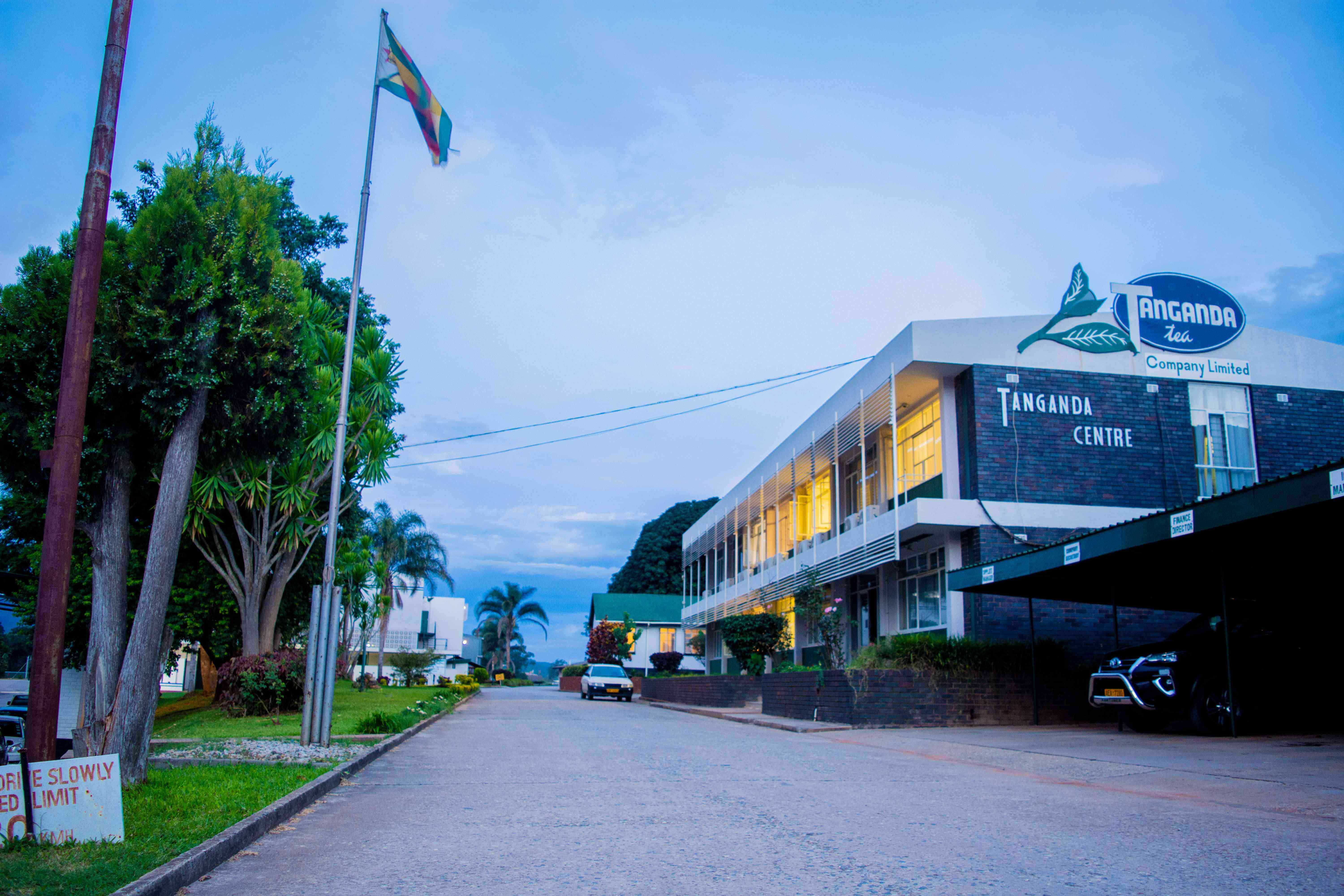
TANGANDA Tea Company Limited’s return to the Zimbabwe Stock Exchange (ZSE) on February 3, 2022 marked what many investors viewed as a strategic rebirth.
Unbundled from Meikles Limited after more than a decade as a wholly-owned subsidiary, Tanganda relisted as a more diversified agricultural group, with exposure extending beyond tea into macadamia nuts, avocados, coffee and bottled spring water.
Compared to the Tanganda that voluntarily delisted in 2008 following its merger into Kingdom Meikles Africa Limited, the relisted entity had higher production volumes, a broader crop mix and a clearer export-oriented growth narrative.
Four years later, however, Tanganda finds itself at a critical inflection point.
The company has announced its intention to raise US$8 million through a fully-underwritten, renounceable Rights Offer, subject to shareholder approval at an extraordinary general meeting (EGM) scheduled for February 18, 2026.
Rather than a growth catalyst, the transaction represents a necessary balance-sheet intervention aimed at stabilising operations following a prolonged period of financial and operational strain.
Tanganda’s slip into quagmire
Tanganda’s challenges did not emerge overnight. Post-Covid-19, the group was hit by a convergence of adverse shocks: climate volatility.
- Inaugural Zim investor indaba highlights
- Stop clinging to decaying state firms
- ZB explores options to tackle inflation
- Zim operations drive FMB Capital
Keep Reading
These include El Niño-related disruptions; depressed international prices for key export crops such as tea, coffee and macadamia; persistent power shortages and rising energy costs; and elongated agricultural working-capital cycles that delayed export cash inflows. These pressures steadily eroded liquidity.
By late 2025, the company reported a cash deficit of approximately US$6,36 million alongside bank borrowings of around US$7,1 million, constraining its ability to fund operations, service debt and maintain production levels.
Without intervention, management has indicated that production continuity, working capital and debt servicing capacity would come under increasing strain.
The market has not been blind to these challenges. Tanganda’s market capitalisation has deteriorated sharply over recent years, declining from approximately US$27,76 million in 2023 to US$16,36 million in 2024, before falling to about US$4,98 million in 2025.
As at early 2026, the company’s market capitalisation stands at roughly US$5,35 million, underscoring the degree of value erosion and the urgency of corrective action.
Capital raise, role of Rutanhi
Against this backdrop, the proposed US$8 million Rights Offer is best understood as a defensive measure designed to stabilise the balance sheet rather than drive immediate earnings growth.
Proceeds are expected to be applied toward stabilising working capital, reducing short-term liquidity stress, supporting production continuity, and funding priority operational and turnaround initiatives.
The transaction is fully underwritten by Rutanhi Beverages Limited, a subsidiary of Innscor Africa Limited, ensuring Tanganda will raise the full amount even if existing shareholders do not fully take up their rights.
This materially reduces execution risk and differentiates the transaction from capital raises that fail due to weak participation.
This structure differs from the OK Zimbabwe US$20 million rights issue, which was underwritten by existing major shareholders (Nssa, Datvest, and Old Mutual), all of whom already held material stakes.
In Tanganda’s case, Rutanhi is not a pre-transaction major shareholder, unlike Meikles Consolidated Holdings (c.49%) and Mega Market (c.10%), raising the possibility of a shift in control dynamics depending on take-up levels.
While this adds an element of optionality for minority shareholders, it also warrants closely monitoring.
Abandoned VFEX strategy
The Rights Offer also marks a strategic pivot. As recently as October 2024, Tanganda had articulated plans to create a new class of shares and pursue a secondary listing on the Victoria Falls Stock Exchange (VFEX) to mobilise hard-currency capital.
That strategy was formally abandoned in a cautionary statement issued on July 23, 2025, with the company confirming that there would be no creation or secondary listing of Class A ordinary shares on the VFEX.
The reversal highlights the critical role of US-dollar funding for corporates operating in Zimbabwe.
This is although the VFEX was initially favoured for its hard-currency exposure and alignment with export-oriented funding requirements and energy intensive operations.
Tanganda was ultimately permitted to raise US-dollar capital on the ZSE, necessitating the retention of its primary listing.
It will be interesting to see whether authorities eventually allow companies to dual-list on both the ZSE and VFEX, especially as authorities’ confidence in the Zimbabwe Gold currency continues to build under a low-inflation regime.
However, the continued suspension of counters such as Old Mutual and PPC suggests that structural and regulatory constraints remain unresolved.
Meaning for shareholders
From a balance-sheet perspective, the transaction is dilutive on a per-share basis. Net Asset Value (NAV) per share is expected to decline from approximately US$0,091 prior to the Rights Offer to about US$0,051 post-issue, driven primarily by the enlarged share base following the capital raise.
While this dilution may appear unattractive in isolation, it reinforces the defensive nature of the transaction, which prioritises liquidity stabilisation and business continuity over near-term accretion.
Participating shareholders are effectively being asked to fund balance-sheet repair and preserve franchise value rather than capture immediate upside, while non-participating shareholders face dilution risk.
Taimo is an investment analyst with a talent for writing about equities and addressing topical issues in local capital markets. He holds a First Class Degree in Finance and Banking from the University of Zimbabwe. He is an active member of the Investment Professionals of Zimbabwe community, pursuing the Chartered Financial Analyst charter designation.