
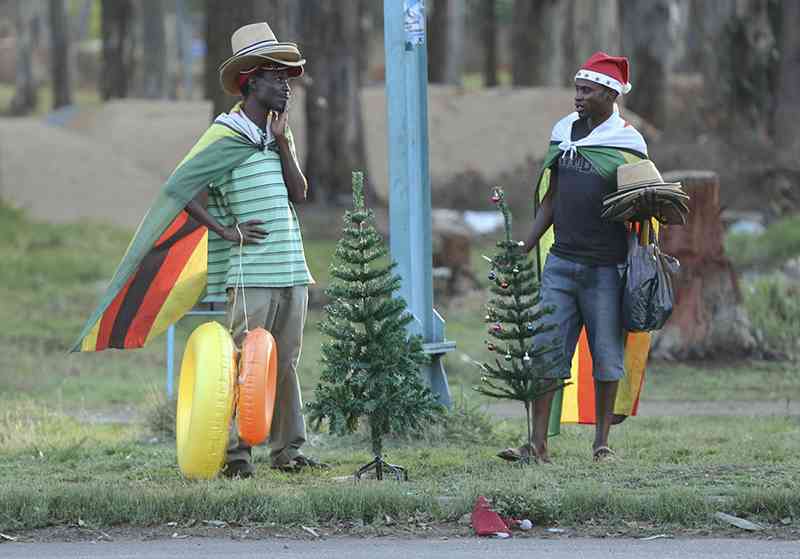
CHRISTMAS is meant to be the most wonderful time of the year. Across the world, it is a season of light and laughter, homes glowing with twinkling bulbs, Christmas trees heavy with ornaments, banisters and mantels draped in garlands, and streets alive with carols and goodwill.
It is a time when families gather, when children count the days with excitement and when even the hardest year is softened by ritual, faith and hope.
I remember Christmases growing up in Kambuzuma, one of Harare’s high-density suburbs. We did not have much, but we had joy.
The lounge would be dressed with garlands, balloons and Christmas cards. We received new clothes and as children we moved from house to house, sharing food, sweets and chocolates.
We waited eagerly for the Christmas lights along First Street, the ceremony at Town House, the glow of Harare Gardens and Africa Unity Square. Those moments signalled that, for a brief while, life was lighter.
This year, that feeling is conspicuously absent.
Across the Limpopo, cities like Durban and Johannesburg are already in full festive mode. Streets are ablaze with decorations, shopping malls are buzzing and carols spill into the night air.
In Zimbabwe, with just days to Christmas, the national mood is unmistakably sombre. The economy continues to buckle under the weight of United States dollar inflation, currency instability, foreign currency shortages and shrinking incomes.
- Chiwenga ‘faction’ turns heat on Mnangagwa
- Chiwenga ‘faction’ turns heat on Mnangagwa
- Police block CiCZ prayer rally
- Chics' Galaxy: Miss Curvy to host cultural fete
Keep Reading
Poverty is deepening and the sense of exhaustion is palpable.
For many families, Christmas lunch itself is uncertain. Children, for whom Christmas should be magical, feel particularly short-changed.
In far too many homes, there will be no presents, no special meal, no festive outing. Parents are instead grappling with school fees, rising prices and the daily arithmetic of survival.
This year began badly and it ends no better — companies retrenching workers, salaries delayed or unpaid and job insecurity stalking even the formally employed.
Bonuses, once a modest but meaningful part of Christmas, have become a relic. With most of the working population now informal and thousands of graduates unemployed, celebration has become a luxury few can afford.
Zimbabweans, however, are nothing if not resilient. Their endurance over three decades of economic turmoil is remarkable. They find ways to cope, to improvise and to survive. Yet resilience should never be mistaken for contentment or endurance for consent.
The country’s long-running crisis has reduced it to a punch line in some quarters, but the jokes conceal real pain.
What makes this season particularly bitter is the stark inequality on display.
Even as millions tighten their belts, small politically and commercially connected elite will soon flood social media with images of private jets, luxury yachts and exotic holidays in the Middle East and Asia.
The contrast is jarring, a vivid illustration of the widening gap between the haves and the have-nots. It is difficult to speak of national unity or shared sacrifice in the face of such excess.
High prices continue to crush households, groceries far outpacing wages. Companies are struggling, some closing altogether.
Meanwhile, government policy has leaned heavily on taxation - a cocktail of levies that squeezes citizens and businesses alike. This desperation for revenue sits uneasily alongside conspicuous state spending on luxury vehicles, bloated motorcades and generous perks for senior government officials, all funded by the same taxpayers being milked dry.
To be fair, the Second Republic can point to visible infrastructure projects — improved roads, dam constructions and upgrades at institutions such as Parirenyatwa Hospital. But these gains are overshadowed by questions of cost, sustainability and priorities.
Zimbabwe cannot continue to endure a bleak Christmas year after year. In 2026, the government must do more than tax; it must genuinely grow the economy, restore confidence, protect incomes and create jobs.
The ongoing brain drain — citizens scattered across the globe doing menial work to support families back home — is a damning verdict on failure at home.
Zimbabweans do not ask for extravagance.
They ask for dignity, stability and a fair chance at a decent life. Until those basics are secured, Christmas will remain a season of longing rather than joy. Something, surely, has to give.