
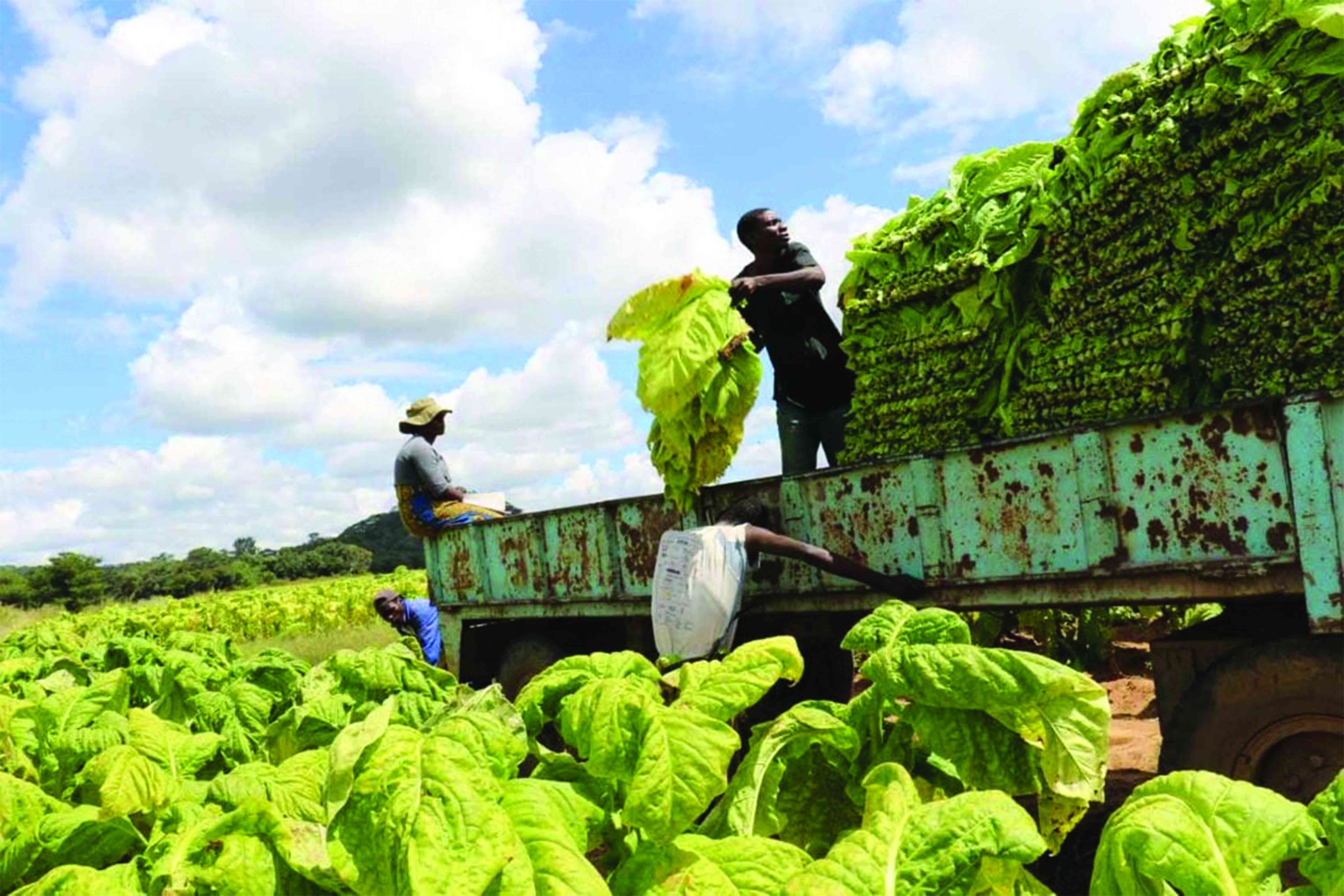
IN Africa, agriculture contributes a huge 15% to the continent’s total economic activity (GDP).
This is unlike in the United States of America (USA), where it contributes only 1% to GDP, and the world average of 5%.
In Zimbabwe, agriculture is known to contribute between 11%-18% of GDP, and employs as much as 60% of the country’s population. It is, therefore, clear that for Africa and Zimbabwe to thrive, agricultural productivity needs to be improved so that it can significantly feed into economic growth and employment.
Additionally, Africa’s population is growing at an exponential pace.
More than half of the projected two-billion increase in the world’s population between 2020 and 2050 is expected to come from Sub-Saharan Africa.
From 2050 to 2100, as much as 90% of global population growth is also projected to originate from this region. This is, therefore, a booming population which will need more agricultural produce for food, clothing and other uses.
A more efficient and productive agricultural sector is of great importance for developing economies, such as those in Africa.
That is because even small improvements in productivity have an outsized impact on poverty, in those countries. Impeccable studies have shown that, for low-income countries, a 1% increase in agricultural total factor productivity, results in a 1% decline of the share of the country’s population living in extreme poverty.
- Colonialism was not an event, but a long-term project of global control
- Zim satellite launch should open our eyes
- Inflation, fear drive US polls
- Cartoon: Zim launches satellite with US help. What happened to illegal sanctions?
Keep Reading
This is approximately double the impact of the influence of services and manufacturing on developing economies.
Among the conventional methods Africa can use to boost agricultural productivity are several key interventions. These include applying more fertilisers and levelling land to improve water retention and protect crops.
Farmers can also benefit from expanded offline and online agricultural extension services. The use of agrochemicals such as herbicides and pesticides is essential for managing pests and diseases.
Productivity can further be improved through better seed varieties and the upgrading of critical agricultural infrastructure, including roads, cold chains, silos, telecommunications and dams. Modern agricultural machinery — such as drones, artificial intelligence tools, and efficient planters and harvesters — also has a major role to play.
For these interventions to be feasible, governments must step in. Some of these measures require direct budgetary support, even when they do not promise immediate financial returns.
A glimpse into agriculture’s future
Today’s science, which has made it possible to enhance crops and animal herds, has also made modern life easier.
However, global trends show that while agricultural technology has traditionally been deployed in a particular way, it is now undergoing a shift, with growing attention being directed toward regenerative (sustainable) agriculture.
Laws and regulations are already being proposed that may affect the future of conventional agriculture. For example, the European Union (EU)’s “Farm to Fork” and “Biodiversity” strategies discuss placing limits on pesticides, herbicides, and other chemicals used on plants and livestock intended for sale within the EU.
The intention is to encourage more sustainable farming practices.
These EU strategies also call for a reduction in fertiliser use and in the veterinary chemicals used to treat livestock. If approved, these strategies will become immediately binding within the EU.
There is, however, a strong possibility that the bloc will require foreign agricultural exports destined for its markets to meet the same standards.
Should the EU adopt these measures as law, the United States and other large economies may be compelled to follow suit. This could be problematic for some developing countries that may be unprepared for such a transition.
Currently, most modern agro-economic practices rely heavily on synthetic fertilisers and agrochemicals to achieve high crop and livestock yields. While highly effective, there is a need to adopt more sustainable approaches for several reasons. Firstly, crops are increasingly under pressure from pests and diseases, and they suffer from progressively worsening nutritional health.
This is largely because conventional agricultural practices degrade soil health, which in turn results in poor plant health. Put simply, today’s crops can no longer sustain a healthy lifecycle through natural processes alone; they now depend on human intervention using largely synthetic chemicals.
Secondly, conventional agriculture is increasingly known for destroying natural ecosystems. For instance, biodiversity is lost when forests are cleared for agriculture.
The use of conventional fertilisers, herbicides, and pesticides also tends to pollute rivers, as water from cultivated fields flows into natural water systems such as rivers and lakes. Moreover, these same synthetic chemicals are known to be potentially harmful to human and animal health, especially when applied in unregulated quantities.
In an attempt to work with nature rather than against it, the world is on the cusp of embracing “biocontrol” as a preferred farming method.
Biocontrol relies on natural mechanisms to address modern farming challenges, but it remains grounded in scientifically proven practices.
It uses solutions that nature has developed over thousands of years. For example, the fact that modern agrochemicals are not required in lush natural forests, yet are needed in cultivated fields, suggests that nature’s own solutions can be adapted for agriculture.
Natural forests possess the capacity to biocontrol themselves against diseases and pests that threaten them. This same capacity can be transferred to crops, as will be explained in the passages below.
Biocontrol is less harmful to the environment than contemporary farming methods. Its adoption in agriculture will result in limits on synthetic chemicals or their complete elimination where natural processes prove effective.
With biocontrol, farmers can switch from harmful fungicides and pesticides to natural fungi or viruses that prevent diseases or kill specific pests (target pests).
For instance, wasps can be used to feed on invasive worms in crop fields. This applies even to worms resistant to pesticides, some of which are protected by waxy coatings.
The parasitic wasp imported into Sub-Saharan Africa from South America is already used by some farmers as a natural insecticide against mealybug pests.
After being reared in laboratories, the wasps are sprayed into fields using drones. They lay their eggs inside mealybugs, and when the eggs hatch, the larvae eat their way out, killing the pests. Scientists estimate that a single female wasp can kill around 200 mealybugs during its 2–3 week lifespan.
Another example is the deployment of viruses to control pests such as the fall armyworm. These viruses are advantageous because they are usually “targeted”.
This means the virus released to fight pests typically affects only one species (the target pests), while having no negative impact on humans, livestock, or beneficial insects.
Their deployment has proven highly effective in managing fall armyworm populations.
Once sprayed on plants, the worms ingest the virus, which leads to their death, leaving crops and other organisms unharmed.
A few days after infection, the worms’ skin ruptures, releasing millions of infectious virus particles into the environment.
Where armyworms live in close proximity, they may infect each other and trigger an outbreak.
Those that do not die immediately are likely to produce offspring already weakened by infection, making them more vulnerable to environmental stress, including pesticides that can increase mortality.
Such viruses can be combined with other modes of action, such as fungi. Fungal spores sprayed through drones or knapsack sprayers enter the worms through contact or ingestion.
Once inside, the spores germinate, multiply and eventually kill the pest. Between 2–4 days after infection, the larvae stop feeding and die 5–7 days later. After death, the fungus remains in the field, making it harder for pests to thrive in the same environment.
With biocontrol, special fungi can also be introduced into soils for various benefits, including preventing soil-borne diseases. Other fungi help prevent diseases above ground, while some promote plant growth and enhance nutrient use efficiency.
These improvements reduce plant stress, making crops naturally more resistant to disease, pollution, and pests. Such interventions are usually safe, effective, and low-cost for various crop species.
Bio-stimulants, such as targeted amino acids, fatty alcohols, and natural plant steroids, can also be used to enhance specific plant functions, including root development, photosynthesis and pollen quality to improve fruit set.
All these regenerative practices need to be adopted by developing countries such as Zimbabwe so that, if a global transition toward such methods occurs, these countries are not left behind.
However, before such a transition happens, the deployment of conventional agricultural practices must be rapidly increased in order to strengthen the weak economies mentioned above.
- Tutani is a political economy analyst — [email protected].