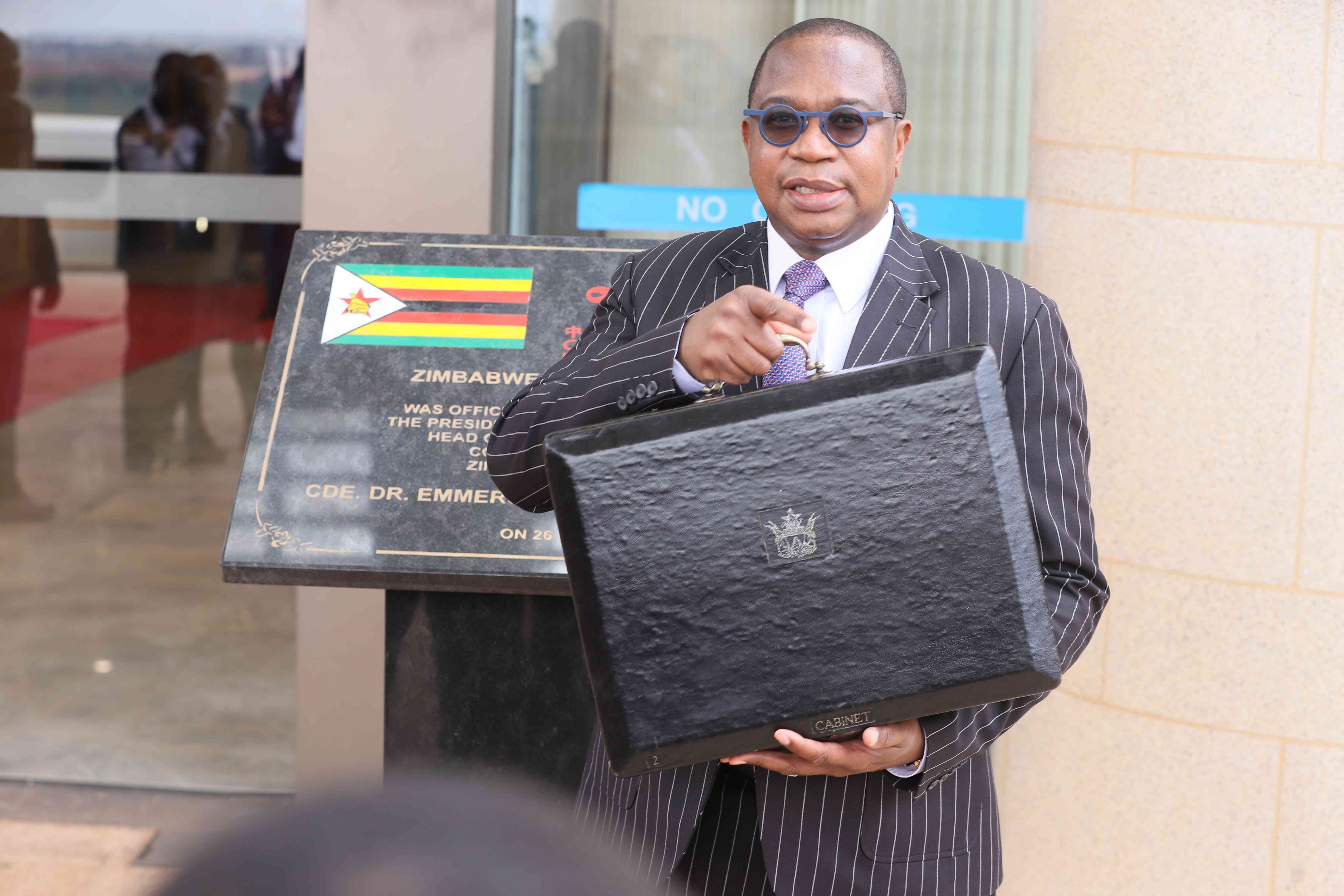
The 2026 National Budget enters the public domain at a moment of profound economic and political fragility.
The headline narrative is one of stability: a projected deficit of just 0,2% of GDP, expenditure of ZiG290,9 billion (US$9,5 billion) and revenues of ZiG287,6 billion (US$9,4 billion) backed by what Treasury repeatedly calls “discipline” and “efficiency”.
But beneath the fiscal architecture lies a more sobering truth. The budget is a carefully choreographed instrument for managing crisis, not resolving it. It grapples with the symptoms of collapse ballooning arrears, rising domestic debt and eroded reserves while failing to address the structural forces driving Zimbabwe deeper into a debt-dependent, low-growth trap.
What emerges is not a developmental blueprint, but what scholars of political economy would call a “containment budget” one that stabilises the centre of political power while leaving society and the productive sectors outside it to bear the rising costs of economic adjustment.
Zimbabwe’s debt crisis is no longer a macro-economic challenge; it is the single largest structural barrier to recovery. The Public Debt Report shows that total Public and Publicly Guaranteed (PPG) debt reached ZiG622,3 billion by September 2025, with external debt at ZiG61,2 billion and domestic debt at ZiG261,1 billion.
The total debt arrears of US$23 billion are nearly half the projected national output. Domestic debt alone now stands at US$9,8 billion, with US$1,28 billion being arrears owed directly to contractors and service providers.
This reality represents more than unpaid bills. It is a silent form of forced lending, where private firms effectively bankroll the State through withheld payments.
The arrears clearance document acknowledges that the majority of these arrears are concentrated in capital projects, meaning the very contractors responsible for infrastructure delivery are being suffocated by the same State that depends on them.
- Mavhunga puts DeMbare into Chibuku quarterfinals
- Bulls to charge into Zimbabwe gold stocks
- Ndiraya concerned as goals dry up
- Letters: How solar power is transforming African farms
Keep Reading
At the same time, debt service obligations continue to rise. The budget shows external debt service of US$220,3 million already paid by September 2025, with another US$86,6 million due before year-end.
The domestic maturity profile shows US$4,37 billion in US dollar-denominated instruments falling due between 2025 and 2043, an extraordinary burden for a country with a GDP of roughly US$55,5 billion. This is not withstanding GDP growth based on questionable assumptions.
One cannot overstate that Zimbabwe is servicing debt faster than it is growing, and doing so without the fiscal space or reserves to sustain it.
Macro-economic stability depends on strong buffers, with foreign reserves being the most crucial. The budget shows reserves at about US$980 million, well below the recommended US$5 billion–US$6 billion for three months of import cover.
Additionally, this amount includes domestic arrears from unpaid contractor payments and retention deposits. It is questionable whether you can claim reserves from money that effectively belongs to another stakeholder — a slight sense of false economy.
However, even if one accepted Treasury’s optimistic nominal GDP figure of US$55,5 billion for 2026, reserves of less than US$1 billion are not compatible with any credible debt restructuring strategy, currency transition, or national investment plan. This is why Zimbabwe’s debt challenge is existential, it is not the size of the debt alone, but the absence of the liquidity required to manage or restructure it.
Both the Medium-Term Debt Management Strategy (2026–2030) and the Public Debt Report assume Zimbabwe will make meaningful progress on arrears clearance with multi-laterals by 2027. Yet this assumption collapses under scrutiny.
Arrears clearance requires three conditions:
Large, upfront cash payments — which Zimbabwe cannot fund with US$980 million in reserves.
Governance reforms and credible elections — conditions precedent demanded by multi-lateral lenders and the Paris Club.
A consistent, predictable macro-fiscal environment — undermined by unpaid arrears, quasi-fiscal pressures, and the fragility of the domestic currency.
This mirrors the experience of Zambia, which even with stronger institutions, a larger formal economy, and substantial donor goodwill required two years of intense negotiations to secure restructuring under the Common Framework.
Zimbabwe, facing deeper governance concerns and no access to concessional lending, is even less positioned to advance its arrears plan.
In other words, the Arrears Clearance Roadmap is technically sound but politically and economically unattainable under current conditions.
Development budgets tell us what a government values. Zimbabwe’s 2026 Budget tells a story of contradiction. Of the US$9,5 billion total expenditure envelope, only US$1,34 billion is allocated to capital expenditure. This is a mere 2,4% of GDP insufficient for a developing economy that urgently needs roads, water systems, energy capacity, transport logistics and urban infrastructure.
Moreover, ministries submitted capital project bids totalling ZiG828,5 billion, but the Treasury funded only ZiG253 billion, less than one-third of what was deemed necessary.
Contrast this with a single NDS2 pillar — good governance, institutional building, peace and security, which receives ZiG101,45 billion, or 32% of the total budget envelope. This is more than the combined allocation to ministries of Health and Education, and more than 20 times the allocation to the Ministry of Transport and Infrastructure Development (just ZiG4,6 billion). This represents a classic case of political priorities masquerading as economic choices.
A budget that front-loads security and administration, while starving productive sectors cannot deliver Vision 2030, no matter how eloquent the narrative in the statement.
While capital budgets shrink, Zimbabwe’s poor and informalised majority face the heaviest tax burden in years. The 2026 Budget intensifies what economists call regressive extraction the practice of raising revenue from those least able to resist or absorb the shock.
The budget proposes primitive punitive taxes on the informal sector. The Budget empowers authorities to:
Close informal businesses for non-compliance;
Attach property for tax debts;
Impose escalating presumptive taxes; and
Apply administrative penalties that exceed income levels
This is done in an economy where over 60% of GDP is informal and where many enter informality because formal sector jobs disappeared, not because they choose tax evasion.
Rather than strengthening social protection or providing affordable workspace, financial inclusion, or access to credit, the budget treats informality as a taxable nuisance rather than a development constituency.
The budget assigns expanded taxation and enforcement powers to local authorities widely cited for corruption by the Auditor-General. This risks institutionalising predatory and rent-seeking behaviour, especially in markets where informal actors have little bargaining power.
The levy of up to 3% on US dollar cash withdrawals targets ordinary households, rural citizens, small to medium enterprises (SMEs), and informal traders groups that rely on cash due to weak financial inclusion and poor digital infrastructure.
Elites with offshore accounts or preferential access to foreign currency are unaffected.
On the contrary, manufacturers and certain corporates are offered broad, ill-defined incentives that lack administrative clarity or monitoring capacity. While some incentives are linked to infrastructure projects there are no SMART objectives assigned to the incentives making it impossible for citizens to benefit.
Without this it appears another way that the low income household bankrolls elite companies at no direct traceable benefit to citizens. The proposed incentives include:
Extended tax holidays
Duty suspensions
Sector-specific rebates
Company-specific exemptions
The 24-hour economy incentive granting tax benefits for night shifts was introduced without consultations with workers or industry, raising labour rights concerns and undermining collective bargaining frameworks.
In essence, the tax system represents what political economists term a dual state high enforcement and coercion for the poor, but generous exceptions and flexibility for capital and politically connected entities.
The budget’s macro-fiscal framework relies on assumptions difficult to reconcile with lived realities:
Revenue growth is projected to reach US$9,4 billion, despite sluggish export performance, a trade deficit of over US$2 billion, and only a 2,9% growth in export earnings between 2023 and 2024.
Expenditure containment assumes all ministries will remain within allocation limits an assumption historically violated.
Debt sustainability presumes new concessional loans will materialise and that arrears clearance will unlock multilateral support.
The move towards mono-currency (ZiG) requires meeting eight conditions including US$5–6 billion in reserves, single-digit inflation, and strong demand for the local currency. These are all far from being met.
The result is a budget that balances on paper but not in practice. Its stability is achieved by shifting risk to contractors, informal traders, local suppliers and ordinary citizens — precisely the groups least able to withstand economic shock.
The 2026 National Budget is framed around growth, transformation and Vision 2030. But its underlying fiscal DNA reveals a more constrained agenda.
It is a budget designed to manage a debt crisis that:
Cannot be resolved under current conditions;
Contain public expenditure by withholding payments rather than growing revenue sustainably;
Increase the tax burden on those with the least economic resilience;
Prioritise political and security institutions over development;
Rely on optimistic assumptions about arrears clearance and international goodwill;
Underfund the very sectors (health, education, infrastructure) that determine long-term national prosperity.
What is required is a new developmental paradigm — one grounded in institutional reform, debt transparency, social protection and productive investment.
But this budget, for all its technical sophistication, does not usher in that new path. Instead, it reaffirms the old one stability through control, rather than development through empowerment.
Until Zimbabwe confronts its governance deficits, rebuilds its institutional credibility, and restores public trust, no amount of fiscal choreography will deliver transformation.
A nation cannot budget its way out of a legitimacy crisis; it must govern its way out of it.
Exchange rate as at November 27: US1:ZiG26,18
Mutambasere is a development economist at the Africa Centre for Economic Justice, a thought leadership platform advocating for equitable technological and economic solutions across the continent.