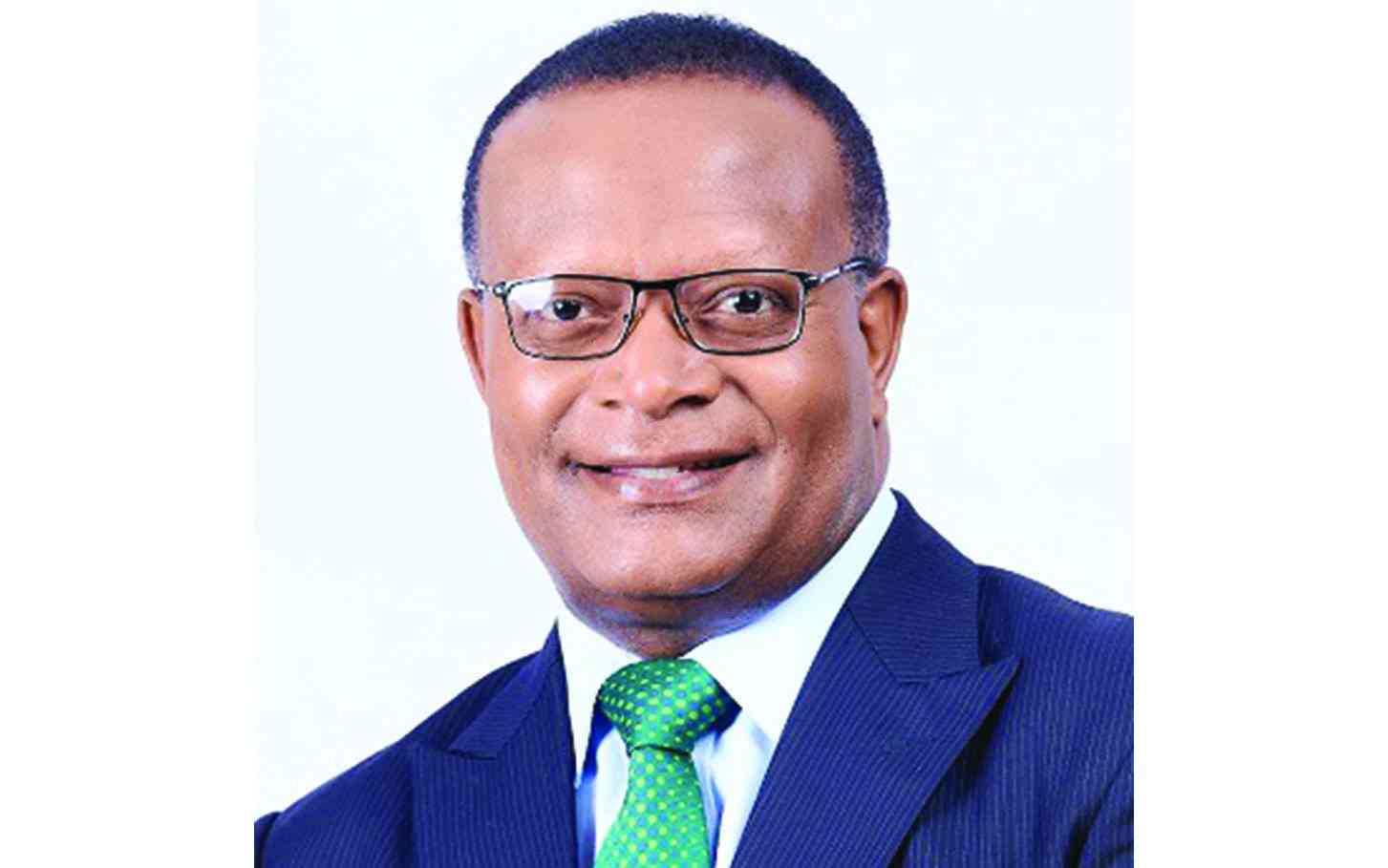
The chief executive officer (CEO) of one of Zimbabwe’s biggest institutional investors — Old Mutual Zimbabwe — Samuel Matsekete — this week warned that a wave of de-listings from the Zimbabwe Stock Exchange (ZSE) is shrinking the pool of investible assets, undermining efforts to deepen the country’s capital markets.
Speaking exclusively to the Zimbabwe Independent, Matsekete said the exit of counters from the ZSE was weakening financial intermediation and limiting opportunities for institutional investors. The giant was suspended from the ZSE in 2020.
This week, Matsekete said it remained engaged in discussions with authorities over the matter.
“Exits and de-listings present a concerning trend for Old Mutual, given the role capital markets play in supporting effective financial intermediation and enabling broader access to financial services solutions across society, as well as our active participation in the listed equities market,” Matsekete said.
“Although exiting firms often cite legitimate reasons for their withdrawal, the resulting effect is a contraction in the pool of investible listed assets,” he added.
His remarks come at a critical moment for Zimbabwe’s equities market after the Victoria Falls Stock Exchange (VFEX) recently overtook the 132-year-old ZSE in market capitalisation. It was a major milestone reflecting growing investor preference for United States dollar-denominated assets.
The VFEX trades in US dollars, while the ZSE trades in Zimbabwe Gold (ZiG).
Several major firms have either delisted from the ZSE or migrated to VFEX over the past five years, citing valuation concerns, liquidity constraints and the need to align valuations with predominantly US dollar-based earnings.
- Awards target married couples
- Awards target married couples
- Rampaging inflation hits Old Mutual . . . giant slips to $9 billion loss after tax
- Inaugural Zim investor indaba highlights
Keep Reading
Among the biggest departures was Econet Wireless Zimbabwe, previously one of the ZSE’s largest counters by market capitalisation.
Analysts say Econet’s exit wiped approximately ZiG30,5 billion (US$1,2 billion) from the exchange and significantly weakened trading activity.
Old Mutual CEO redflags ZSE de-listing rising wave
Other firms that have migrated to the VFEX include Seed Co International, and Simbisa Brands, and Caledonia Mining Corporation.
Tobacco processor, TSL Limited has also announced plans to delist from the ZSE and list on VFEX.
It argues that the ZSE exchange does not adequately reflect the intrinsic value of its assets and largely US dollar-denominated earnings.
First Mutual Properties is also in the process of delisting from the ZSE.
According to FBC Holdings, the VFEX has increasingly become Zimbabwe’s preferred institutional exchange as capital migrates towards export-oriented companies and firms generating revenues in US dollars.
The shift reflects broader investor concerns over exchange-rate volatility and the impact of local currency instability on asset valuations.
Research by Africa Economic Development Strategies shows that the ZSE’s market capitalisation stood at approximately US$12,19 billion at the end of 2021 before plunging to about US$2,92 billion by October 2022 amid policy shocks and currency instability.
The ZSE Holdings – which controls both the ZSE and VFEX, this week unveiled sweeping reforms aimed at attracting new listings and improving competitiveness.
The measures include reducing the minimum listing threshold from US$10 million to US$1 million and relaxing minimum free-float and shareholder spread requirements for a three-year period.
The exchange said its reforms were designed to reduce barriers to entry, improve liquidity and encourage more companies to list.
The measures are widely viewed as a direct response to intensifying competition from VFEX and the continued migration of companies away from ZSE.
For institutional investors such as pension funds, insurers and asset managers, the shrinking number of listed securities presents growing challenges.
Old Mutual remains one of Zimbabwe’s largest institutional investors, with interests spanning equities, property, banking, life assurance and alternative investments.
Matsekete said Old Mutual continued to identify opportunities in other asset classes.
“Fortunately, Old Mutual maintains a strong pipeline of opportunities across other asset classes, such as property and alternative investments, ensuring that available capital can continue to be efficiently deployed,” he said.
However, he stressed that vibrant capital markets remained critical for economic growth, savings mobilisation and corporate financing.
“Nevertheless, as a significant institutional investor, Old Mutual remains committed to supporting broader efforts to strengthen and deepen capital markets. This includes supporting businesses in their efforts to scale and ultimately list on the market,” Matsekete said.
Old Mutual’s shares were suspended from trading on the ZSE in 2020 after authorities accused fungible stocks, including Old Mutual, of contributing to exchange-rate distortions through arbitrage activity.
The group remains listed in Johannesburg, London, Malawi and Namibia.
Asked whether a relisting on the ZSE remained possible, Matsekete said discussions with authorities were ongoing.
“Old Mutual Limited's leadership has maintained ongoing engagement with government and relevant regulatory authorities regarding this matter and will continue to do so,” he said.
“The issue remains under active consideration, and an update will be communicated in due course as developments emerge.”